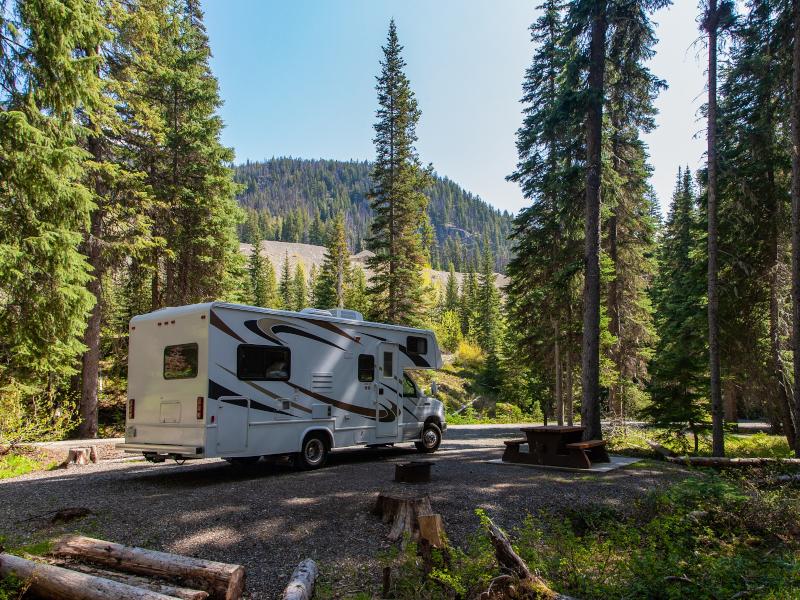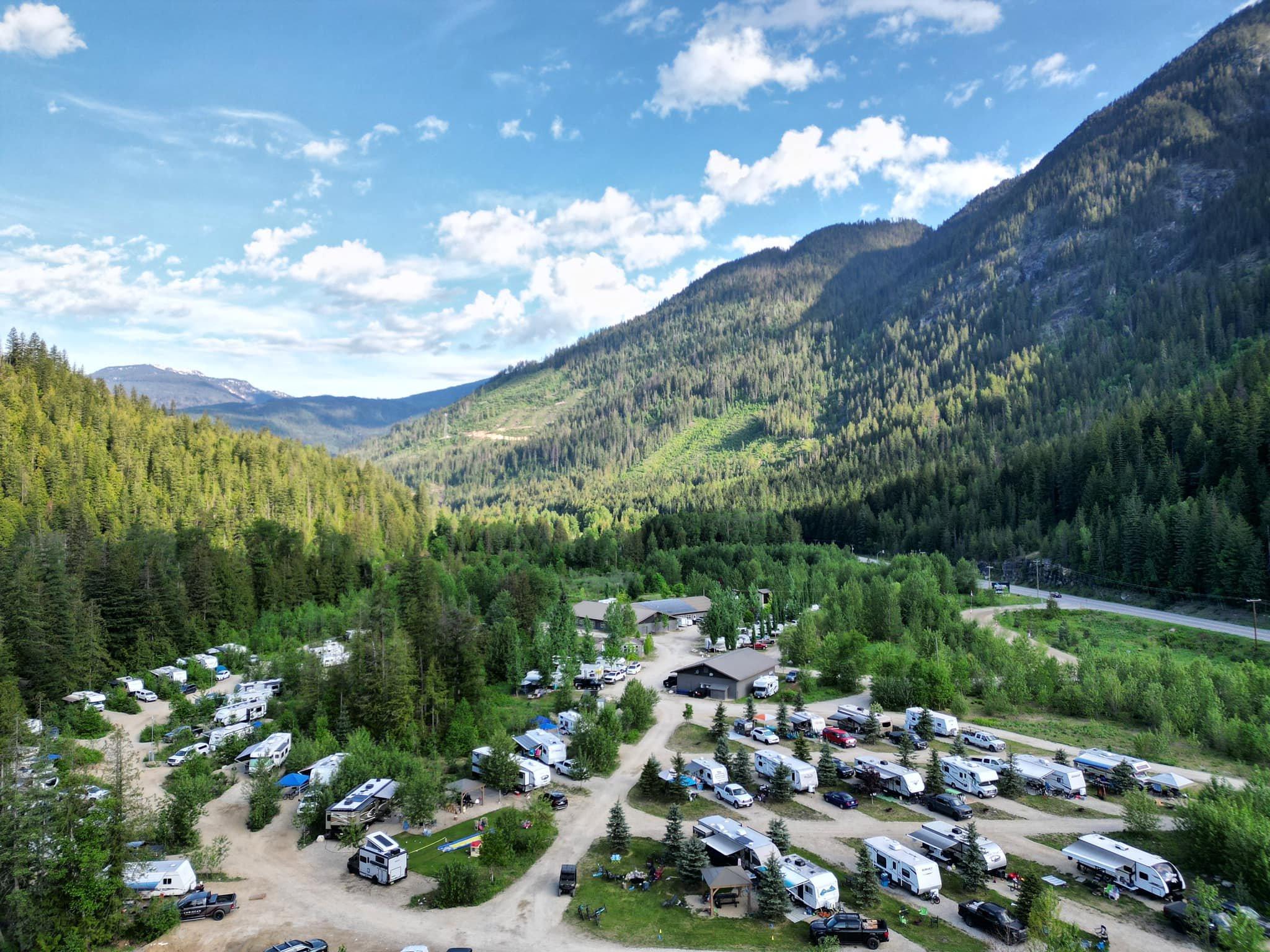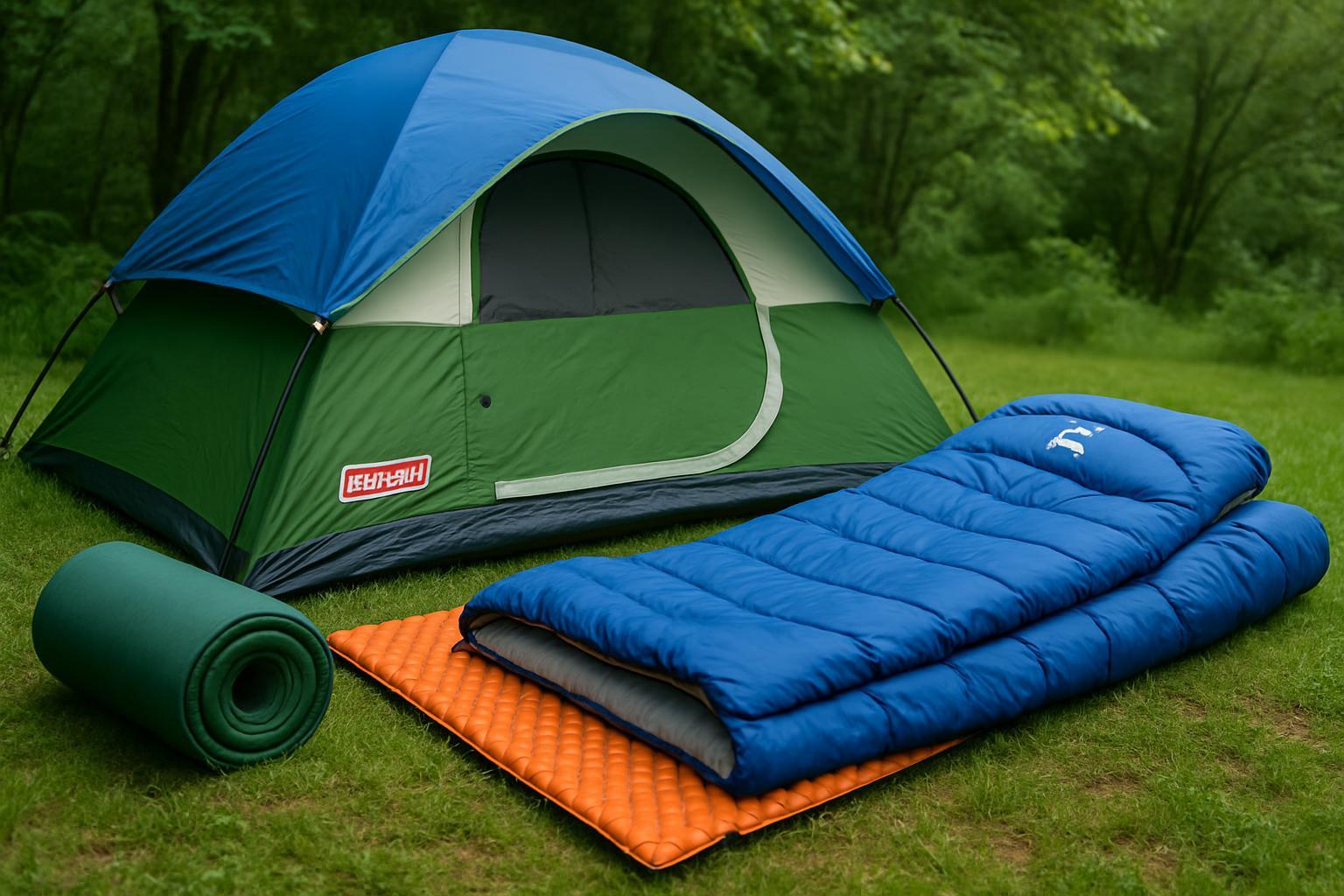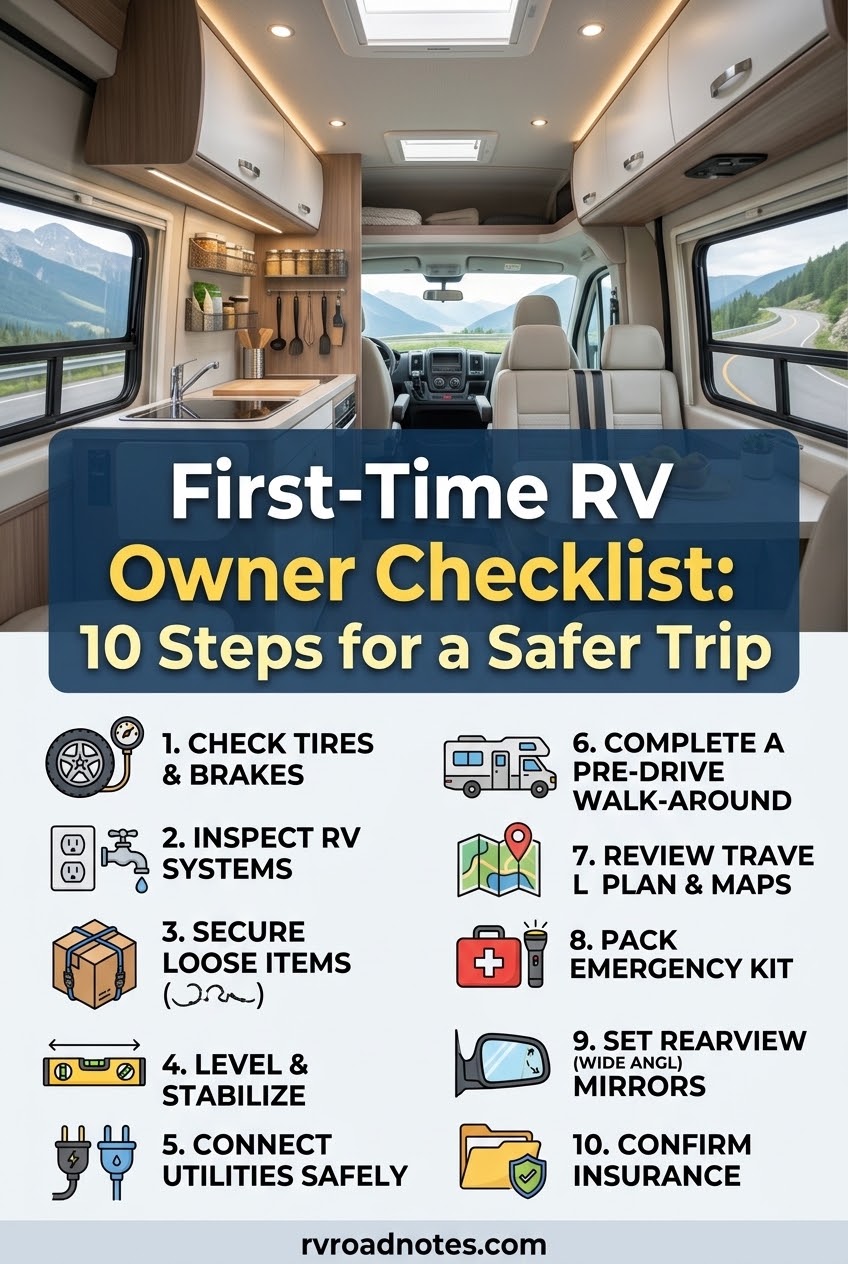
A first RV trip is much easier when the unknowns are handled before the wheels move. I have learned that the small checks done in the driveway prevent the expensive surprises that happen miles from a parts store. This first time RV owner checklist walks through the practical systems, supplies, and habits that make early trips smoother.
Inspect Your RV Before the First Trip
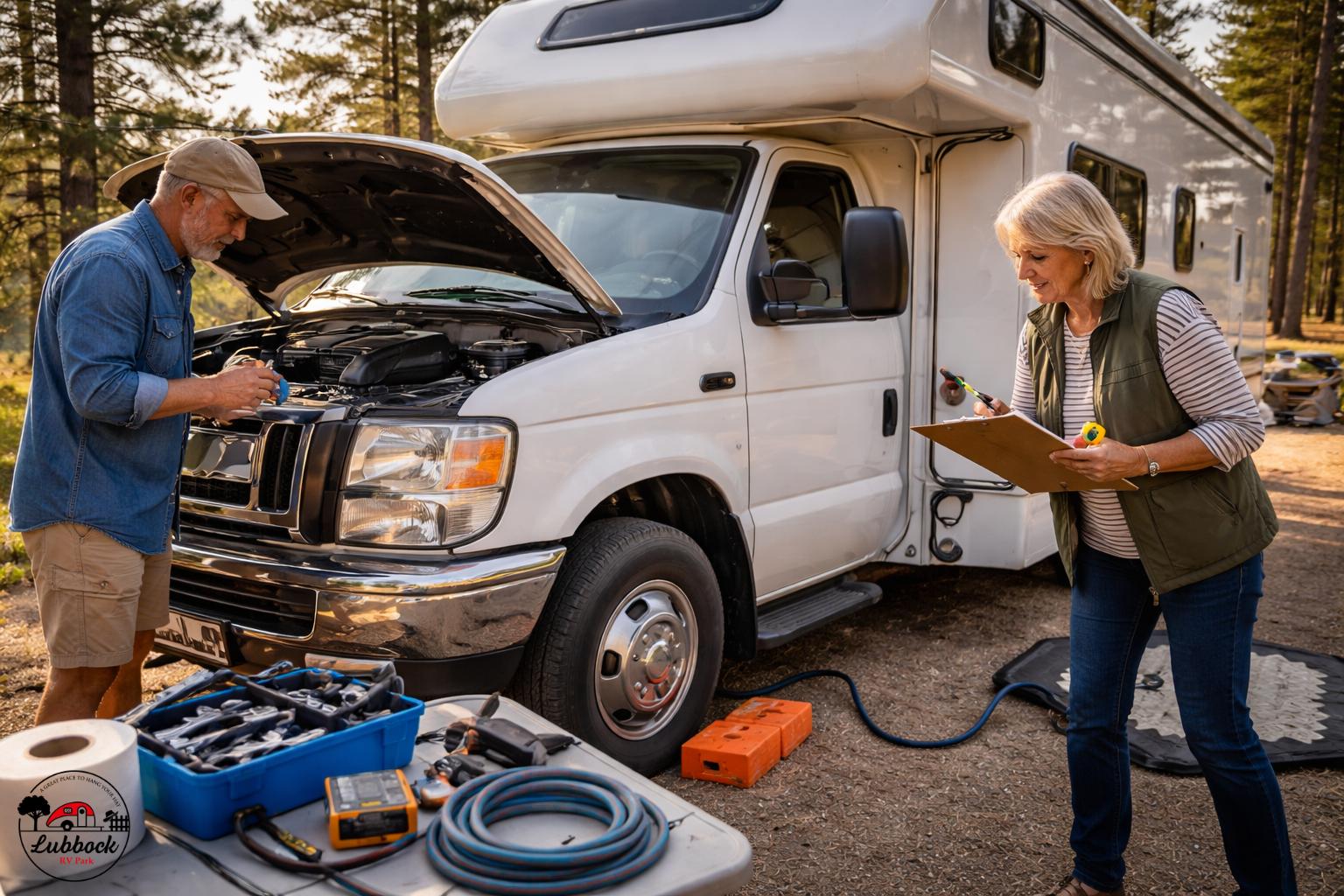
The first inspection is less about finding perfection and more about knowing what you own. A used RV can hide small issues that become large repairs once you are traveling. Check the roof seals, exterior compartments, windows, doors, steps, and underbody areas before loading everything inside.
Start with a slow walk-around:
- Check for water stains, soft spots, or damaged seals around roof openings.
- Confirm that storage doors latch securely and that nothing is loose inside compartments.
- Test lights, appliances, slides, awnings, and safety equipment before departure.
A useful first habit
Take photos of your RV systems when they are working correctly. Those reference photos make troubleshooting much easier later.
My own 1998 Class C needed attention in pieces after purchase, including a water pump and subfloor work. That experience made one lesson very clear: a pre-trip inspection is cheaper than a roadside diagnosis.
Learn Your RV’s Essential Systems
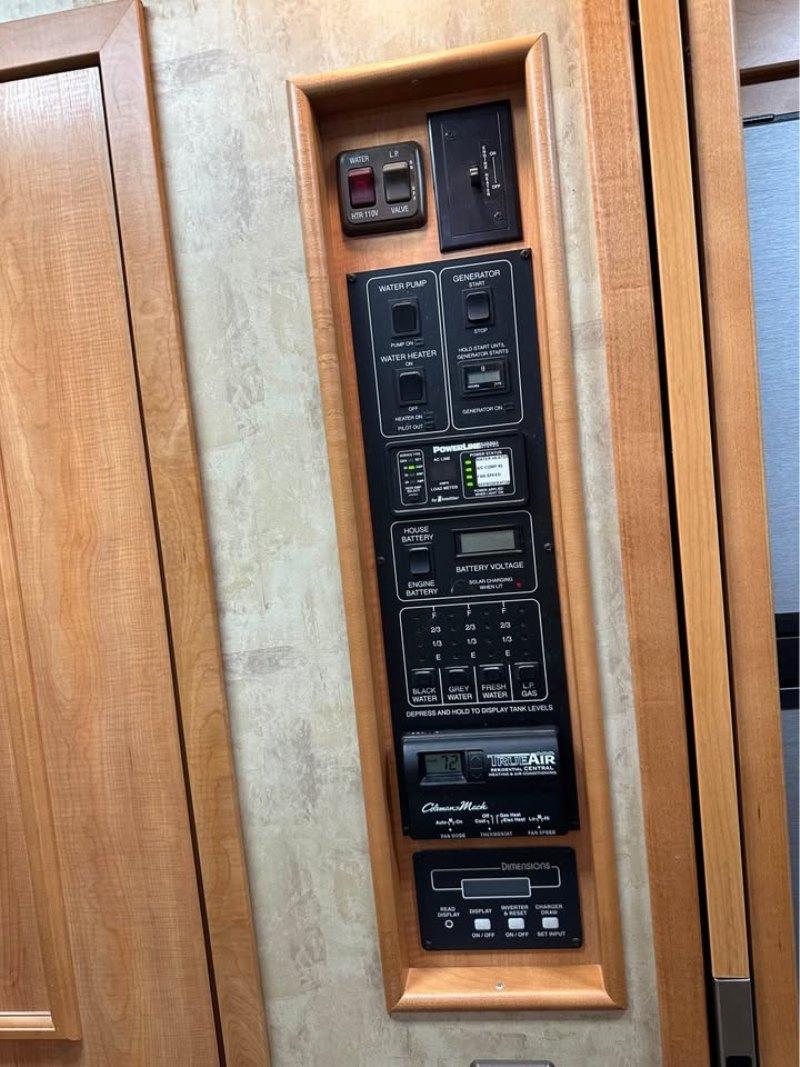
The control panel is the nerve center of an RV. New owners often know how to turn things on but not what each system depends on. Learn your battery setup, converter, inverter if equipped, generator controls, water pump, water heater, and tank monitors before your first campsite.
- Electrical: Understand shore power, battery power, and what appliances consume the most energy.
- Water: Know fresh, grey, and black tank locations and how the pump operates.
- Heating and cooling: Learn the limits of propane appliances, air conditioning, and ventilation.
Safety point
Never use a cooktop, oven, or unvented heater for cabin heat. Test carbon monoxide and propane detectors regularly and replace them when they reach their expiration date.
Spend an afternoon operating every switch while parked. Confusion in a driveway is easy to fix; confusion during a storm is not.
Stock the RV With Must
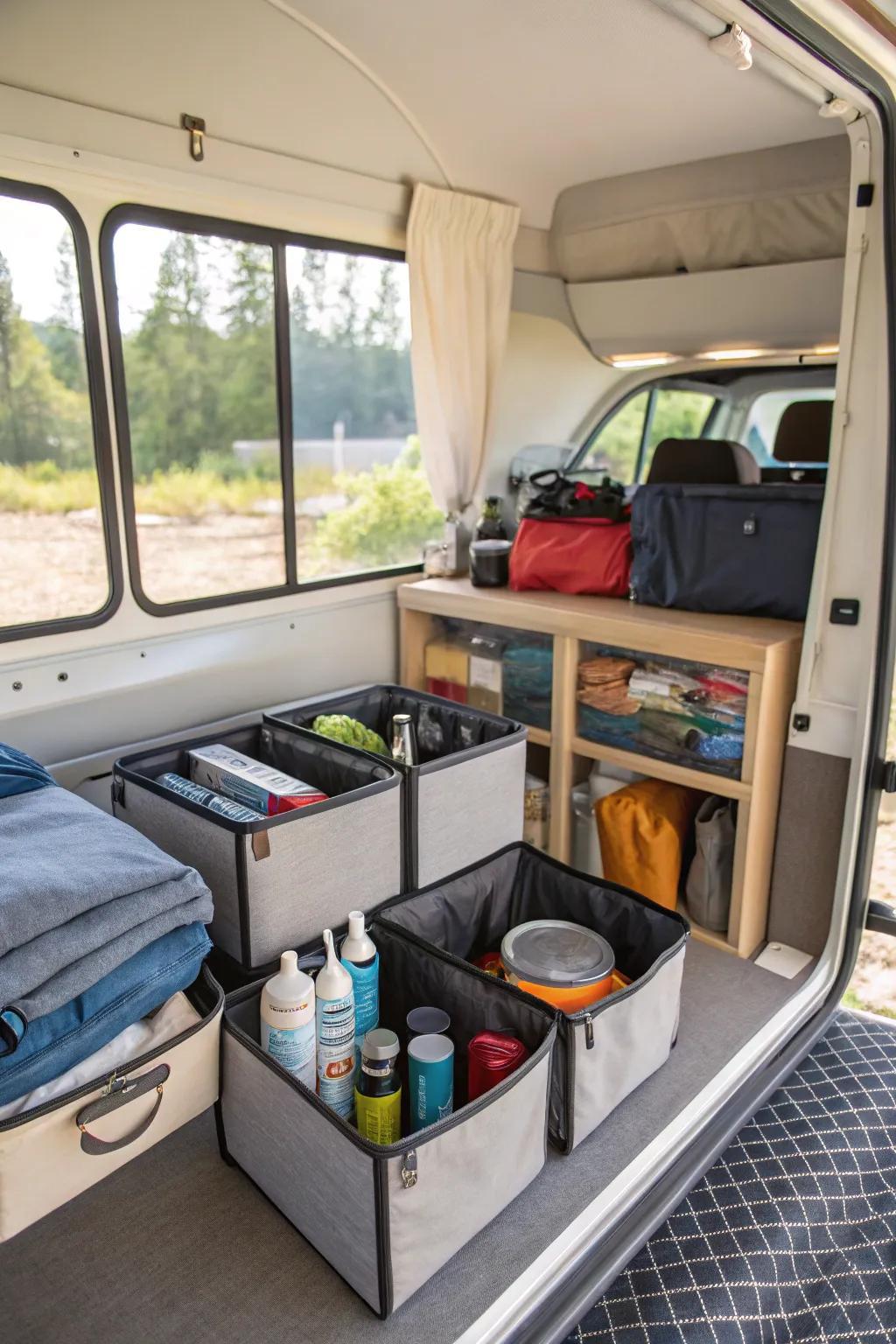
RV packing is not about filling every cabinet. It is about putting the right items where they solve recurring problems. Storage space disappears quickly, especially in smaller rigs, so every item should earn its place.
- Kitchen basics: Keep lightweight dishes, measuring tools, food storage containers, and cleaning supplies secured for travel.
- Comfort items: Add bedding, towels, weather layers, and simple organization bins.
- Daily-use supplies: Store items like gloves, flashlights, and a small tool collection where they are reachable.
The best RV gear is the gear you can find when you need it.
Dana Prescott, RV Road Notes
A common beginner mistake is buying gadgets before understanding the rig. Travel a few times first, then add what actually solves a problem.
Set Up Water, Sewer, and Power Connections
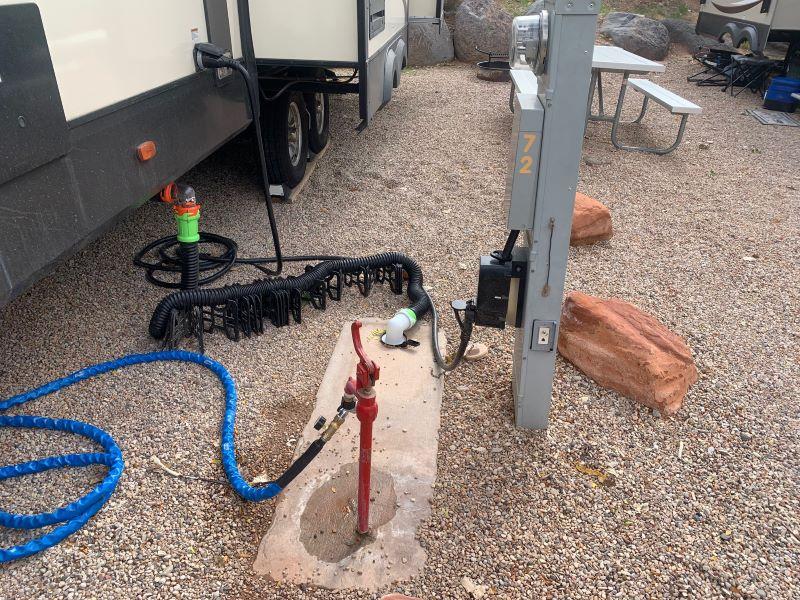
Hookups become simple once the order is understood. The goal is a clean setup that protects your equipment and follows campground rules.
- Position. Park with enough room for hoses, cords, and safe access to connections.
- Connect. Use potable-water equipment for fresh water and connect sewer equipment according to local campground requirements.
- Confirm. Check for leaks and verify that electrical connections are secure before using RV systems.
Avoid this beginner error
Never dump wastewater illegally. Use approved dump stations or campground facilities and follow local grey-water rules.
Water and sewer work rewards patience. Rushing a connection usually creates the exact mess you were trying to avoid.
Check Tires, Brakes, and Road Safety Gear
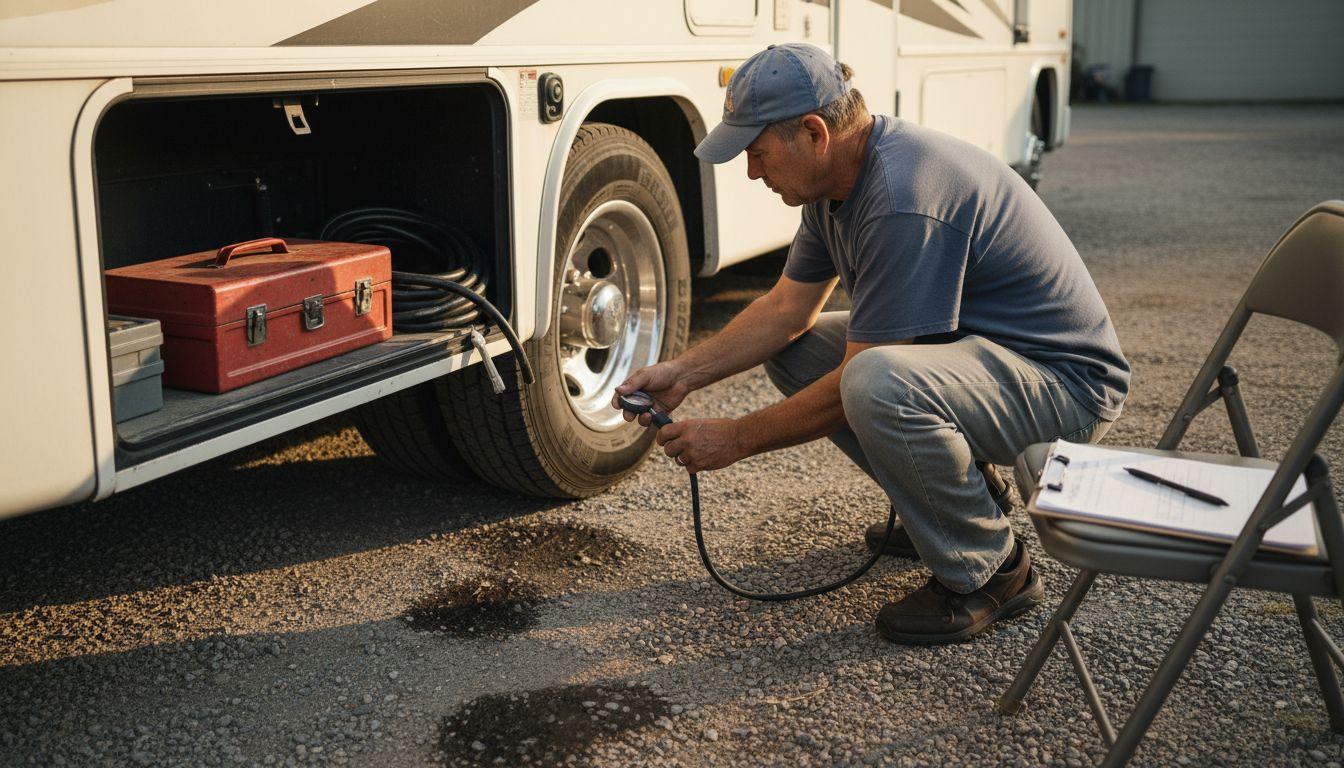
Tires are one of the most important safety checks before any RV trip. Tread alone does not tell the full story; aging rubber can fail even when it looks acceptable.
- Inspect tires for cracks, damage, and proper inflation based on load requirements.
- Confirm that tire ratings match the vehicle requirements.
- Check wheel hardware and have brake concerns handled by a qualified technician.
5–7 years
A common tire replacement timeframe to discuss with tire professionals based on condition and manufacturer guidance.
Before loading, know your vehicle limits. GVWR, GCWR, payload, and tongue weight are not suggestions. A certified scale such as a CAT scale can show whether your loaded RV stays within its ratings.
Practice Driving and Parking Your RV
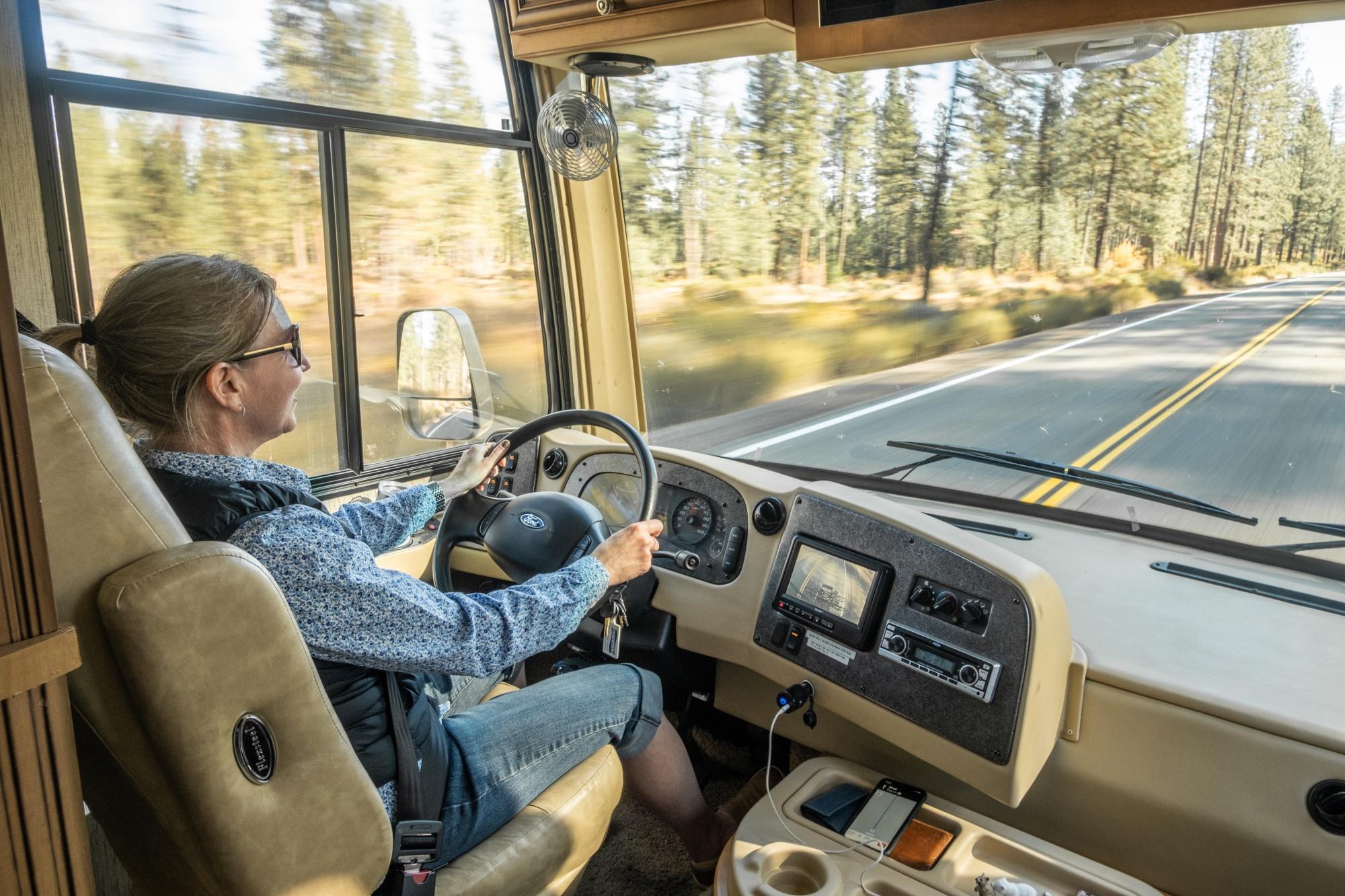
The first drive should not be the first time you learn the turning radius. RVs behave differently from cars because of height, length, weight distribution, and rear overhang.
Practice helps with
- Backing into spaces
- Wide turns
- Mirror use
Common mistakes
- Ignoring clearance height
- Turning too tightly
- Relying only on cameras
Find an empty parking area and practice slowly. A spotter and agreed hand signals are worth more than confidence alone.
Remember that every RV has limits. Low branches, narrow roads, and steep grades deserve planning before they become obstacles.
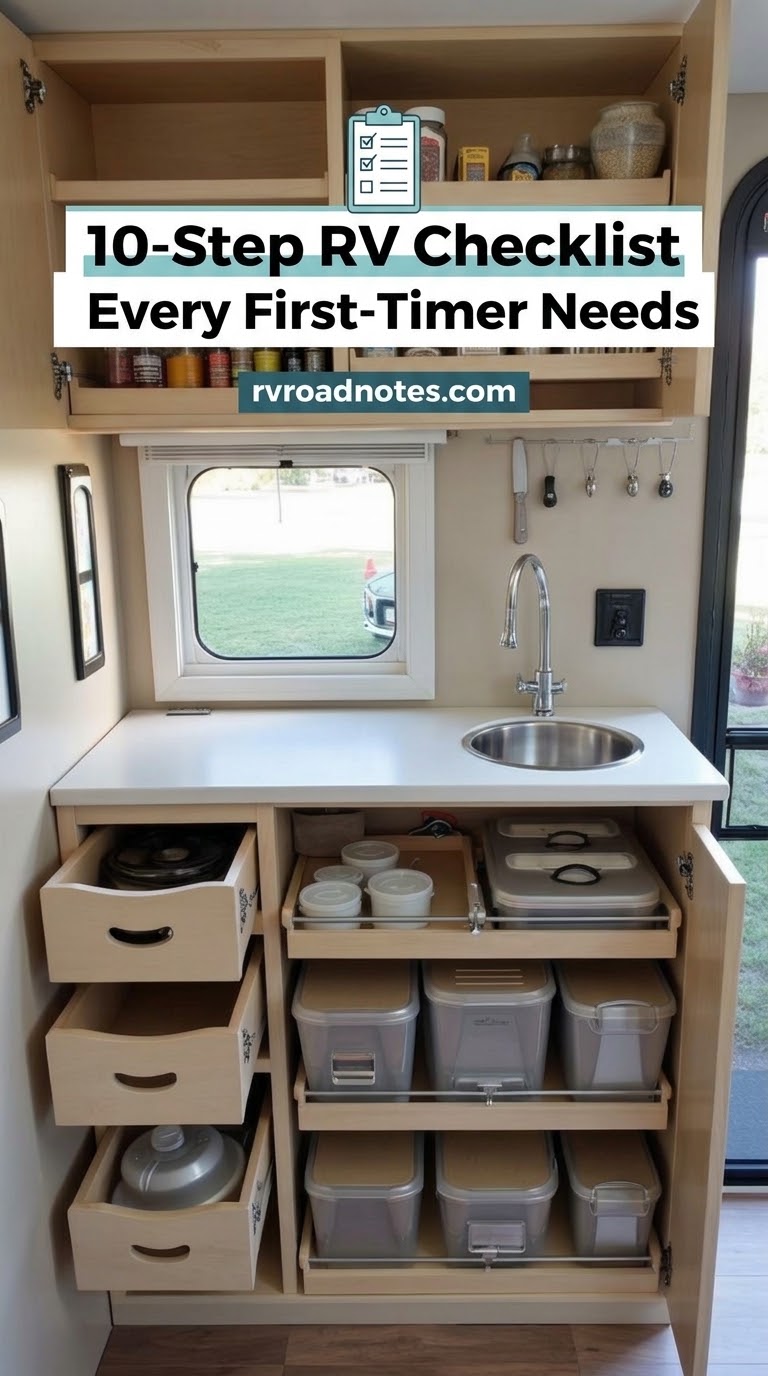
Prepare Your First RV Kitchen Setup
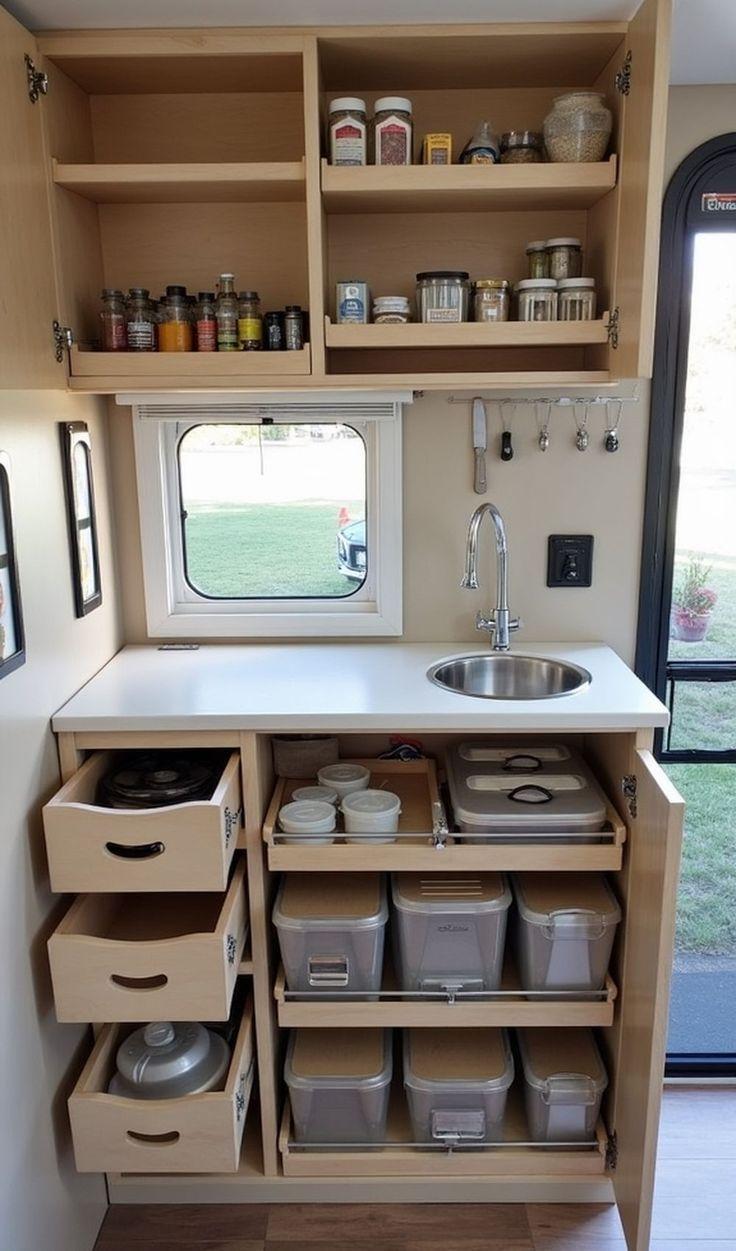
An RV kitchen works best when it is designed around movement. Cabinets, drawers, and counters must keep items secure while traveling and accessible when parked.
Build a practical galley
Choose containers that stack, secure loose items before driving, and avoid carrying more cookware than your cooking style requires. A small kitchen usually becomes easier when organization replaces excess.
Good first choices include: nesting containers, a basic knife set, cleaning supplies, and storage that prevents spills.
Simple upgrade
Use a short test trip to discover what stays useful. The best kitchen setup develops from real travel, not a shopping list.
Create an RV Maintenance Routine
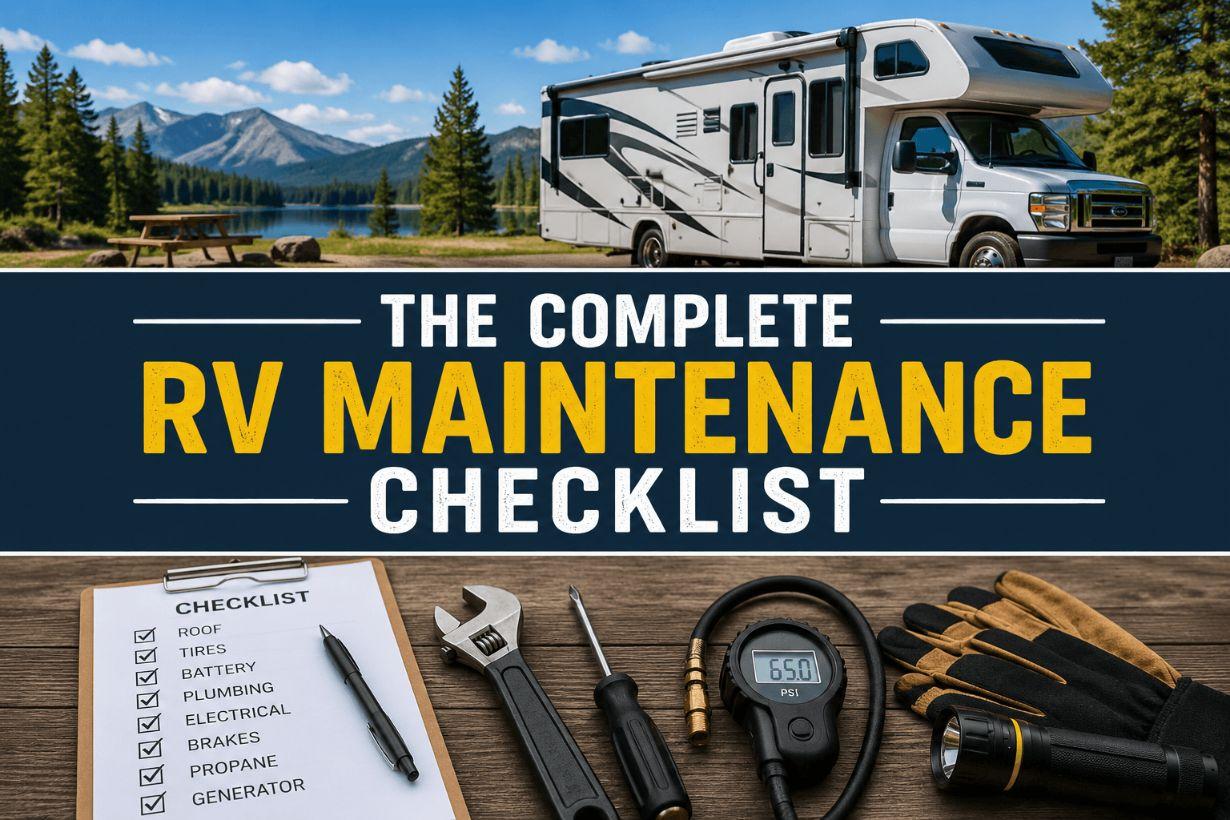
Maintenance is what keeps an RV from becoming a collection of expensive surprises. A simple schedule works better than waiting until something breaks.
- Before trips: Check fluids, tires, seals, appliances, and visible damage.
- Monthly: Inspect batteries, plumbing areas, detectors, and storage compartments.
- Seasonally: Review roof condition, winterization needs, and weather-related wear.
Some repairs are reasonable for an owner with experience. Others are not. Propane systems, LP appliances, structural repairs, and chassis brake work belong with qualified professionals.
A maintenance routine does not remove every problem. It moves problems from emergencies into manageable tasks.
Understand Campsite Setup and Departure Steps
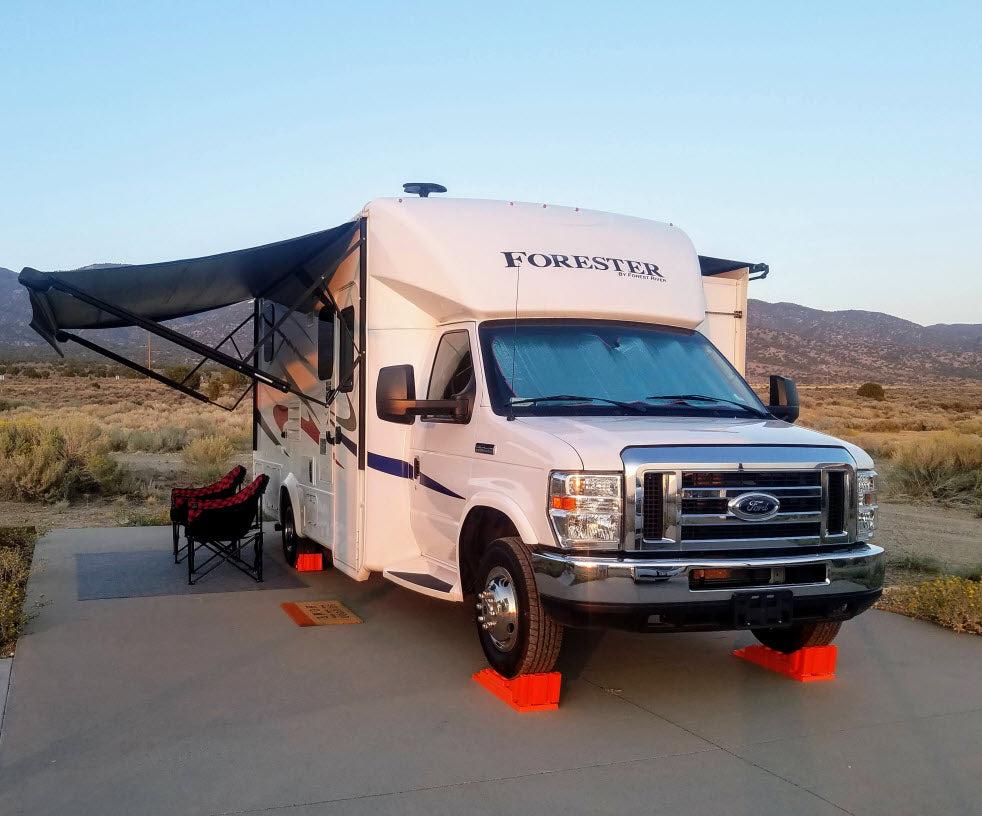
Campsite routines prevent forgotten connections, damaged equipment, and stressful departures. The setup process should be the same whether you stay one night or one month.
- Survey. Check the site for clearance, slope, hookups, and hazards before parking.
- Level. Stabilize the RV according to manufacturer instructions.
- Secure. Organize hoses, cords, and outdoor items so they are ready for departure.
- Walk around. Complete a final exterior check before driving away.
For dispersed camping, follow the rules of the managing agency, use existing sites when required, respect stay limits, and leave no trace.
Build an Emergency and Repair Kit
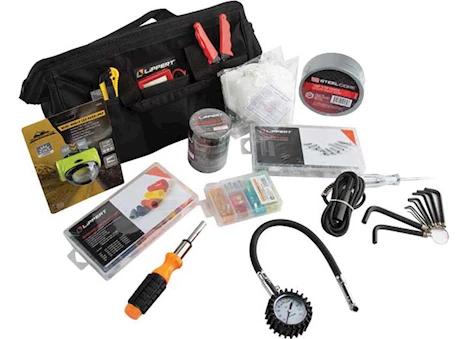
A repair kit is not meant to turn every owner into a mechanic. It is meant to handle small problems until proper help is available.
- Carry basic hand tools appropriate for your RV.
- Keep electrical connectors, tape, gloves, and emergency supplies organized.
- Include a tire pressure gauge, flashlight, and safety equipment.
- Keep important manuals and contact information accessible.
Know your boundary
Emergency supplies are for temporary solutions. Safety-critical repairs involving brakes, propane, or structural damage require qualified service.
The best first-time RV owner checklist ends with preparation, not worry. A well-understood RV gives you more freedom because you know what to watch.
A first RV trip becomes much more enjoyable when preparation replaces guesswork. Learn the systems, respect the limits, and build habits that make every departure easier.



Frequently Asked Questions
What should a first time RV owner check before leaving home?
Inspect tires, fluids, seals, safety detectors, electrical systems, water systems, and storage areas before every major trip.
Should new RV owners do their own repairs?
Owners can handle many basic checks and organization tasks, but propane systems, structural repairs, chassis brakes, and other safety-critical work should go to qualified professionals.
What is the most important RV safety habit?
Know your RV limits, complete inspections consistently, and never ignore signs of tire, electrical, propane, or brake problems.