

Living or traveling in an RV with a cat means making every bit of interior space work harder. A traditional floor-standing cat tree can take up valuable room, interfere with walkways, or become a problem when it's time to travel. Fortunately, there are better ways to give a cat room to climb, scratch, stretch, and rest without sacrificing the practical parts of the RV.
I've gathered 11 RV cat tree ideas that range from wall-mounted climbing systems to portable designs and custom wooden furniture. Some are better suited to motorhomes, while others work nicely in travel trailers and camper vans. The important details are stability, accessible climbing routes, sensible placement, and a way to secure everything before driving.
What makes a good RV cat tree?
- Uses vertical space instead of valuable floor area.
- Provides stable platforms and comfortable resting spots.
- Includes scratching surfaces suited to the individual cat.
- Can be secured or safely removed before travel.
- Doesn't block windows, exits, ventilation, or essential RV access.
Wall-Mounted Cat Tree for Space-Saving RV Living
A wall-mounted cat tree is one of the most practical ways to add climbing space without filling an already crowded RV floor. Instead of a large tower, I would use individual wall-mounted shelves arranged in a gradual climbing route. A small resting platform at the top, a lower step, and a scratching panel can provide several useful activities in a relatively small footprint.
For a motorhome or travel trailer, the difficult part is not arranging the shelves. It's finding a suitable structural attachment point. RV walls can contain thin paneling, insulation, wiring, and other components that aren't designed to carry a jumping animal. Identify the wall construction and locate appropriate structural backing before drilling. If the mounting point or wall construction is uncertain, have an RV professional assess it. Adhesive strips alone are not a suitable substitute for a properly engineered mechanical attachment. 【】【】
My practical tip
Keep the shelves close enough together for comfortable movement, with a clear route down. Avoid placing a landing platform above the stove, sink, or an entry step.For travel days, removable platforms or a design with dedicated locking hardware make maintenance easier. The goal is a secure climbing wall that doesn't become loose equipment when the RV moves.
Window-Mounted Cat Tree with a Scenic View
A window perch can become the most frequently used part of an RV cat tree. Cats benefit from elevated resting places and opportunities to observe their surroundings, and a window offers a changing view without taking up much floor space. I particularly like the idea of combining a window-facing resting platform with a small scratching surface or step below it. 【】【】
There are two common approaches. A suction-cup window perch attaches directly to suitable glass, while a shelf mounted beside the window provides a more permanent arrangement. Suction-cup models are convenient, but they need regular inspection. The Ontario SPCA specifically recommends checking the suction attachment because its seal can weaken over time. 【】
Don't rely on suction cups without inspections
Follow the manufacturer's weight limit, inspect every attachment before use, and remove the perch for travel. Never assume a suction-mounted platform will remain secure while an RV is moving.Also consider sunlight and temperature. A sunny window can become uncomfortably hot, especially when the RV is parked. Provide shade and a cooler alternative resting place. A comfortable window seat should be optional, not the only place where the cat can relax.
Slim Vertical Cat Tree for Small RV Interiors
Some RV interiors have enough height for a cat tree but very little spare floor space. A slim vertical model makes better use of that arrangement. Look for a narrow base, staggered platforms, and a compact sleeping cubby rather than a wide tower with several oversized shelves. The idea is to build upward while keeping the walking area clear.
I'd compare the tree's footprint with the actual available space, including the room needed for the cat to turn, jump, and descend. A narrow climbing tower should not obstruct cabinet doors, bathroom access, emergency exits, or slide-out movement. It also needs a stable base that won't rock when the cat climbs. Vertical enrichment is useful, but the layout should suit the individual animal's mobility and confidence. 【】【】
| Feature | What to look for |
|---|---|
| Base | Wide enough for stable support |
| Platforms | Non-slip and comfortably sized |
| Height | Suitable for the available interior clearance |
| Access | Easy climbing and descending |
| Travel setup | Removable or positively secured components |
For smaller camper vans, a compact vertical design is often more useful than a conventional multi-level tower. Measure first rather than trusting the product photograph.
Built-In Sisal Scratching Post and Climbing Station
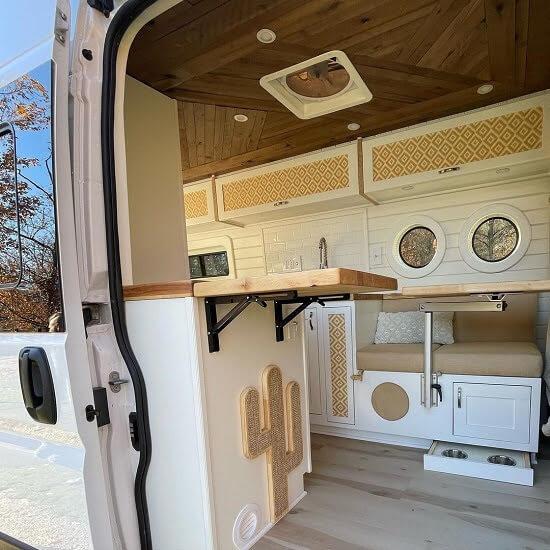
A scratching post and climbing station can serve two purposes without requiring separate pieces of furniture. A vertical post wrapped in sisal rope can support normal scratching behavior, while a small platform above it provides a place to rest. This is a particularly sensible option when the available floor area is limited.
Scratching isn't simply a way for cats to sharpen their claws. It also provides stretching and scent-marking opportunities. Veterinary guidance recommends choosing a scratching surface that matches the cat's preferences and is stable enough not to wobble during use. Vertical sisal scratching surfaces are popular, but some cats prefer horizontal cardboard or other textures. 【】【】
For an RV installation, I'd position the scratching station near an existing resting area or a place where the cat already spends time. This increases the chance that the new surface will actually be used. A post hidden behind storage bins is unlikely to be particularly attractive.
Choose the surface before building
Watch what your cat scratches at home. If it prefers carpet, cardboard, or horizontal surfaces, a vertical sisal post may not be the right solution.A good combined scratching and climbing station should have a sturdy base, securely attached rope, and enough clearance for a full-body stretch. Avoid loose fibers and exposed fasteners that could catch claws.
Cozy Hammock-Style Cat Tree for RV Corners
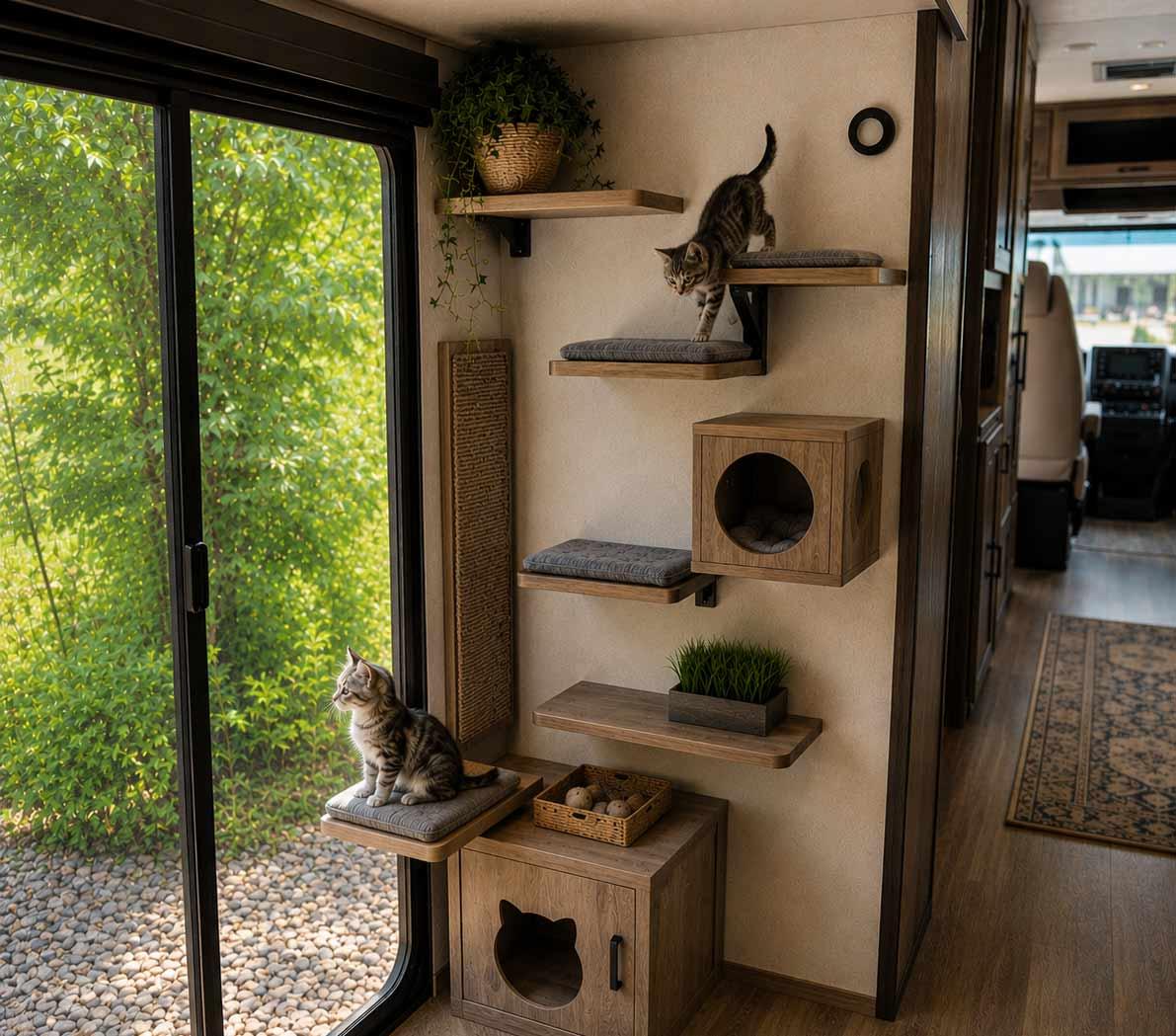
An RV corner is often a useful place for a hammock-style cat tree because it makes use of an area that might otherwise remain empty. A fabric hammock can create a comfortable resting surface while a lower step provides access. The enclosed or dipped shape also gives some cats a greater sense of shelter.
Feline environmental guidelines describe elevated perches with hammock-style depressions as useful resting arrangements. The platform should still be large enough for the cat to stretch and settle comfortably. A properly sized hammock is more important than adding several decorative levels. 【】
For a corner installation, check the surrounding furniture and wall construction before deciding how to support the frame. A hammock that hangs from lightweight decorative trim is not a reliable climbing structure. The fabric should be washable, firmly attached, and free of loose cords.
Advantages
- Uses otherwise awkward corner space.
- Provides a soft resting surface.
- Can be relatively lightweight.
- Works with a small climbing step.
Limitations
- Requires reliable structural support.
- Fabric needs regular cleaning.
- May not suit cats that dislike unstable surfaces.
- Must be secured or removed before travel.
My preference would be a low hammock platform with an easy step-up rather than a high suspended bed. It offers the resting benefit without making access unnecessarily difficult.
Multi-Functional Cat Tree with Integrated Storage
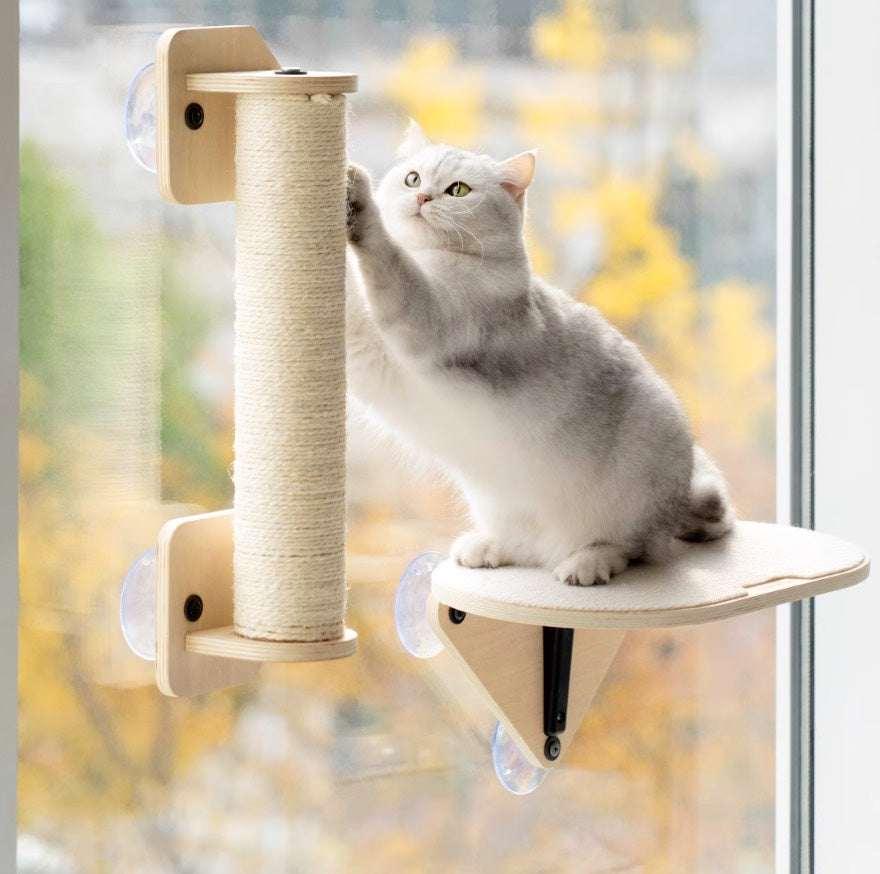
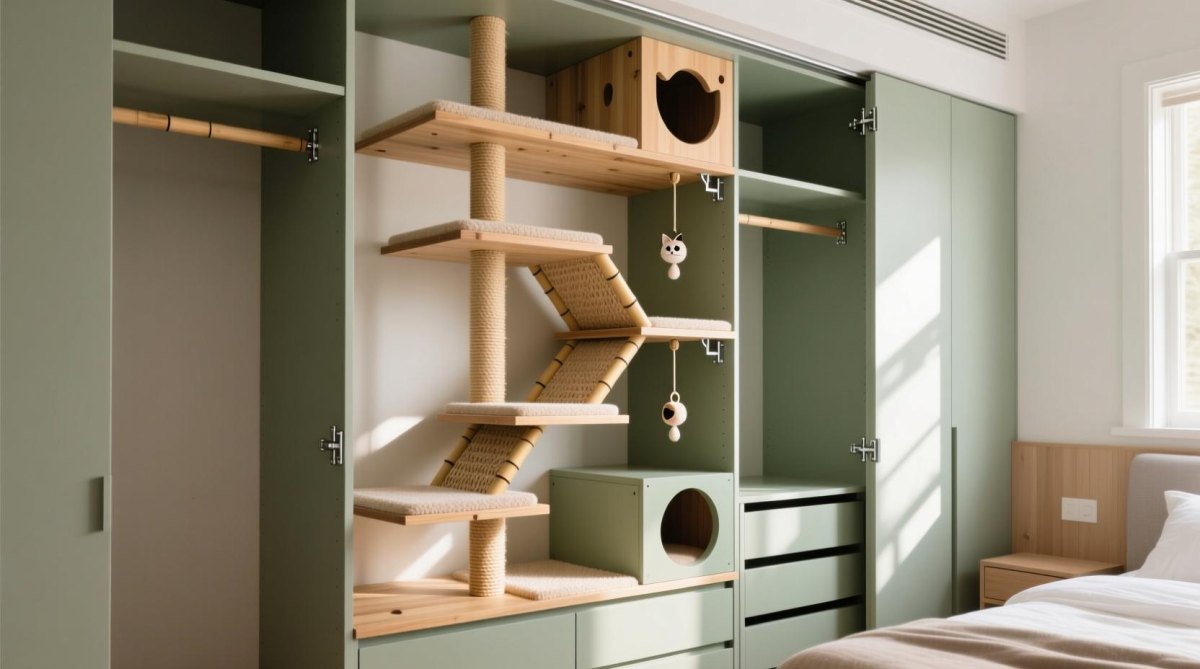
When storage space is limited, a cat tree that doubles as a cabinet or organizer can make good use of the same footprint. Think of a compact wooden unit with a lower enclosed compartment, a scratching panel on one side, and a padded perch on top. The lower section might hold toys, grooming supplies, or small accessories.
This arrangement is especially useful in a travel trailer or motorhome where separate pet furniture quickly competes with everyday storage. The important distinction is between storage furniture and a safe cat enclosure. The compartment should not become a place where the cat can accidentally become trapped, and it should not be used for storing chemicals, cleaning products, or other hazardous materials.
Environmental guidance emphasizes providing separate areas for resting, scratching, feeding, and toileting rather than forcing every activity into one location. A multifunctional tree should therefore supplement the cat's environment, not replace its other essential resources. 【】
- Lower compartment: Store lightweight toys and washable bedding.
- Side panel: Attach a replaceable scratching surface.
- Upper platform: Provide a padded, washable resting area.
- Storage doors: Use secure latches that remain closed during travel.
- Outer frame: Keep edges smooth and hardware inaccessible to curious paws.
I'd keep heavier stored items low and avoid overloading the unit. A cat-friendly storage cabinet is useful only when it remains stable and doesn't interfere with the RV's normal operation.
Multi-Level Cat Tree for Active Cats
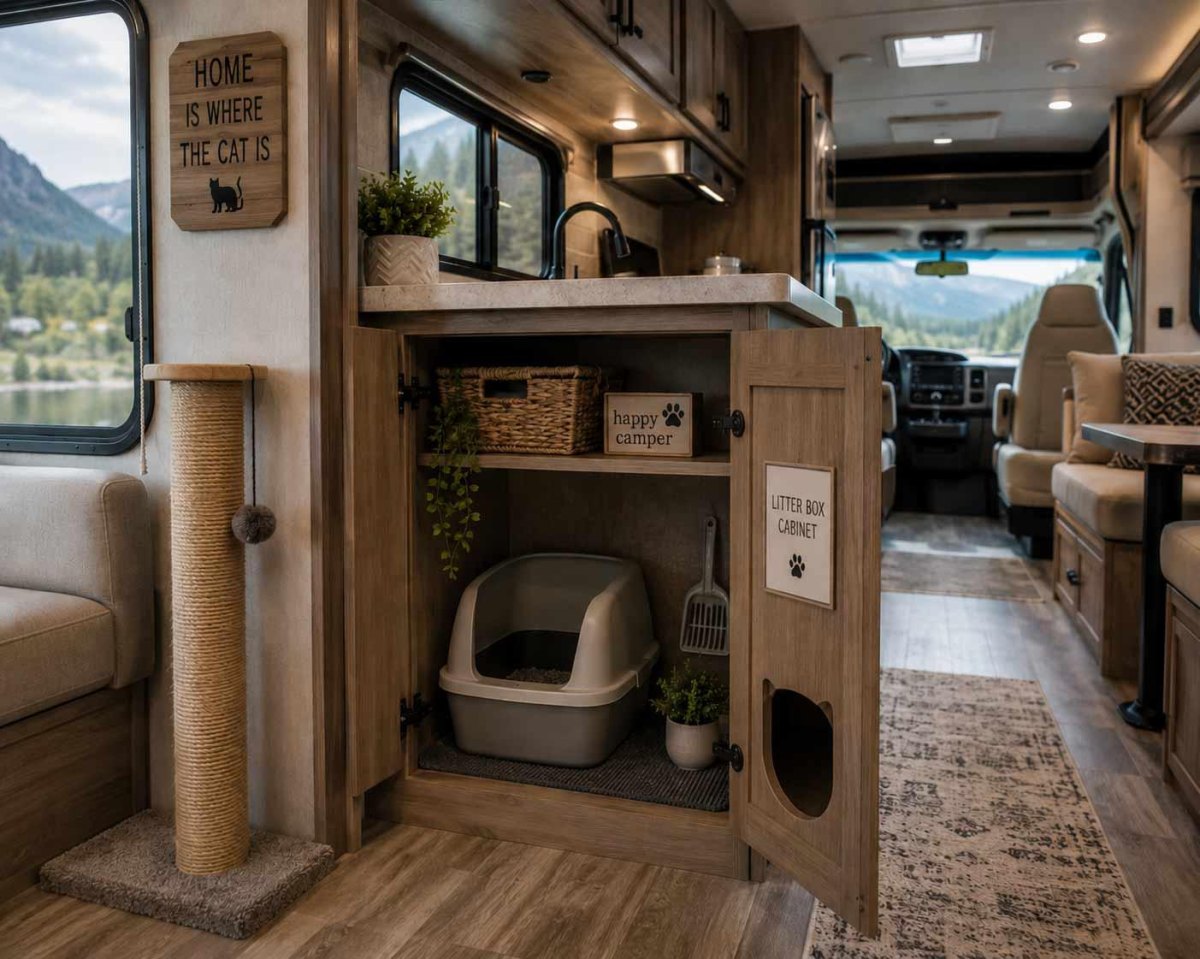
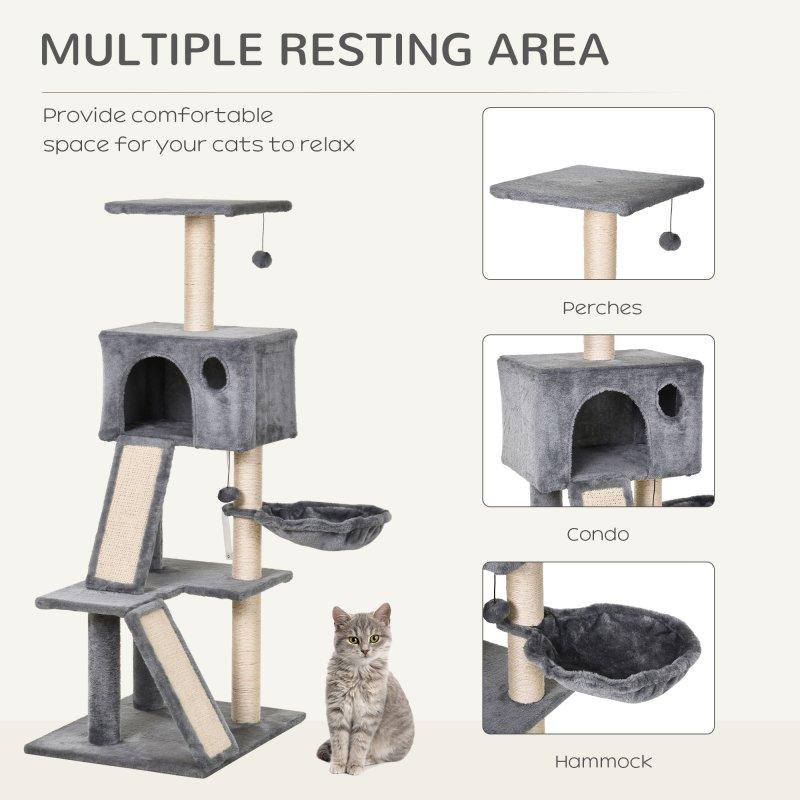
For a cat that enjoys climbing and exploring, a multi-level cat tree can provide a useful activity area inside an RV. The design doesn't have to be enormous. Two or three well-positioned platforms, a small hiding compartment, and a scratching section can offer plenty of variety in a compact arrangement.
Vertical structures allow cats to climb, observe their surroundings, and rest at different heights. Veterinary literature on feline environmental enrichment identifies shelves, climbing poles, and cat trees as useful ways to increase opportunities for normal behavior. 【】
Platform spacing deserves more attention than the number of levels. A cat should be able to move between surfaces without making an awkward leap over a narrow aisle or landing on a slippery edge. For kittens, senior cats, or animals with limited mobility, shorter climbing intervals and broader steps are generally more practical than steep jumps.
- Platforms provide enough room to turn around.
- Every level has a stable, non-slip surface.
- The cat can descend without a difficult jump.
- Resting and hiding spots are included.
- The structure does not obstruct doors or walkways.
- The entire assembly has a travel-securing plan.
A multi-level climbing tree should encourage movement without forcing it. The cat needs to be able to choose when to climb, where to rest, and how to get back down.
Foldable and Portable Cat Tree for Travel
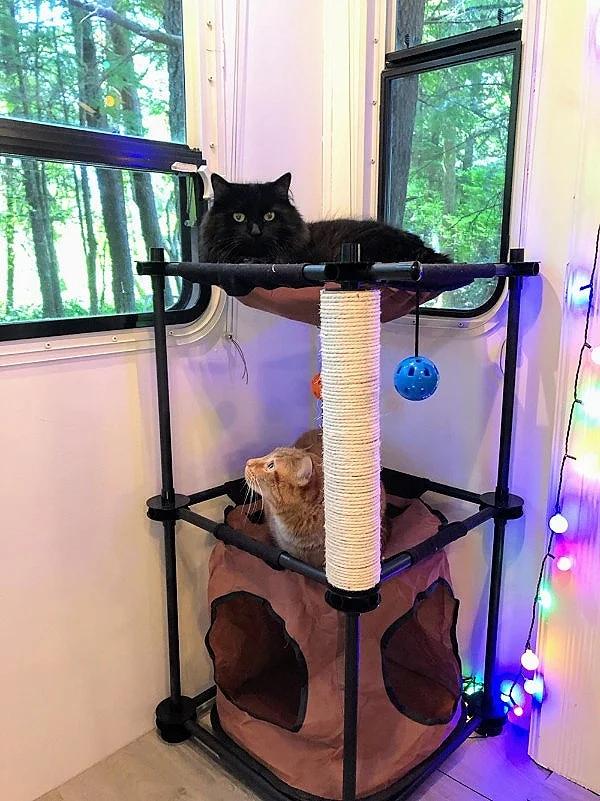
A foldable cat tree is worth considering if the RV layout changes frequently or the cat furniture needs to be stored during travel. Portable designs can include collapsible fabric tunnels, folding platforms, lightweight scratching panels, and removable sleeping areas. They are particularly useful when a permanent installation isn't practical.
There is one important distinction: portable does not mean travel-ready. A lightweight cat tree may be convenient at a campsite, but it should not be left loose inside an occupied vehicle while driving. Even a relatively small object can become a hazard when the RV brakes suddenly or changes direction.
For a travel setup, I'd choose a design that folds without exposing sharp hinges, loose screws, or pinch points. Removable cushions and washable covers are useful because campsite dust and pet hair accumulate quickly. Check the manufacturer's assembly instructions each time the unit is reopened.
Secure the cat separately during travel
A portable cat tree is furniture, not a vehicle restraint. Transport the cat in an appropriately secured carrier, and store the folded tree so it cannot slide or fall.RV furniture guidance also recommends securing movable items with suitable tie-downs or locking arrangements rather than relying only on friction. 【】
The best foldable RV cat tree is easy to assemble at camp, comfortable for the cat, and simple to secure when the vehicle is moving.
Floor-to-Ceiling Tension Pole Cat Tree
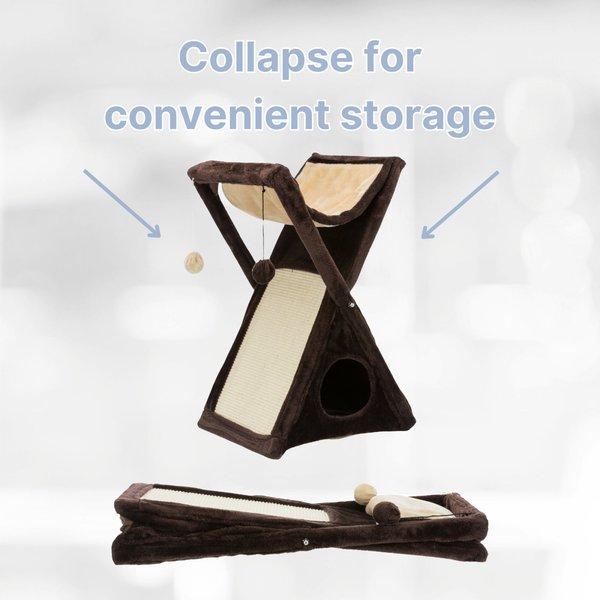
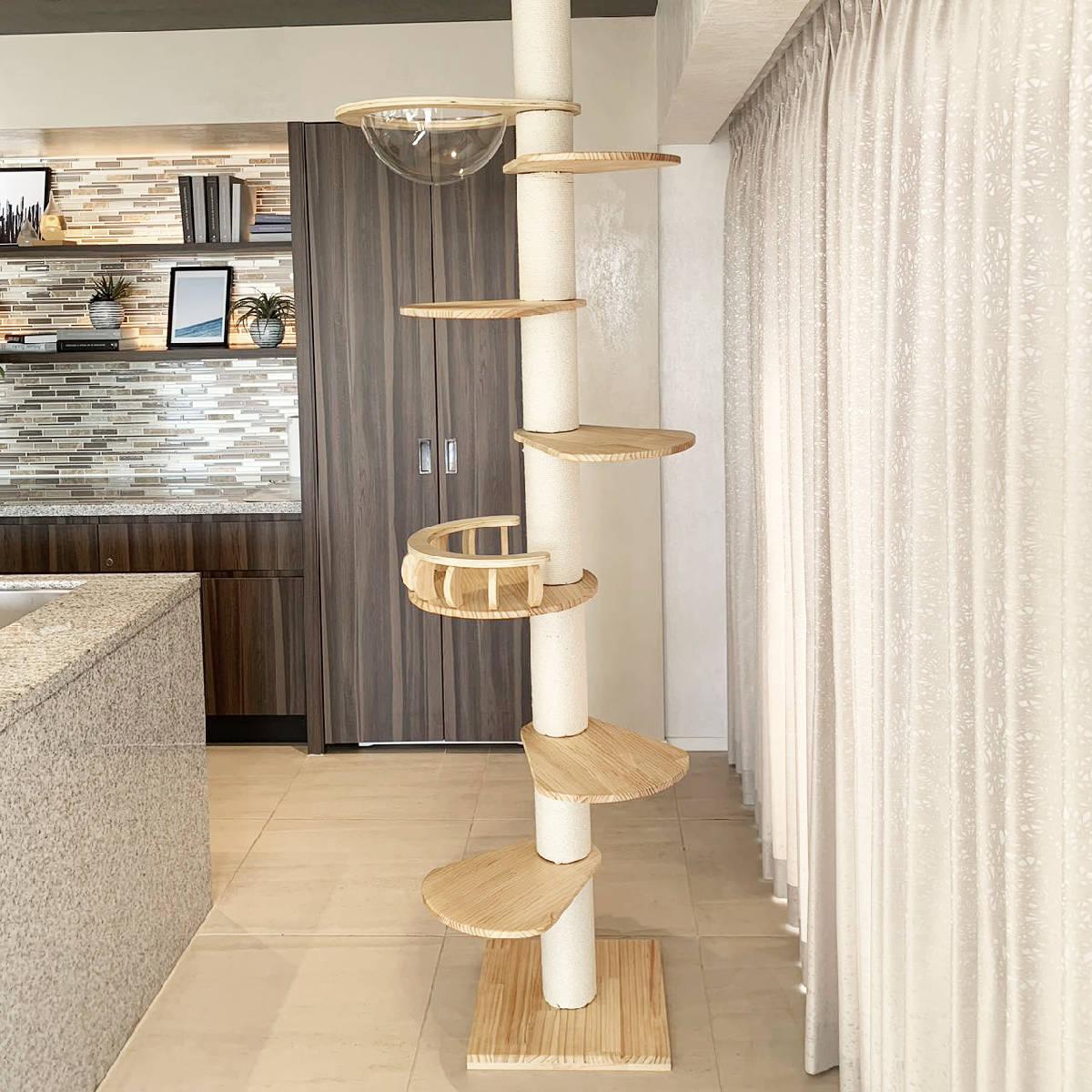
A floor-to-ceiling tension pole can provide climbing space without requiring several separate wall shelves. The vertical post is held between the floor and ceiling, with platforms or small resting baskets attached at different heights. In a suitable interior, this can be an efficient way to use unused vertical space.
However, RV ceilings and floors are not automatically suitable for a tension-mounted structure. Interior finishes, ceiling panels, trim, and flooring may not tolerate concentrated pressure. A pole that is secure in a conventional house may loosen or damage an RV interior. Check the mounting surfaces and the product's installation limits before considering this design.
VCA's guidance on creating vertical space for cats includes floor-to-ceiling climbing posts as one possible enrichment feature. That doesn't mean every RV can safely accommodate one. 【】
Avoid overtightening the pole
Excessive pressure can damage ceiling panels or flooring. Follow the manufacturer's specified installation method, and do not use a tension pole if the available surfaces cannot support it.For a suitable installation, choose broad, non-slip contact pads and inspect the pole regularly for movement. Remove or positively secure the structure before travel according to its manufacturer's instructions. A tension-mounted climbing tower is a good space-saving option only when the RV structure and installation method are compatible.
DIY Wooden Cat Tree with Custom RV Shelving
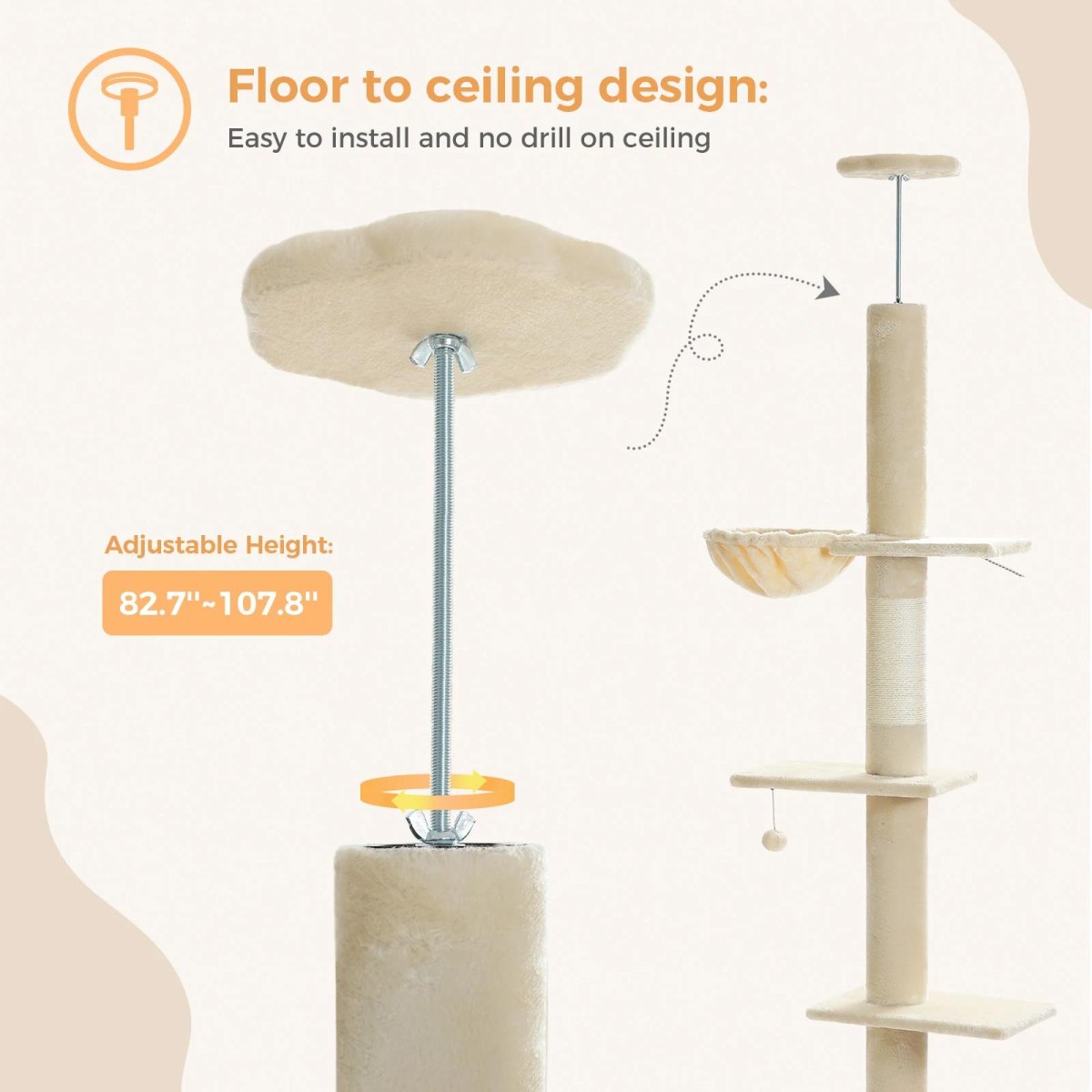
A DIY wooden cat tree offers the most flexibility when standard pet furniture doesn't fit the RV interior. You can build a narrow climbing unit, match the existing cabinetry, or create a short series of platforms around an unused corner. Plywood is a common choice for custom furniture because it can be cut into practical shapes and finished to suit the interior.
I'd start with a simple layout rather than a complicated climbing wall. Sketch the available space, mark cabinet doors and service access, and plan the platforms around the cat's natural movement. Rounded platform edges, non-slip coverings, and replaceable scratching panels make the finished structure easier to maintain.
The attachment method needs careful consideration. An RV's interior wall may be a sandwich construction rather than a conventional framed residential wall. Never assume a decorative panel or thin plywood lining can carry a climbing animal. Identify structural backing, check for wiring and plumbing, and have uncertain mounting points assessed by a qualified RV professional. General furniture-anchor guidance also emphasizes fastening to appropriate structural support rather than relying on weak wall surfaces. 【】【】
- Measure. Record the available floor area, ceiling clearance, and nearby access points.
- Plan. Draw the platforms, resting area, scratching surface, and route down.
- Select materials. Choose smooth, durable wood and washable, non-slip coverings.
- Build the unit. Use suitable fasteners and finish all exposed edges carefully.
- Assess the installation. Confirm that the RV structure can safely support the attachment method.
- Test at ground level. Check stability before allowing the cat to climb.
DIY is a good way to achieve a custom-fit RV cat tree, but structural modifications are not a place to guess. If the wall or ceiling attachment is uncertain, hire the appropriate professional.
Secure Freestanding Cat Tree for a Traveling RV
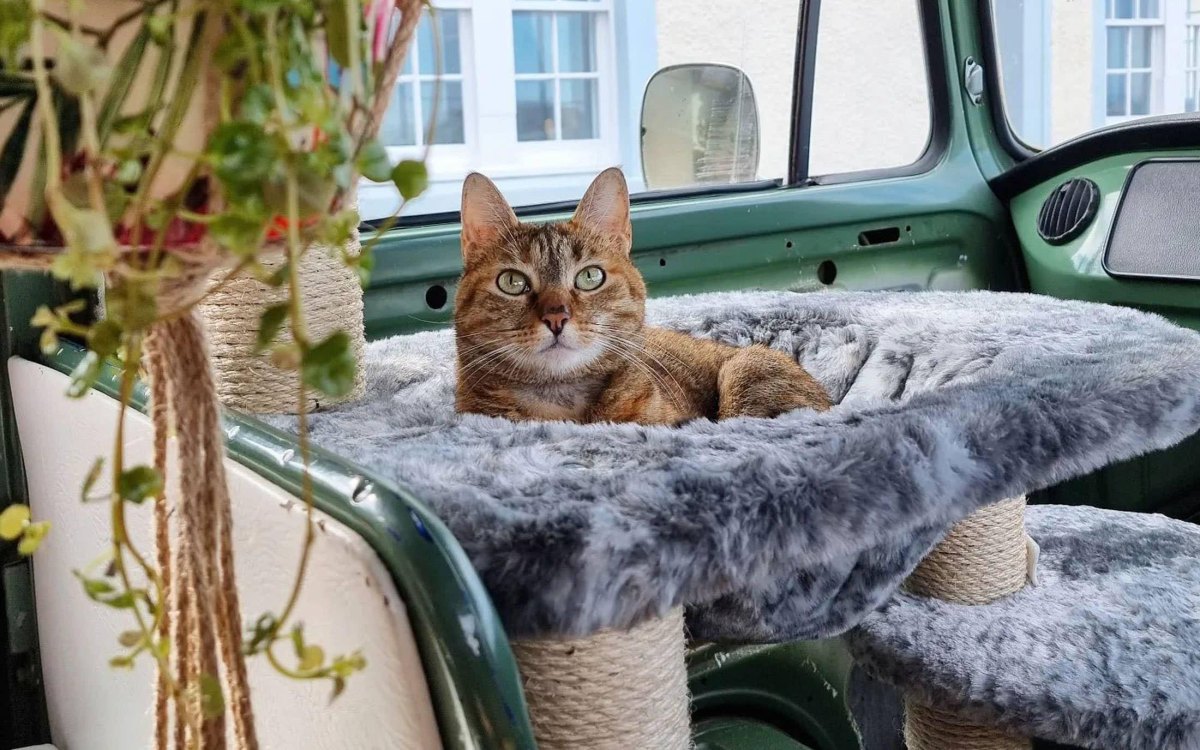
A freestanding cat tree is the simplest option for anyone who doesn't want to modify RV walls or ceilings. It can be positioned beside a window, near a seating area, or in an unused corner. The main advantage is flexibility: the tree can be moved, replaced, or removed without building a permanent installation.
The trade-off is stability. A standard household cat tree may have been designed for a stationary floor, not the changing movement and vibration of a vehicle. Look for a broad base, solid construction, and platforms that don't wobble when pressure is applied. A stable base is essential even when the RV is parked because an active cat can pull strongly on a scratching post. 【】【】
For travel, the tree needs a positive securing arrangement or should be removed and stored. Suitable restraints must attach to appropriate structural points and hold the unit against movement. Non-slip pads can help prevent sliding while parked, but they are not a substitute for proper travel restraints. RV furniture guidance recommends tie-down systems and other suitable securing methods for movable furnishings. 【】
| RV cat tree type | Best use | Main consideration |
|---|---|---|
| Wall-mounted | Permanent vertical space | Structural attachment |
| Window perch | Watching outdoor activity | Attachment inspection |
| Slim vertical | Very small interiors | Base stability |
| Hammock | Comfortable corner resting | Secure support |
| Foldable | Temporary campsite setup | Travel storage |
| Freestanding | Flexible positioning | Positive restraint |
Before choosing a model, check the complete travel-day arrangement. The tree should not block an emergency exit, obstruct access to essential equipment, or interfere with a slide-out. The cat also needs a separate, appropriately secured travel carrier. Secure the furniture and the animal independently; one cannot replace the other.
For most RV owners, the right choice comes down to the available space, the cat's mobility, and how much permanent installation is practical. A modest, stable tree that gets used every day is a better investment than an elaborate climbing tower that has to be dismantled whenever the RV moves.
More Pinterest Visuals



 RV Maintenance & Care17 Essential RV Winter Storage Tips to Prevent Cold-Weather Damage
 Camping Gear & Planning15 RV Must-Haves for Beginners to Camp Safely and Comfortably
 Camping Recipes18 Easy RV Camping Snacks Ideas for Road Trips and Campfire Nights
 RV Pet Travel14 Practical RV Cat Travel Tips for a Safe and Comfortable Road Trip