
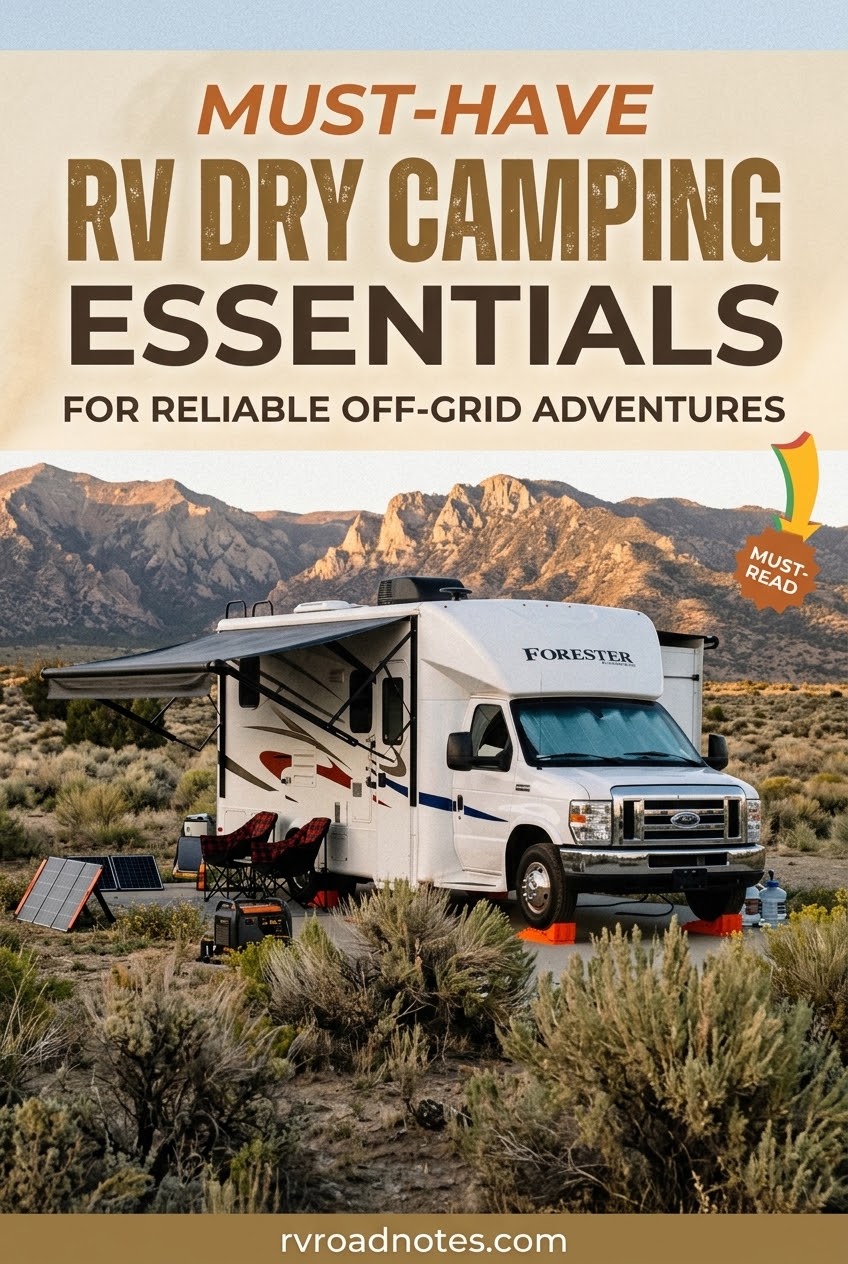
Dry camping rewards preparation more than extra gear. After years of boondocking, I have learned that the essentials are the systems that keep power, water, and safety predictable when services are miles away.
This guide covers the equipment that earns space in an RV because it solves real problems: keeping batteries charged, protecting water supplies, cooking efficiently, and staying comfortable without hookups.
What matters most for dry camping
- Reliable energy storage and charging
- Safe water handling and conservation
- Emergency planning and campsite basics
Solar Power Setup for Off-Grid Energy
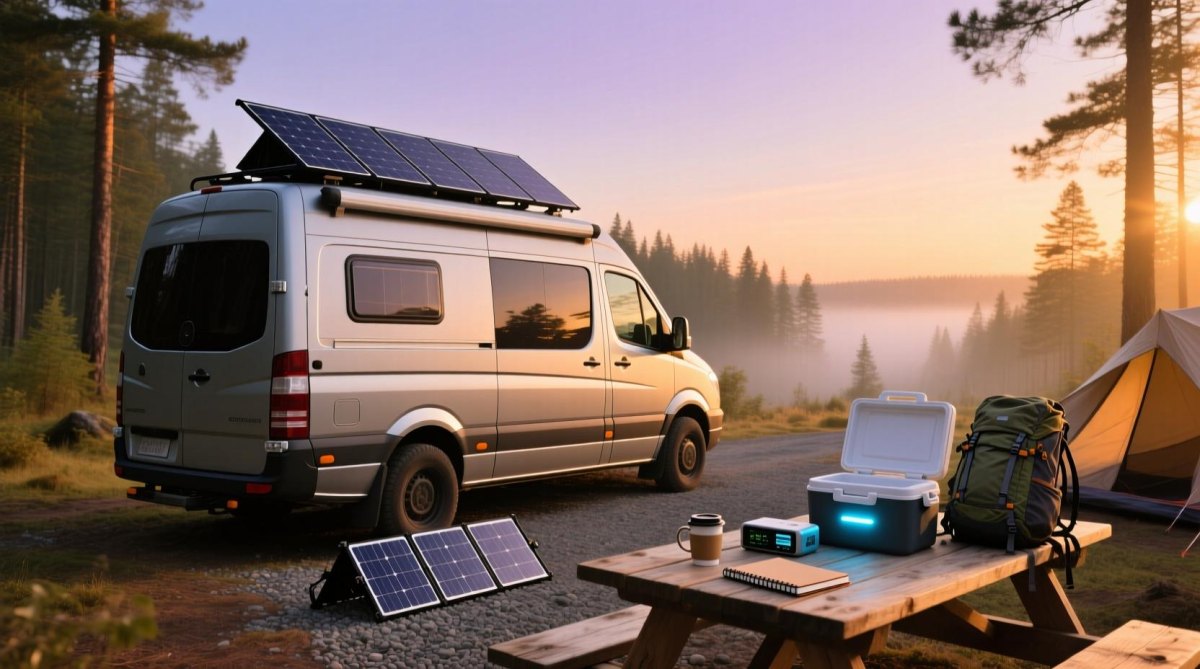
A good solar setup starts with realistic power needs. Lights, phones, water pumps, and refrigeration are very different loads from air conditioning or electric heating. A small system can work well when paired with careful energy habits.
Solar availability depends on weather, season, shade, and location. Public land camping also requires following local rules and protecting the places where we stay. The Bureau of Land Management manages public lands under a multiple-use mission, which includes recreation and conservation.
Fresh Water Storage and Conservation Gear
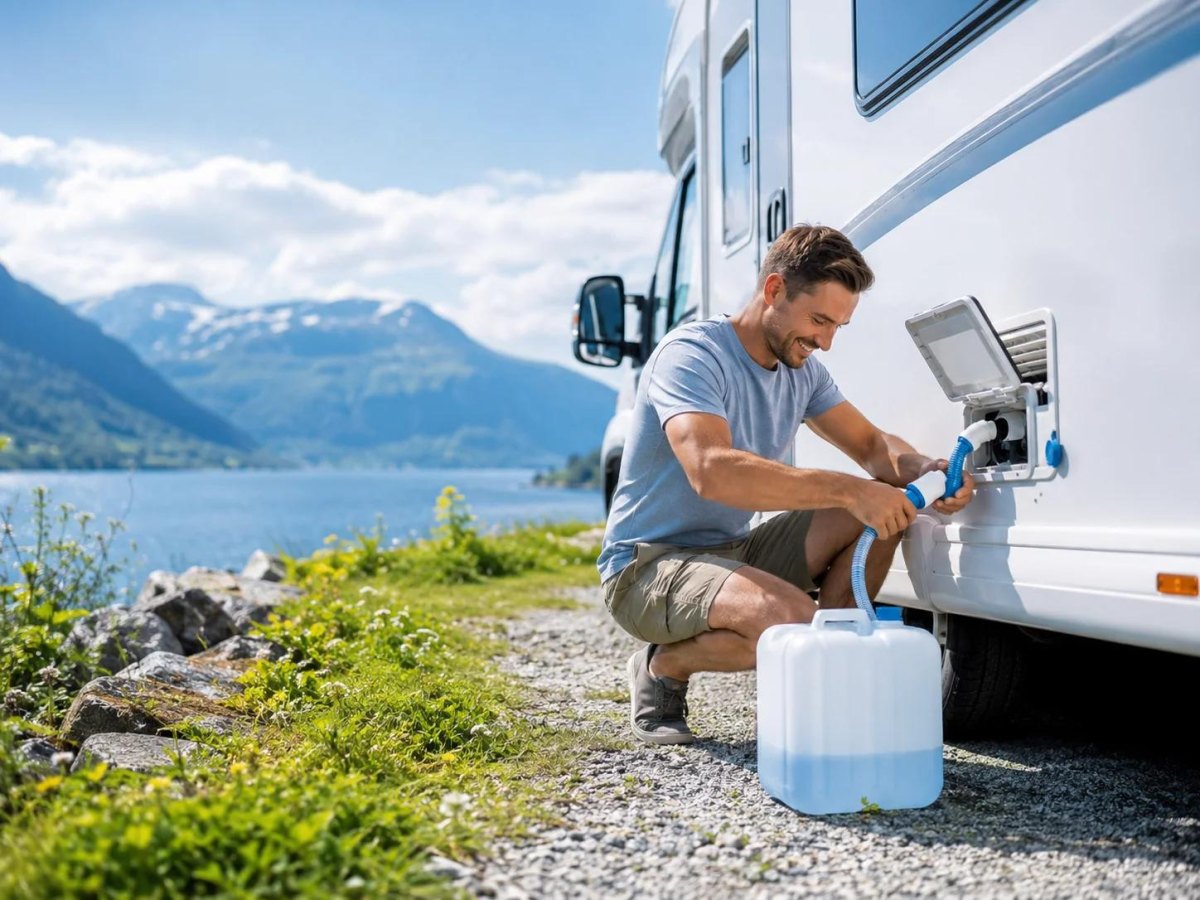
Water is usually the limiting resource before anything else. A dry camping setup needs a clean source, safe storage, and a plan for reducing waste. The CDC recommends filling RV tanks with safe drinking water sources and keeping water systems clean.
- Fresh tank: Carry enough potable water for your trip length and conditions.
- Filters: Replace them according to manufacturer guidance rather than guessing.
- Conservation tools: Low-flow habits save more water than most gadgets.
A water container is useful, but a water plan is the real dry camping essential. Natural sources should be treated before drinking.
Battery Banks and Power Management Tools
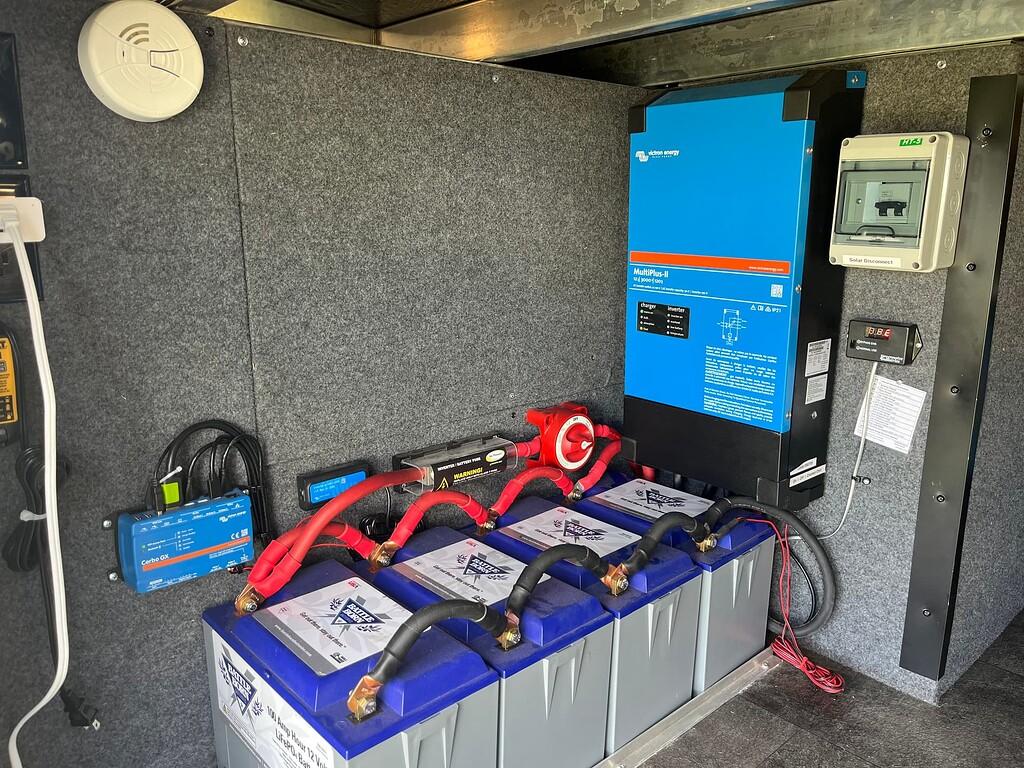
Solar makes energy; batteries store it. The battery bank is what carries an RV through cloudy days and high-use evenings. I look at batteries as a reserve system, not permission to use unlimited electricity.
| Equipment | Purpose |
|---|---|
| Battery monitor | Tracks actual energy use |
| Inverter | Provides AC power when needed |
| Portable power station | Adds flexible backup capacity |
The right setup depends on the RV and electrical demands. Power management prevents unnecessary battery stress and unpleasant surprises.
Portable Cooking Equipment and Food Supplies
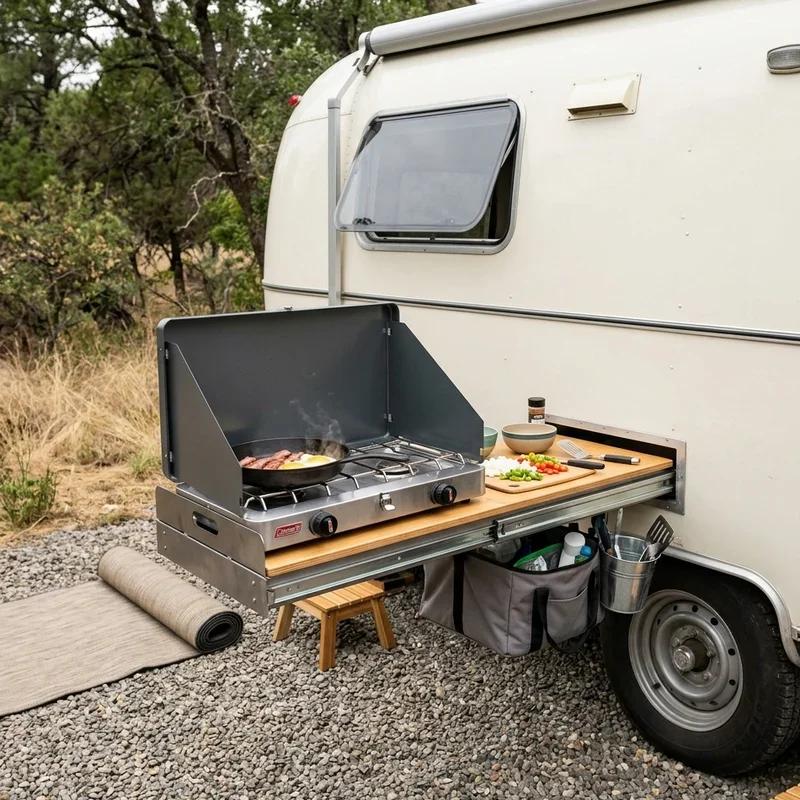
Dry camping cooking works best when meals match the available resources. A compact stove, practical cookware, and shelf-stable ingredients reduce dependence on large appliances.
Useful cooking items
- Portable stove or approved RV cooking setup
- Reusable cookware and storage containers
- Efficient meal ingredients
Common mistakes
- Packing too much food without a plan
- Ignoring water used for cleanup
- Overloading electrical appliances
Never use a cooktop, oven, or unvented heater as a substitute for cabin heat. Cooking and heating decisions affect carbon monoxide safety.
Waste Management and Sanitation Essentials
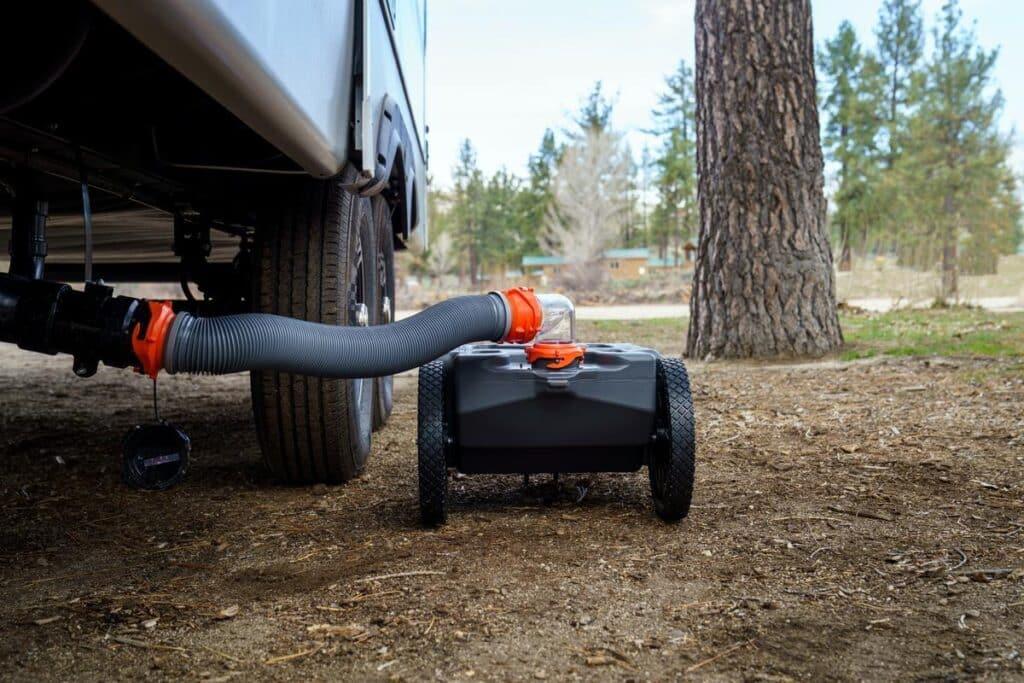
Waste handling is part of responsible boondocking. A portable toilet, proper storage equipment, and knowledge of local rules make remote stays easier and protect the places we visit.
Avoid illegal dumping
Wastewater and human waste must be handled according to local regulations. Public land guidance emphasizes packing out waste and protecting natural areas.
Good sanitation gear is not glamorous, but it is one of the most important systems in a remote campsite.
Navigation, Communication, and Safety Equipment
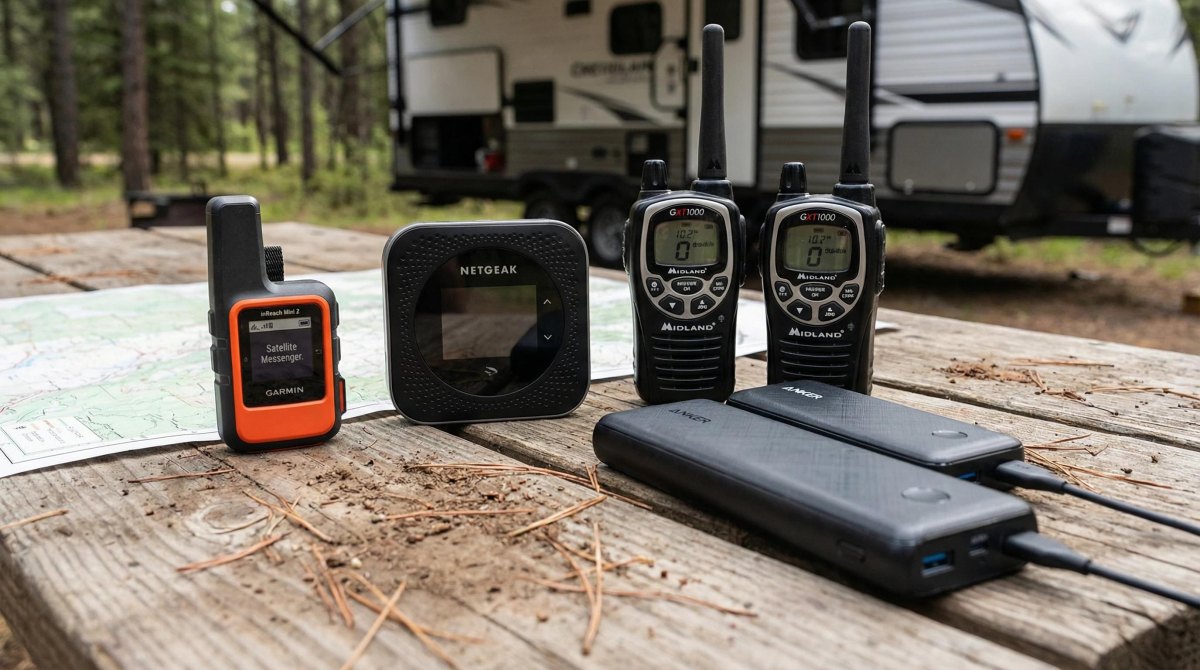
Remote camping changes the risk calculation. Maps, offline navigation, weather information, and emergency communication tools should work even when a phone signal does not.
Emergency beacons and satellite communication can provide another layer of safety beyond normal cellular service. Federal safety resources highlight the role of emergency distress communication systems.
Leveling Gear and Campsite Comfort Items
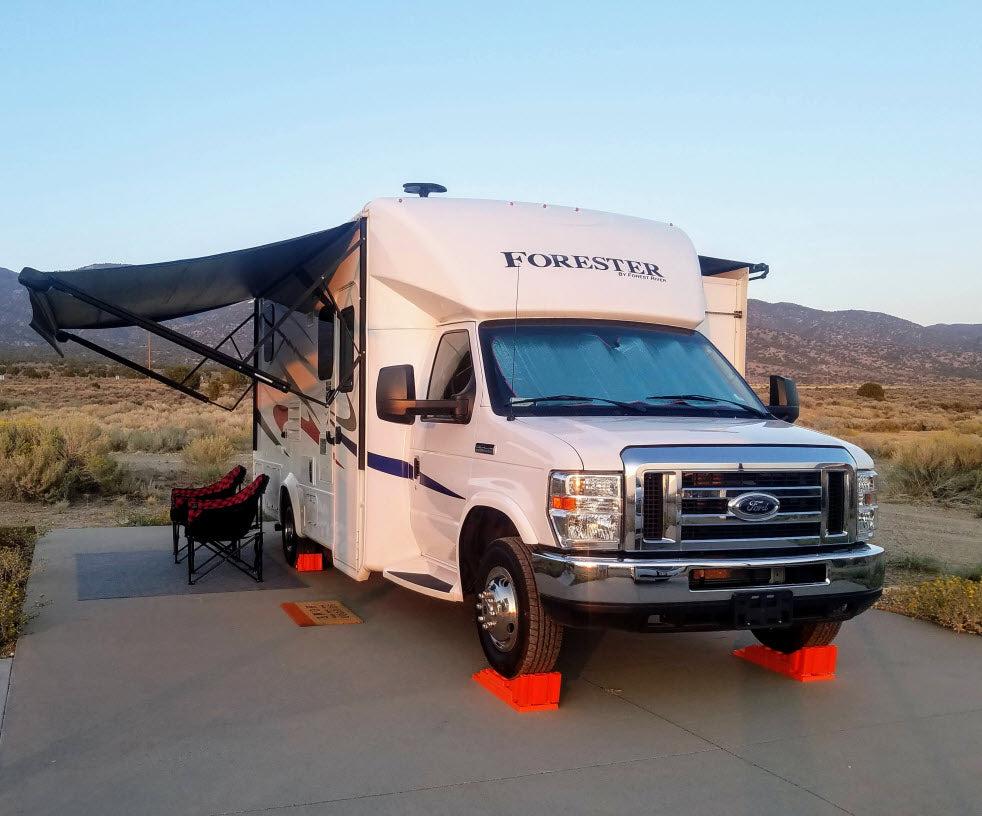
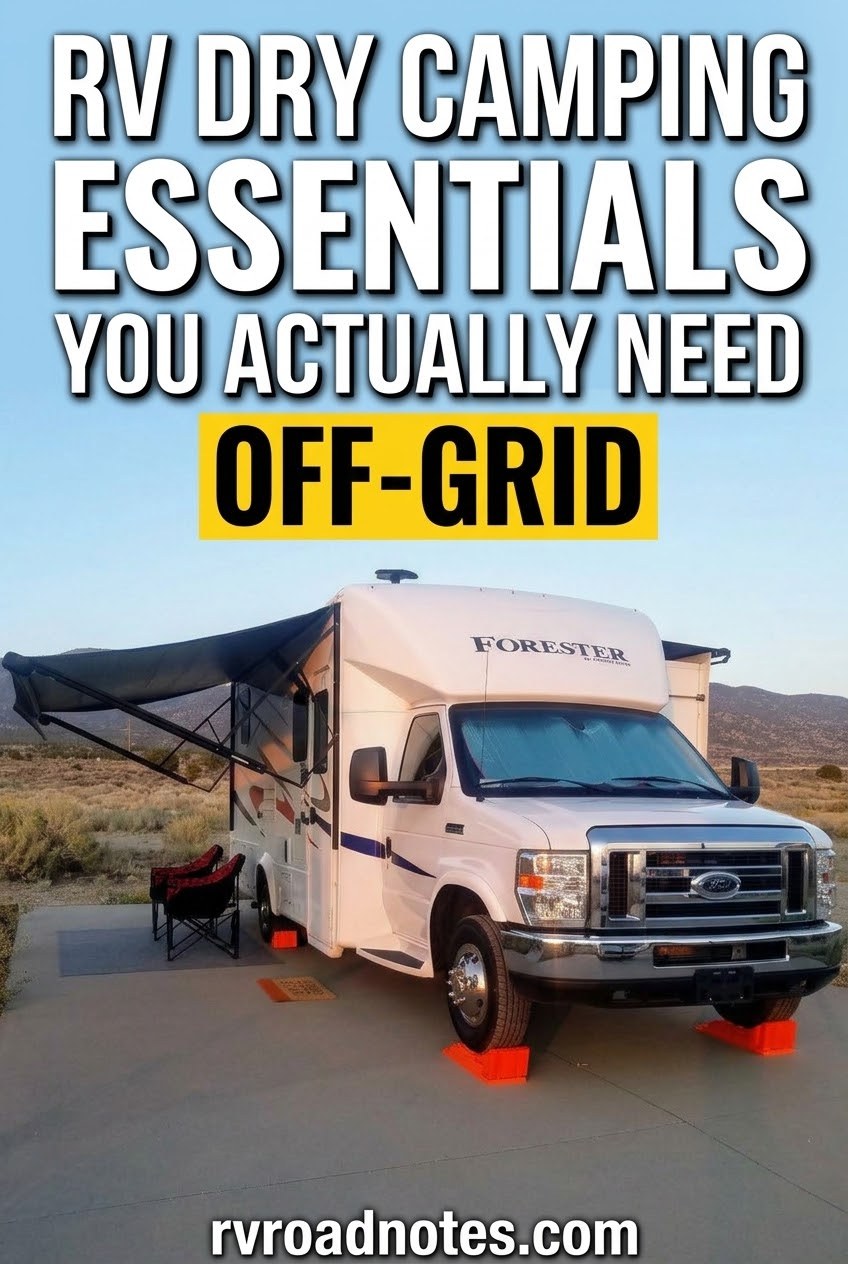
A comfortable campsite starts with practical setup gear. Leveling blocks, wheel chocks, outdoor lighting, and durable seating make daily routines easier after parking.
- Leveling blocks: Improve appliance operation and interior comfort.
- Chocks: Add stability when parked.
- Outdoor setup: Creates usable living space without draining RV systems.
Choose gear that earns its storage space. The best camp comfort equipment reduces friction without adding unnecessary weight.
Small upgrade tip
Practice your setup routine at home before relying on it in a remote campsite.

More Pinterest Visuals



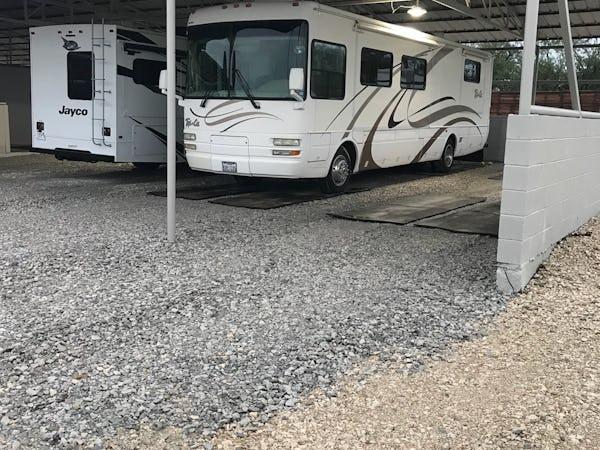 RV Maintenance & Care17 Essential RV Winter Storage Tips to Prevent Cold-Weather Damage
 RV Pet Travel11 RV Cat Tree Ideas That Make Small Spaces More Cat-Friendly
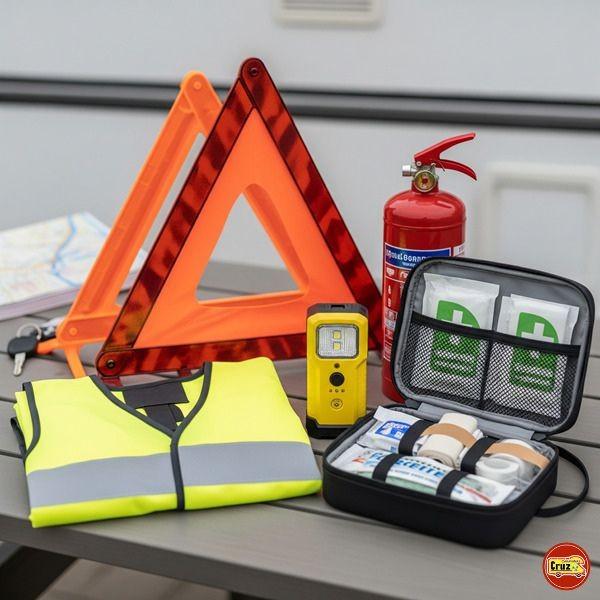 Camping Gear & Planning15 RV Must-Haves for Beginners to Camp Safely and Comfortably
 Camping Recipes18 Easy RV Camping Snacks Ideas for Road Trips and Campfire Nights