

Rain does not have to ruin an RV trip, but it does expose the weak points in a rig and a camping plan. After years of wet-weather travel, I have found that the best rainy days are the ones prepared for before the first drops hit.
This guide covers the practical details that matter most: preventing leaks, choosing safer campsites, protecting your interior, and knowing when rain changes from inconvenient to unsafe.
Check the Weather Before Your RV Trip

A rainy RV trip starts with a reliable forecast, not a last-minute scramble. I check expected rainfall, wind, temperature swings, and possible severe weather before choosing a route or campsite because conditions can change quickly.
Use weather information to adjust your timing and avoid arriving at an unfamiliar campsite during poor visibility. A few minutes of planning can prevent parking problems later.
Rain planning basics
- Check hourly forecasts near your destination.
- Look for wind warnings and flood risks.
- Keep a backup overnight location.
Inspect Your RV Roof and Seals Before Rain
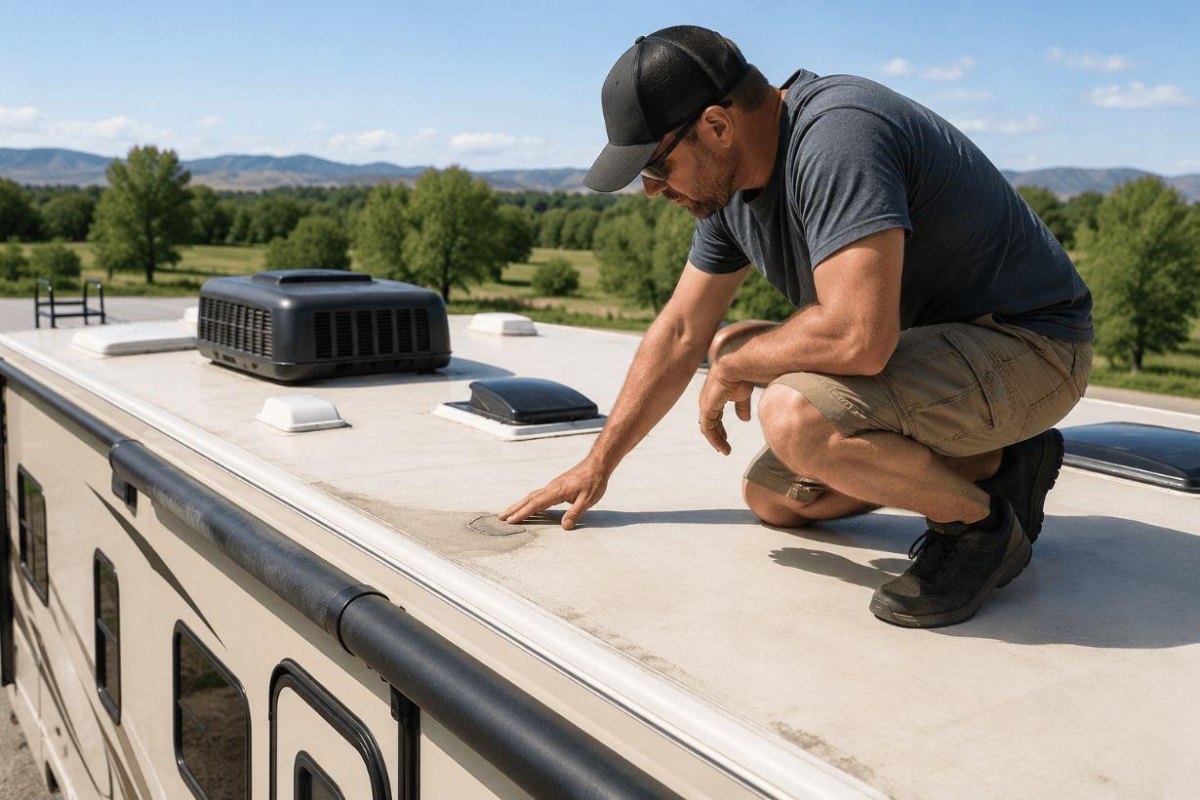
Water usually finds the smallest weak point first, which makes roof and seal inspections one of the most valuable rainy-season habits. Check roof edges, vents, windows, and exterior seams before a storm arrives.
I pay attention to cracked or lifting sealant rather than waiting for a ceiling stain. Small repairs are easier before water enters walls, insulation, or cabinets.
Maintenance tip
Inspect exterior seals regularly and follow the sealant manufacturer's instructions for compatible materials.
Pack Waterproof Gear for Wet Camping Days
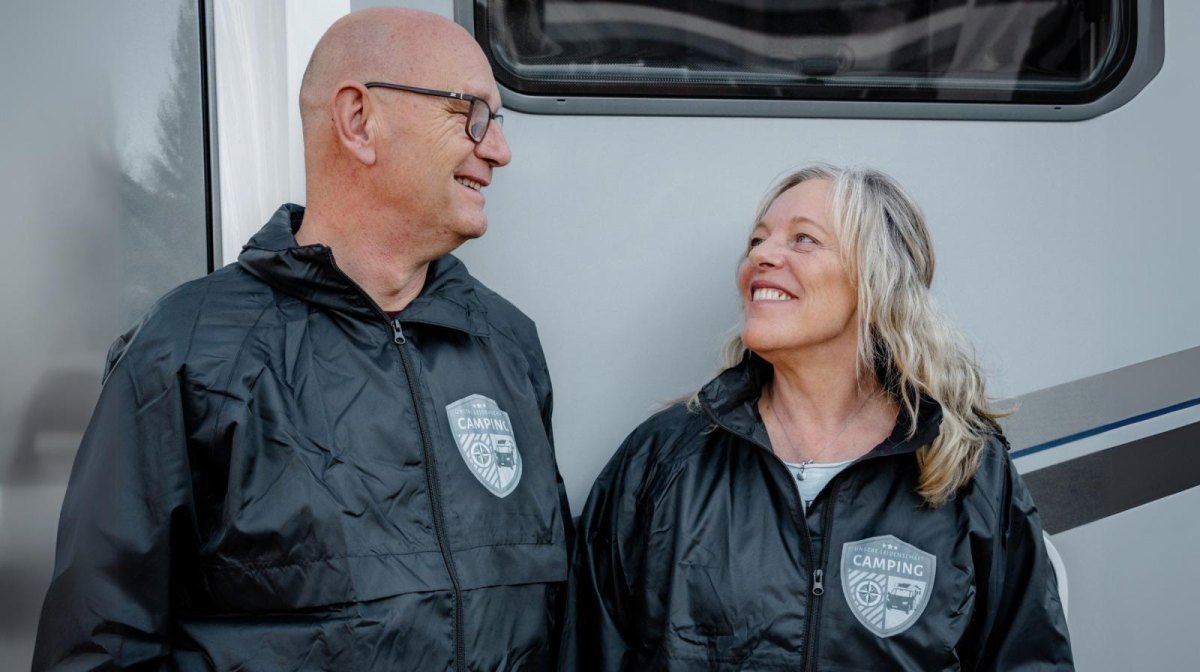
Rainy camping becomes much easier with the right waterproof camping gear already packed. A good setup includes waterproof footwear, rain jackets, quick-dry towels, and storage bags for wet items.
I prefer simple gear that earns its space because RV storage disappears quickly. The goal is keeping water outside instead of carrying it indoors all day.
- Rain jacket and waterproof shoes
- Absorbent towels near the entry
- Waterproof storage containers
- Extra dry clothing layers
Choose a Safe RV Campsite During Rain
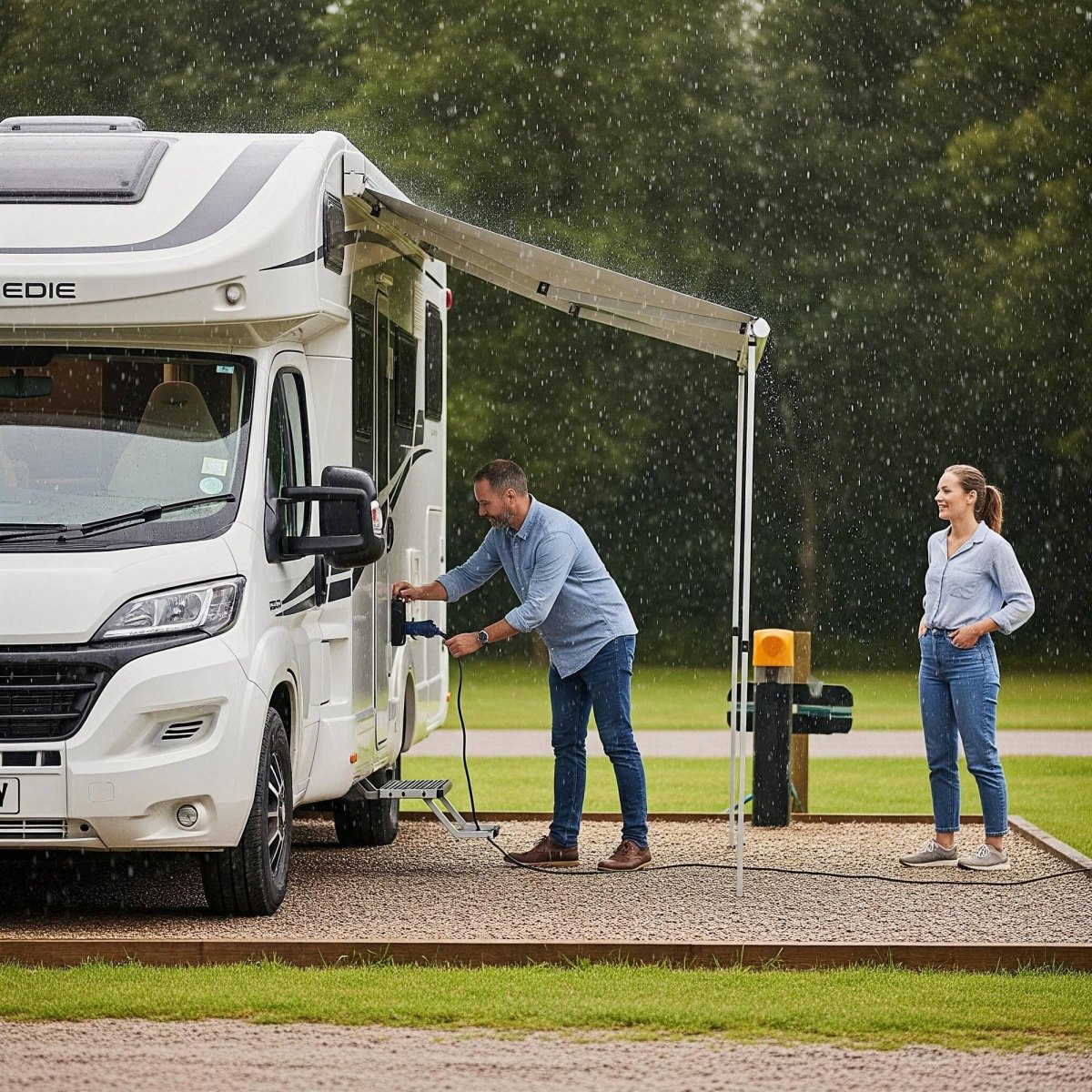
A campsite that works in dry weather may become a poor choice after heavy rain. I look for stable parking surfaces, drainage paths, and enough space to leave without getting stuck.
Avoid low areas where water collects and be cautious on soft ground. Gravel or firm surfaces are usually more forgiving than wet grass or loose soil.
Better campsite choices
- Firm ground
- Good drainage
- Clear exit routes
Riskier choices
- Deep mud
- Low drainage areas
- Flood-prone spots
Prevent Water Leaks Inside Your RV
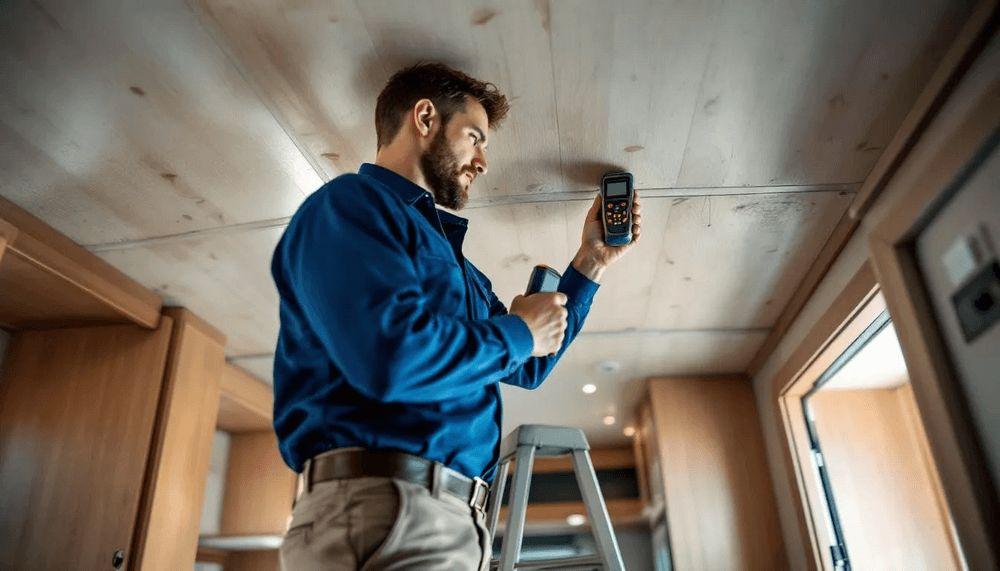
Finding a leak early saves a lot of repair work. After rain begins, I check corners, window frames, cabinets, and areas around ceiling openings for signs of water intrusion.
Do not ignore damp smells or small stains. Moisture that stays hidden can create larger problems over time.
Warning
Never assume a small drip is harmless. Locate the source of water entry and repair the cause rather than only drying the visible area.
Manage RV Awning Use in Stormy Weather
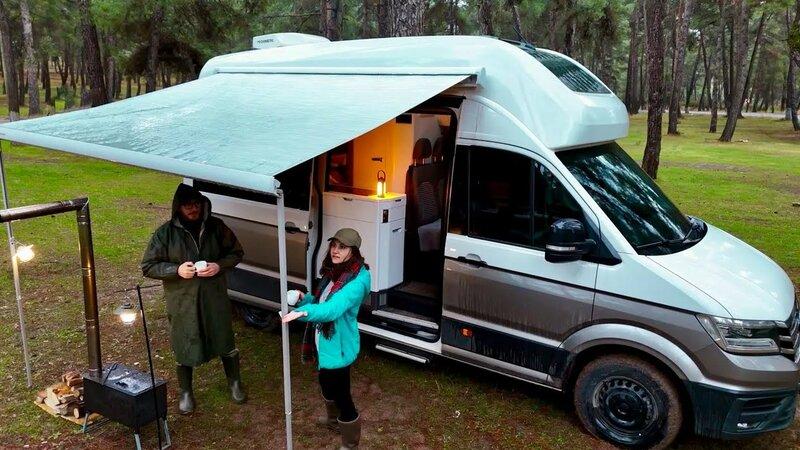
An RV awning is useful for light rain, but it is not designed to handle every storm. Strong wind and heavy rain can put unnecessary stress on the hardware.
I retract awnings when conditions become questionable because replacing damaged components costs more than losing a little shade time. Knowing when not to use equipment is part of good RV ownership.
Common mistake
Leaving an awning extended during changing weather without checking wind conditions can turn a convenience into damage.
Keep Your RV Interior Dry and Organized
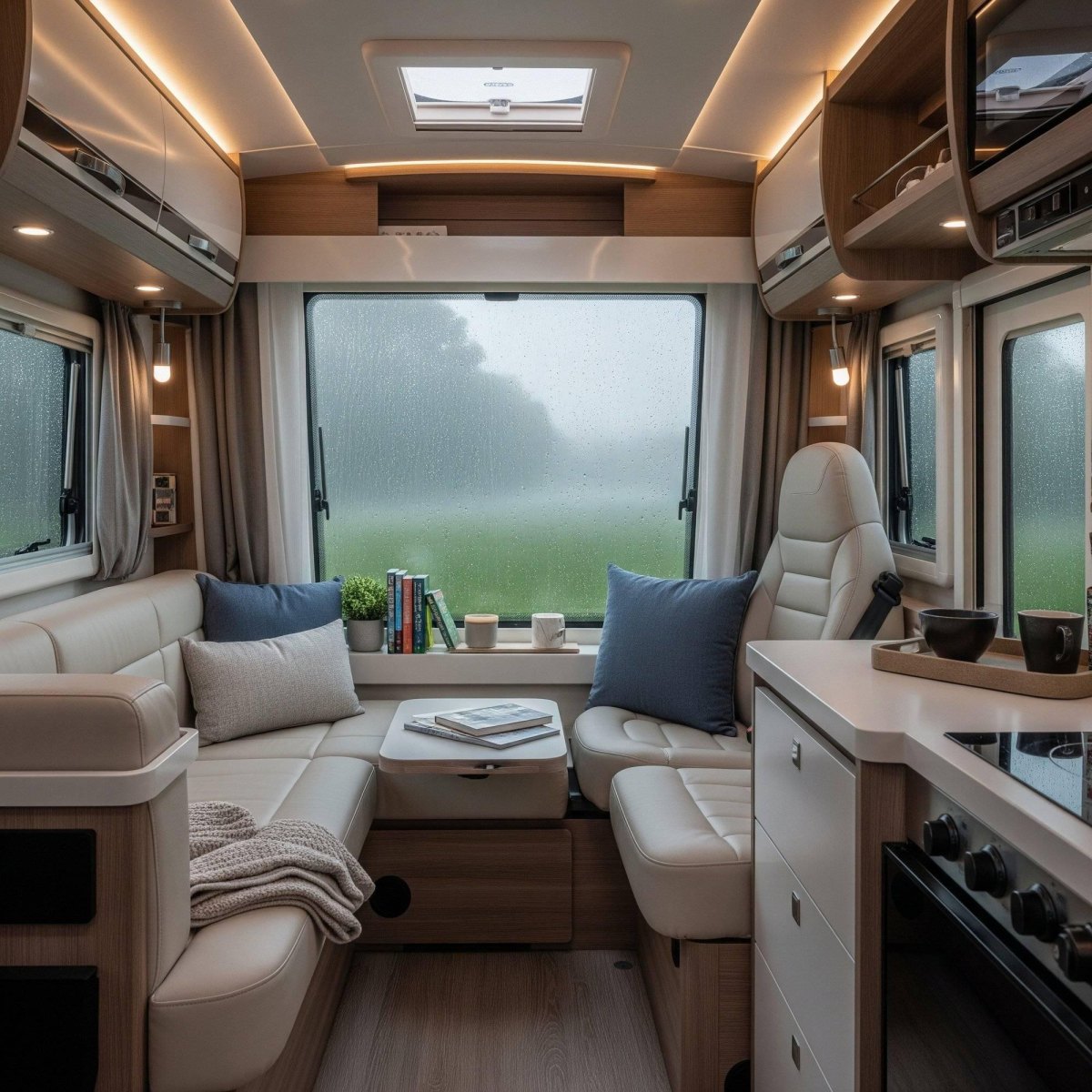
The biggest challenge during rainy camping is managing wet items coming through the door. A simple wet-weather entry system keeps floors, furniture, and storage areas cleaner.
Keep towels and rain gear near the entrance, and give wet clothing a dedicated place to dry. Organization matters more when everyone is bringing water inside.
- Entry area: Keep mats and towels ready.
- Wet clothing: Separate damp items from dry storage.
- Floor protection: Use removable coverings where needed.
Improve RV Ventilation During Rain
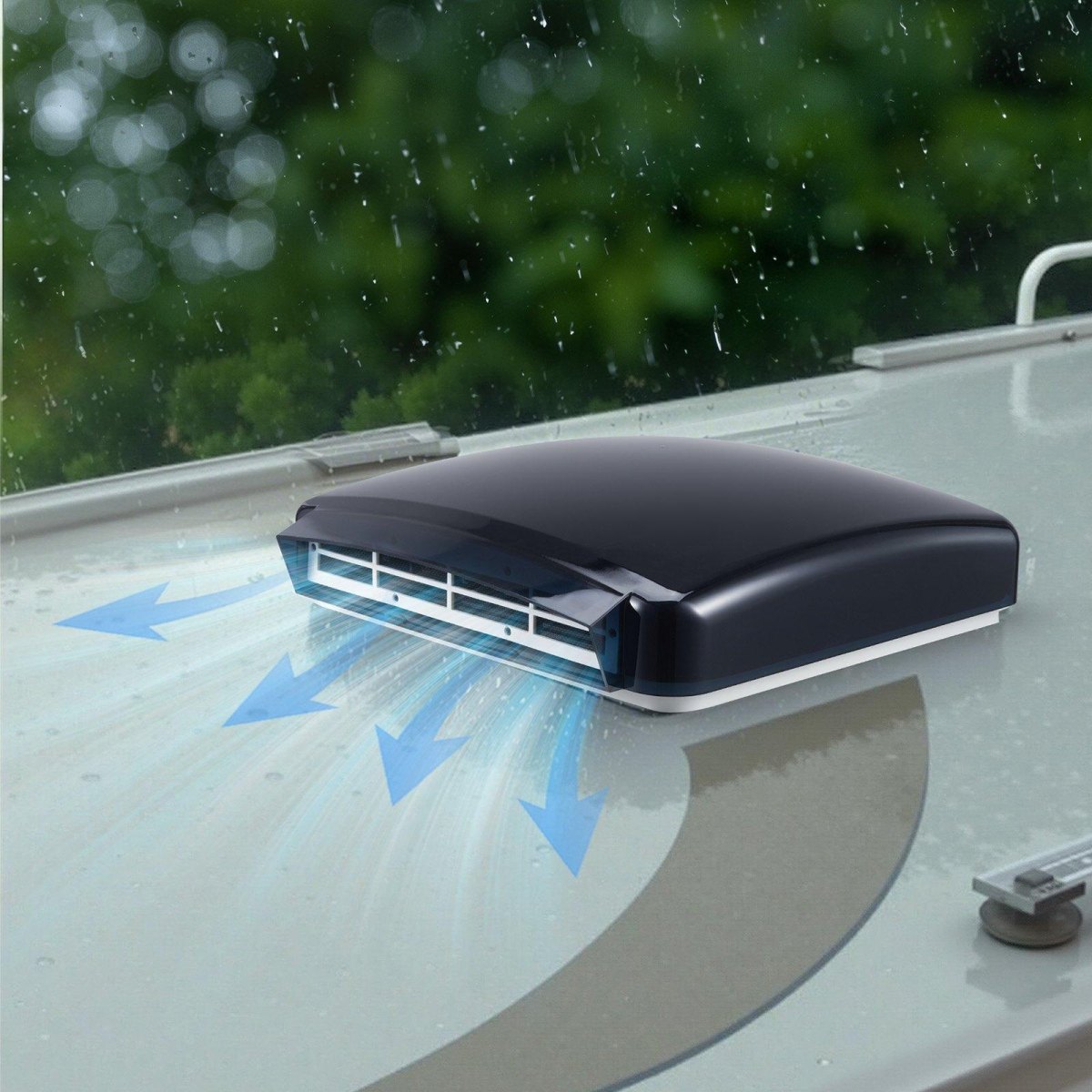
Rain often means closed windows, but trapped moisture can create condensation problems. Good RV ventilation habits help control humidity from cooking, breathing, and wet gear.
Use roof vents and fans appropriately while keeping rain conditions in mind. Moisture control is about balance, not simply sealing the rig shut.
50%
CDC recommends keeping indoor humidity no higher than about this level to help reduce mold growth risk.
Protect RV Floors From Mud and Water
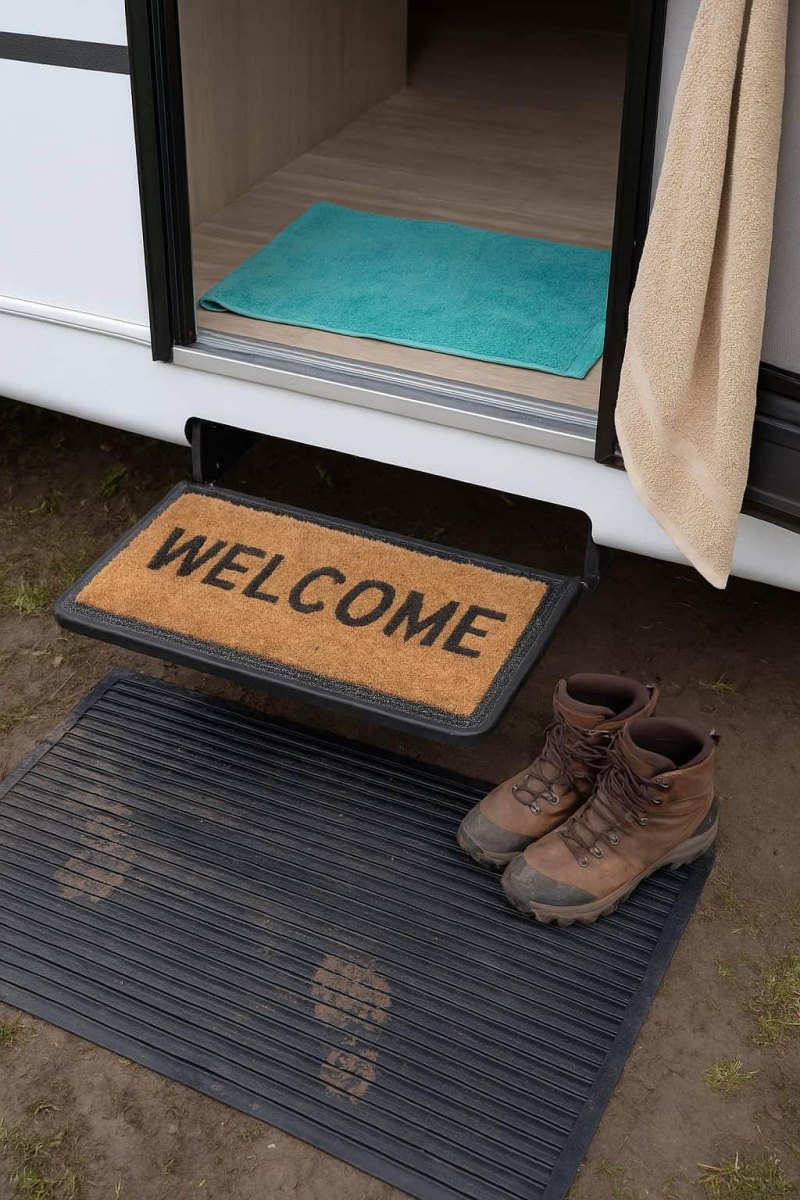
Wet ground quickly becomes a wet floor problem. A simple setup with entry mats and drying supplies prevents mud from spreading throughout the RV.
I keep the transition from outside to inside intentional: shoes off, wet gear managed, and floors checked before the mess travels farther.
- Place. Put absorbent mats at the entrance.
- Remove. Leave muddy footwear outside or in a controlled area.
- Dry. Wipe moisture before it reaches storage spaces.
Stay Comfortable With Indoor RV Activities

A rainy day can still be a good camping day with a little planning. Keeping a few indoor RV activities available makes weather delays much easier.
Books, games, cooking projects, route planning, and maintenance tasks are useful ways to enjoy time when outdoor plans pause.
Bad weather days are easier when the RV is prepared before the weather arrives.
Dana Prescott
Handle Driving an RV in Heavy Rain
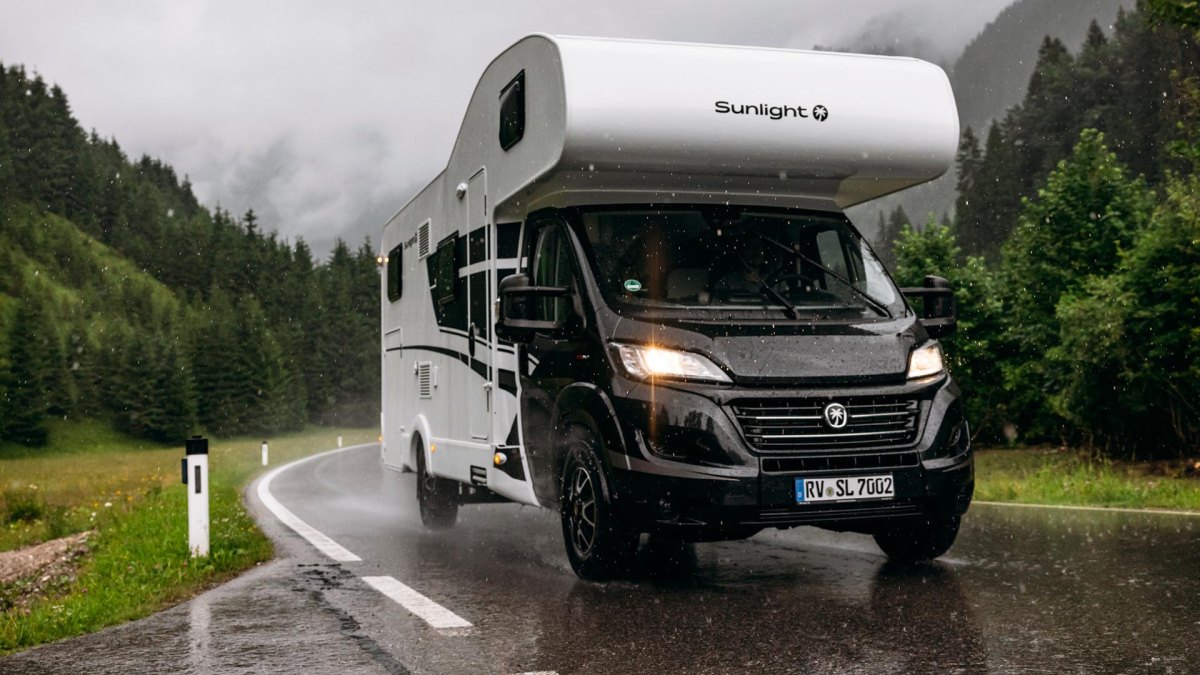
Driving an RV in heavy rain requires more patience than a normal vehicle. Reduced visibility, longer stopping distances, and slippery roads mean slower, more deliberate driving.
I avoid rushing to meet a schedule when weather turns poor. If conditions become unsafe, stopping in a suitable location is the better decision.
| Condition | Response |
|---|---|
| Heavy rain | Reduce speed and increase following distance |
| Poor visibility | Consider delaying travel |
Prevent Mold and Moisture Problems After Rain
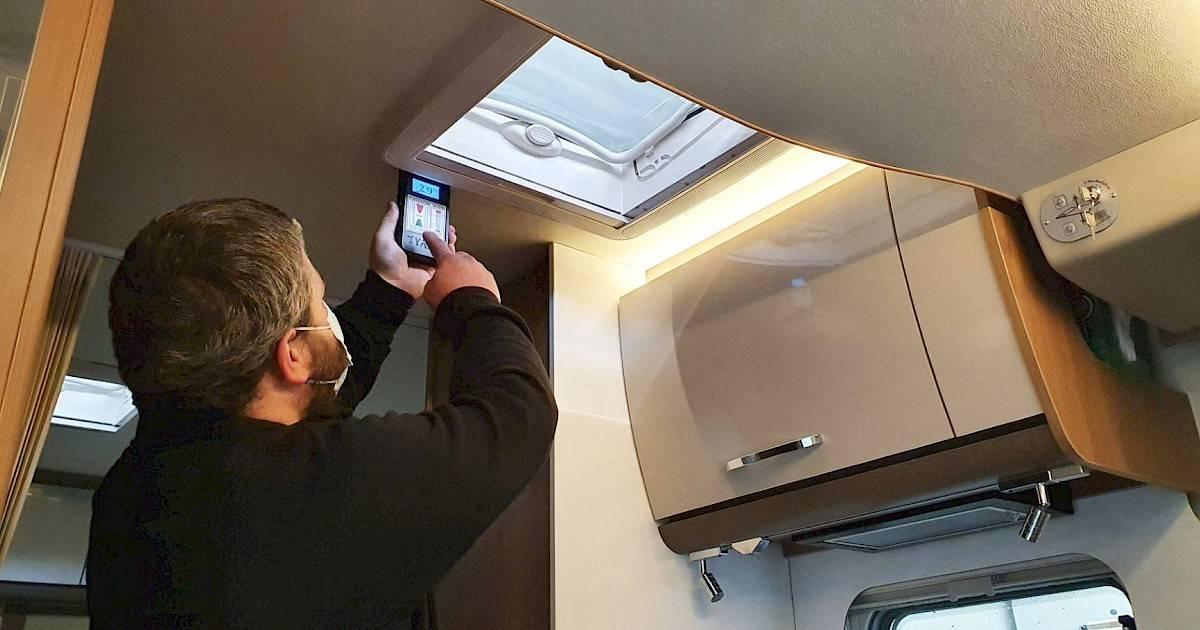
After wet weather passes, drying the RV matters just as much as staying dry during the storm. Mold grows where moisture remains, so finding damp areas early is important.
Open up the interior when conditions allow, dry wet materials, and investigate any persistent damp smell or leak source.
After-rain check
Dry wet areas quickly and fix the source of water entry instead of covering up the symptom.
Prepare an RV Emergency Kit for Rainy Conditions
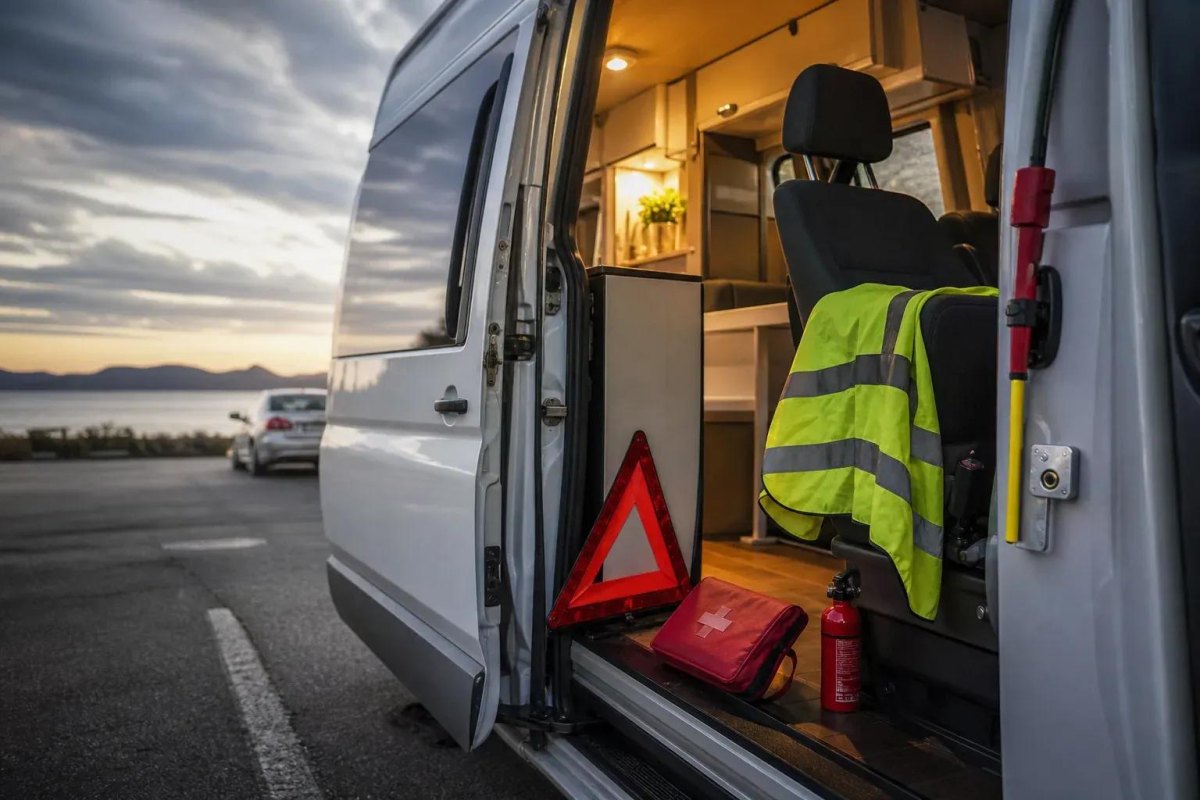
A rainy-weather emergency kit is not complicated, but it should cover the problems most likely to happen. I keep supplies that help with visibility, repairs, and comfort when weather interrupts plans.
The exact contents depend on your rig and travel style, but every RV should have basics ready before leaving the driveway.
- Flashlights and spare batteries
- First aid supplies
- Basic repair materials
- Weather-appropriate clothing
- Emergency communication options
More Pinterest Visuals



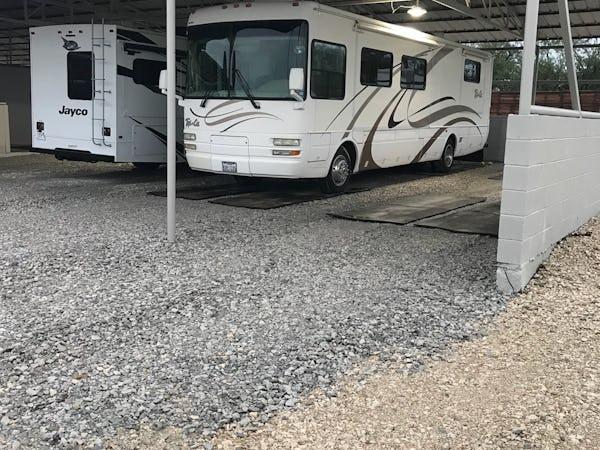 RV Maintenance & Care17 Essential RV Winter Storage Tips to Prevent Cold-Weather Damage
 RV Pet Travel11 RV Cat Tree Ideas That Make Small Spaces More Cat-Friendly
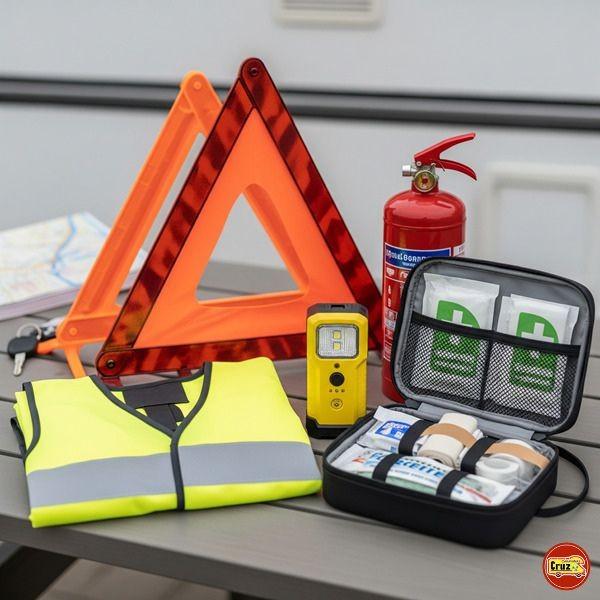 Camping Gear & Planning15 RV Must-Haves for Beginners to Camp Safely and Comfortably
 Camping Recipes18 Easy RV Camping Snacks Ideas for Road Trips and Campfire Nights