

Creating a bathroom area for pets in an RV is mostly a space and routine problem. After years of watching small rigs struggle with wet paws, litter tracking, and limited storage, I have found that the best setups focus on easy daily cleaning and a location your pet will actually use.
A good RV pet bathroom does not need to be complicated. It needs secure placement, proper airflow, and supplies that survive travel. The ideas below cover dogs, cats, and mixed pet households.
Choosing the Right RV Pet Bathroom Location
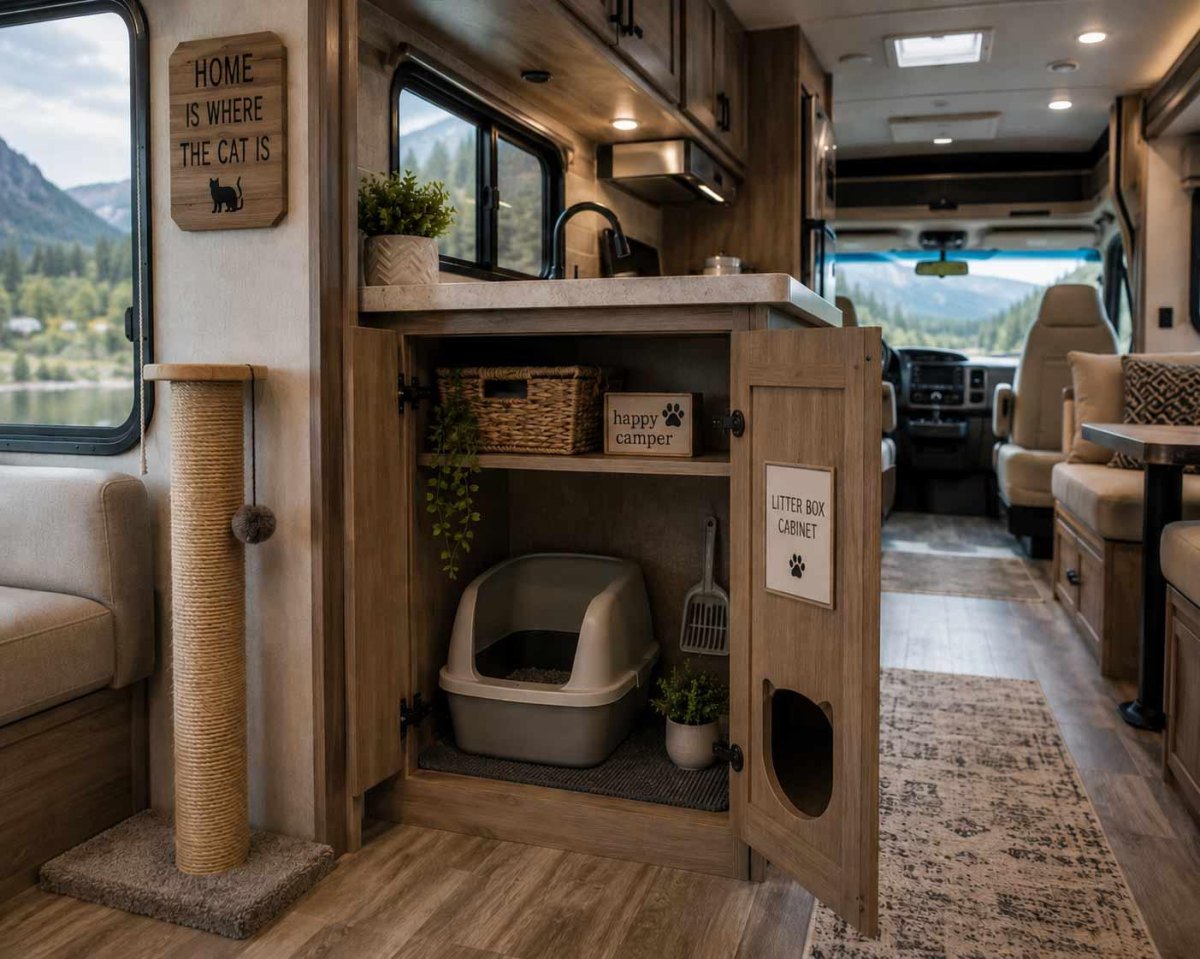
The first decision is where the bathroom belongs. A good location balances pet access and human traffic. Dogs usually need a quick route outside or a dedicated indoor station, while cats need a quiet corner away from food and heavy movement.
Location priorities
- Choose an area that stays stable while driving.
- Avoid blocking exits, vents, and storage access.
- Keep cleaning supplies nearby.
In smaller RVs, unused corners, shower areas, or under-table spaces often become practical choices. I always measure the space before buying a tray or box because RV inches disappear quickly.
Setting Up an Indoor Dog Potty Station
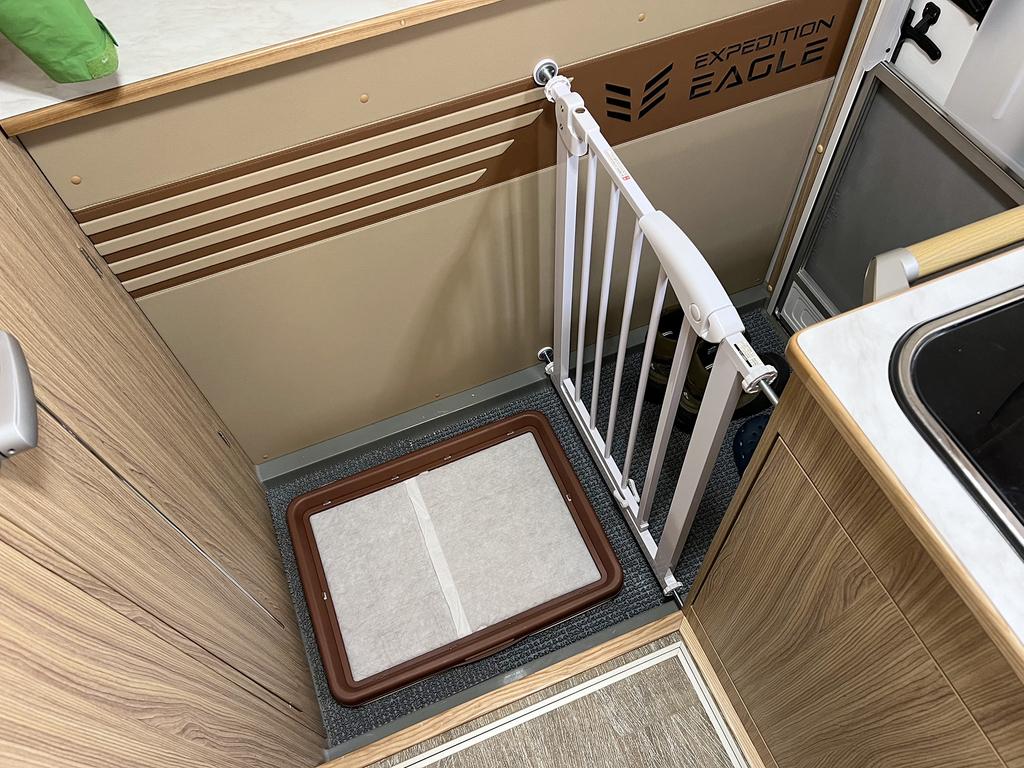
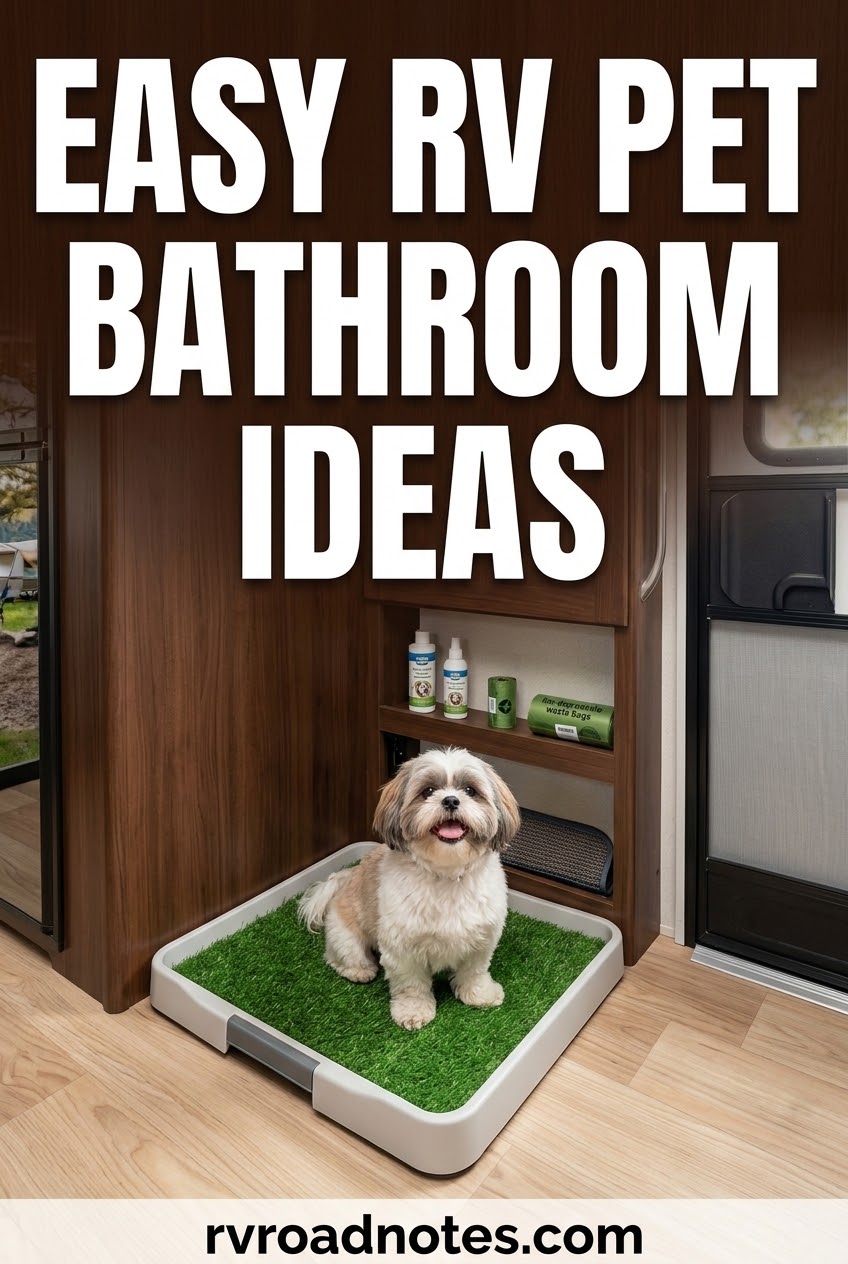
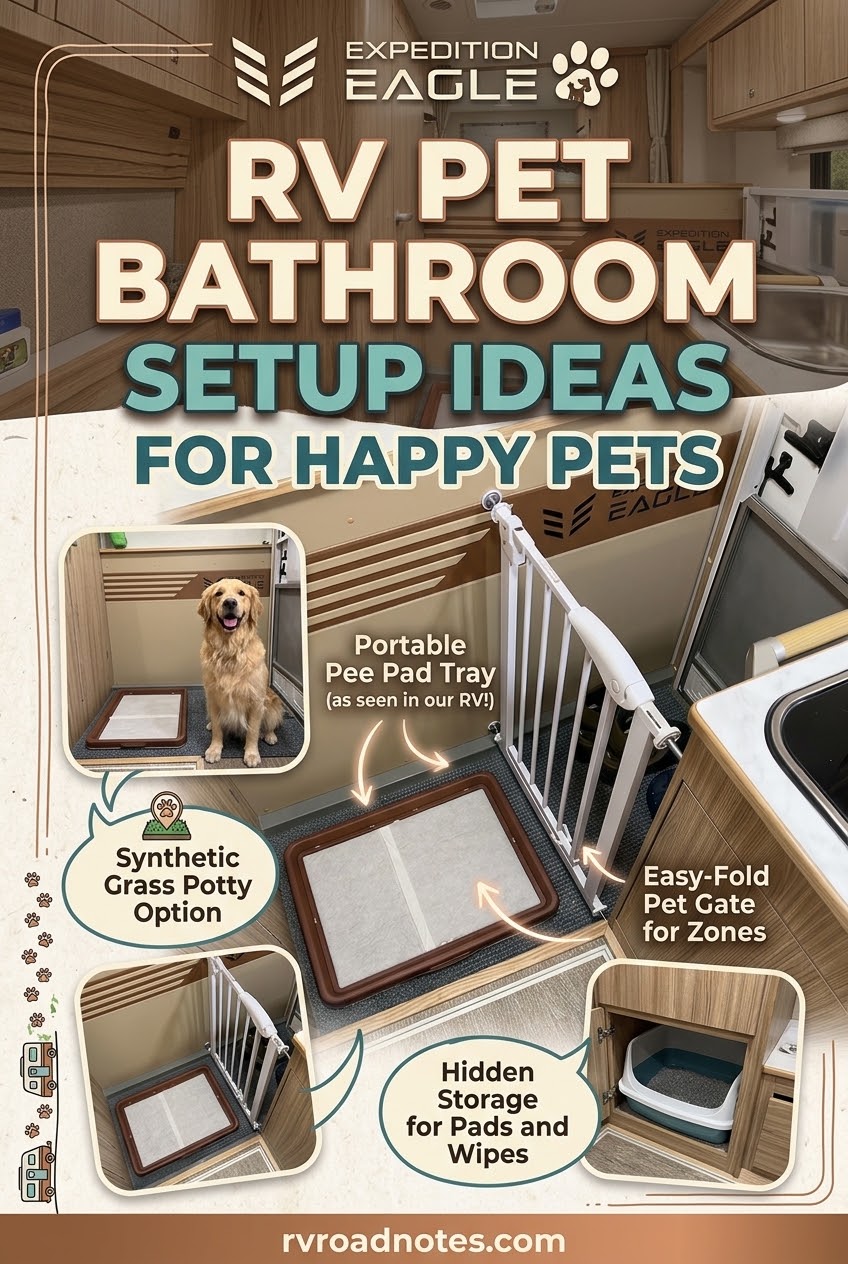
An indoor dog potty station can be useful for overnight stops, bad weather, or pets that cannot always reach the outdoors. The most reliable setups use replaceable potty surfaces such as grass pads, washable trays, or absorbent liners.
- Select. Pick a tray size that allows your dog to turn comfortably.
- Secure. Prevent sliding with mats or travel restraints.
- Clean. Remove waste promptly to avoid odor buildup.
Pet travel safety also depends on temperature planning. Hot RV interiors can become dangerous quickly, so a bathroom area should never be treated as a reason to leave a pet unattended in unsafe conditions.
Installing a Cat Litter Box in an RV
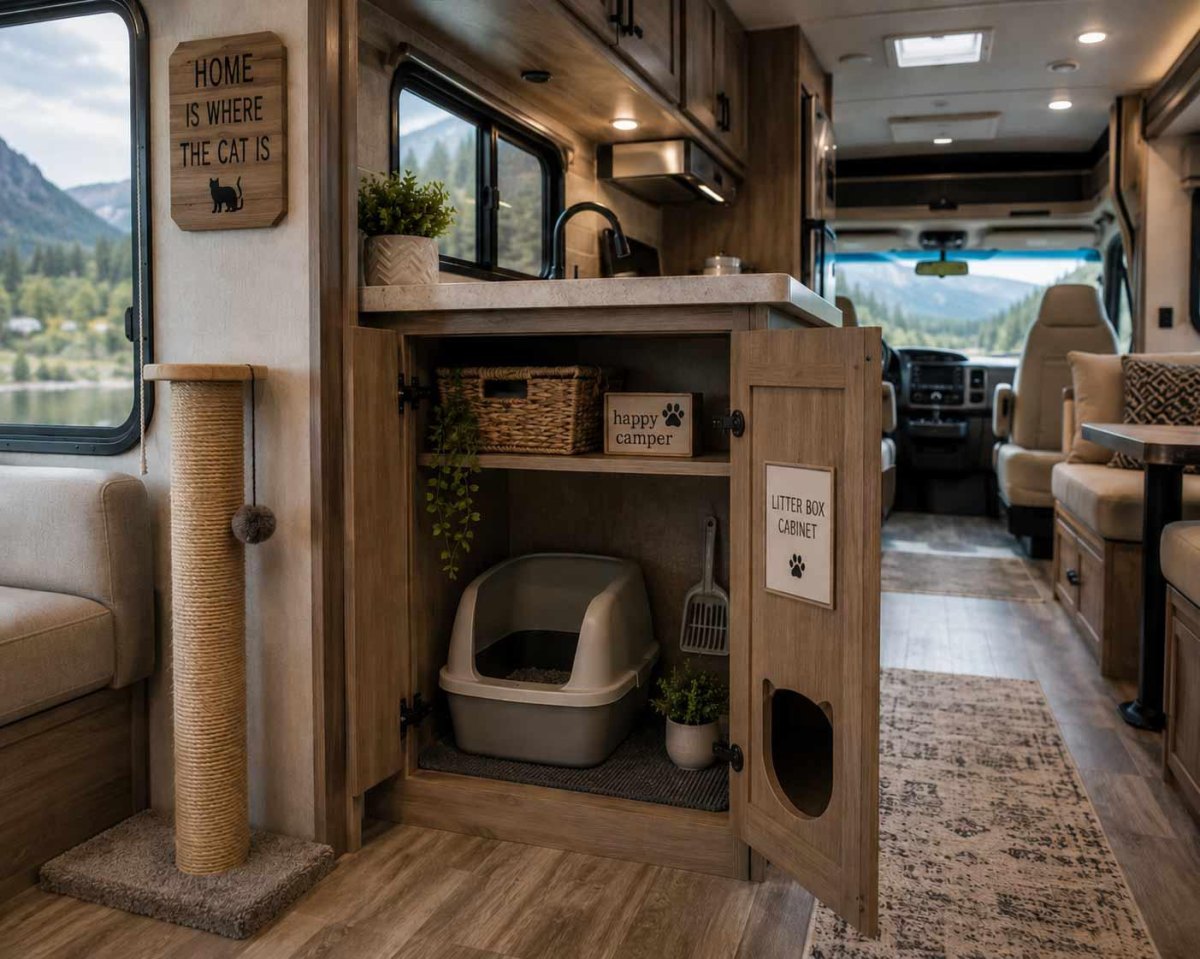
Cats need a bathroom setup that feels private but remains practical to clean. Popular RV solutions include cabinet conversions, under-seat spaces, and compact boxes with controlled litter tracking.
| Location | Best use |
|---|---|
| Cabinet enclosure | Hidden storage-style setup |
| Bathroom corner | Easy cleaning access |
| Dinette area | Uses otherwise wasted space |
Ventilation matters in enclosed RV spaces. Some owners add filtration or ventilation solutions because litter areas can concentrate odors in a small cabin.
Using Artificial Grass Pet Toilet Systems
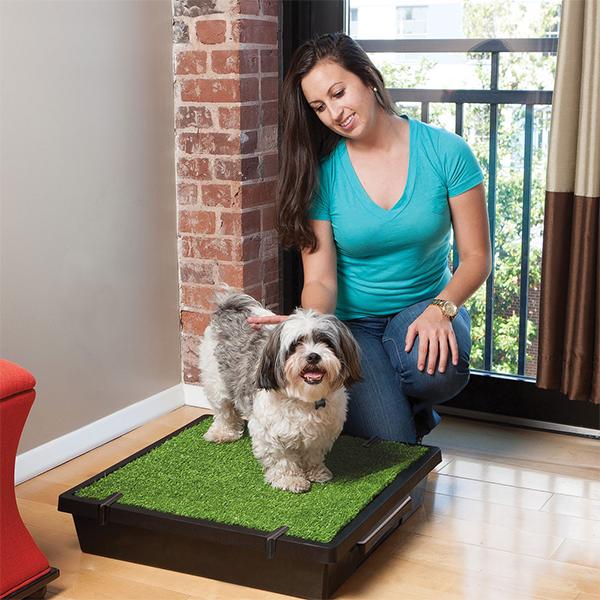
Artificial grass systems are popular because they feel familiar for dogs and can work both indoors and outdoors. A good system combines drainage and easy washing so moisture does not sit against the RV floor.
Pros
- Reusable surface
- Familiar texture for many dogs
- Works in compact spaces
Cons
- Requires regular washing
- Takes storage space
- Needs drying before storage
I prefer systems that can be separated into parts because cleaning a large one-piece unit inside a campsite bathroom is usually inconvenient.
Managing Pet Bathroom Odors and Cleanliness
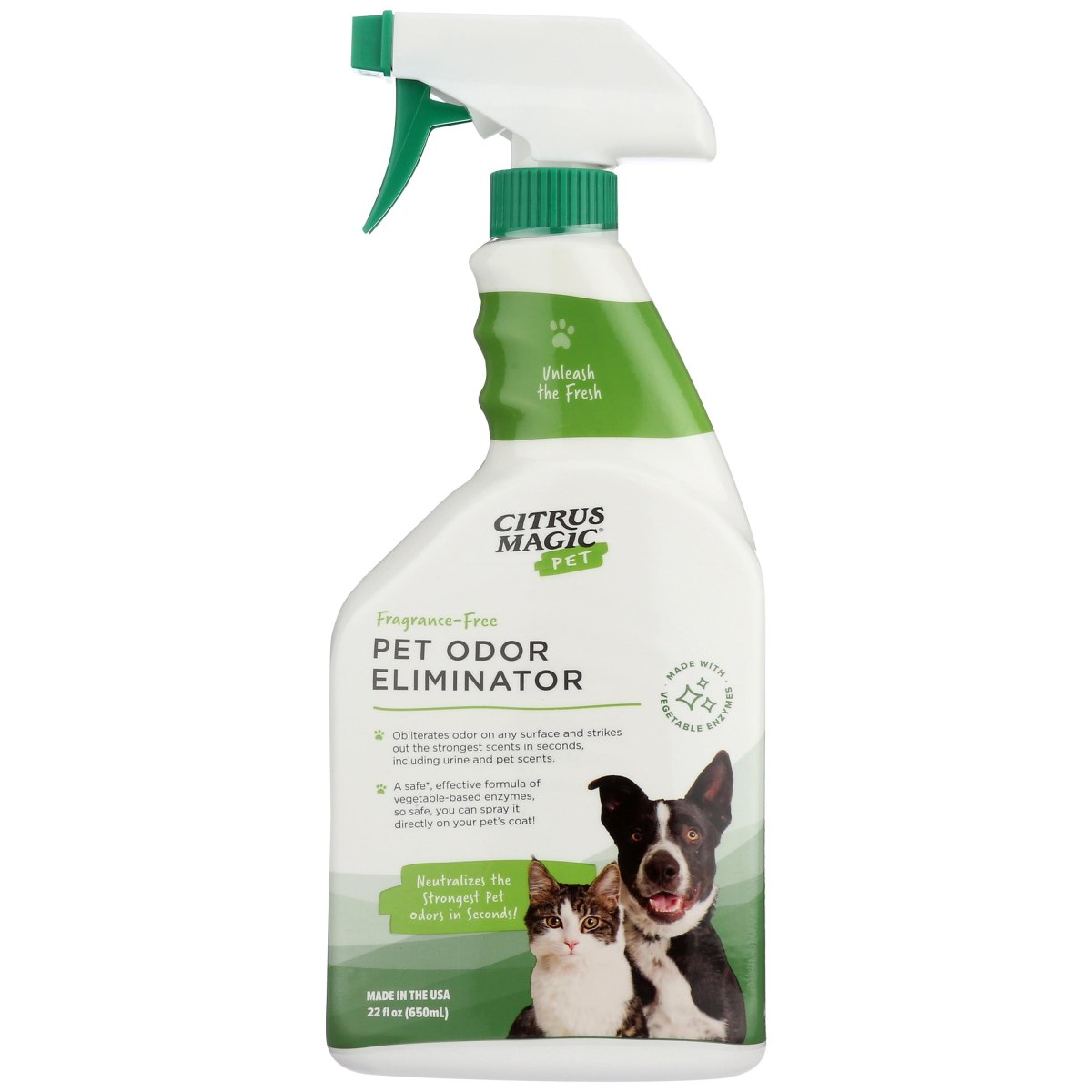
Odor control starts with the setup, not with air fresheners. A small RV has limited air volume, so frequent waste removal and washable surfaces make the biggest difference. Some RV cat setups use filters or ventilation to reduce smells.
- Scoop or remove waste regularly.
- Wash reusable trays on a schedule.
- Keep odor supplies separate from food storage.
- Dry wet materials before packing them away.
A common mistake is hiding the bathroom area completely without planning airflow. A hidden box still needs maintenance access.
Creating a Portable Outdoor RV Pet Bathroom
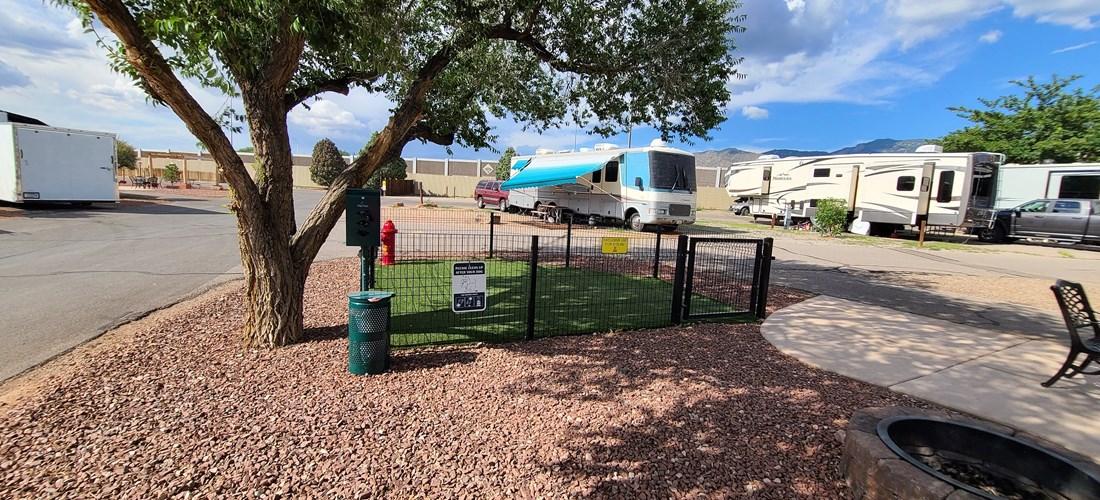
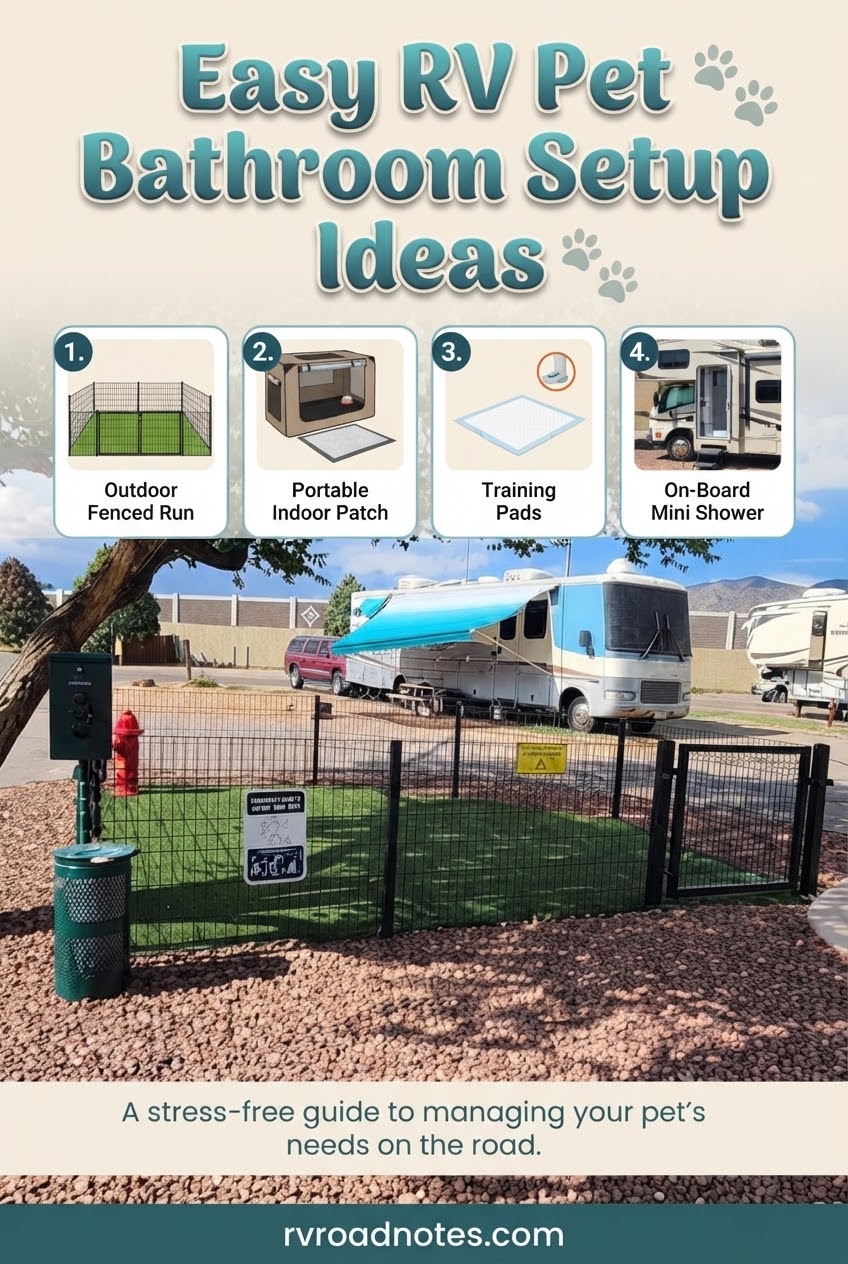
An outdoor bathroom area gives pets a familiar routine when campsite rules and conditions allow. Portable fencing, mats, and grass trays can create a temporary pet zone without damaging the campsite.
Campground tip
Check local campsite rules before setting up pet areas, and always dispose of waste properly.
For dispersed camping, I keep the setup simple and follow land management rules, including waste disposal requirements. Approved dump stations and proper waste practices protect access for future campers.
Storing Pet Bathroom Supplies Efficiently
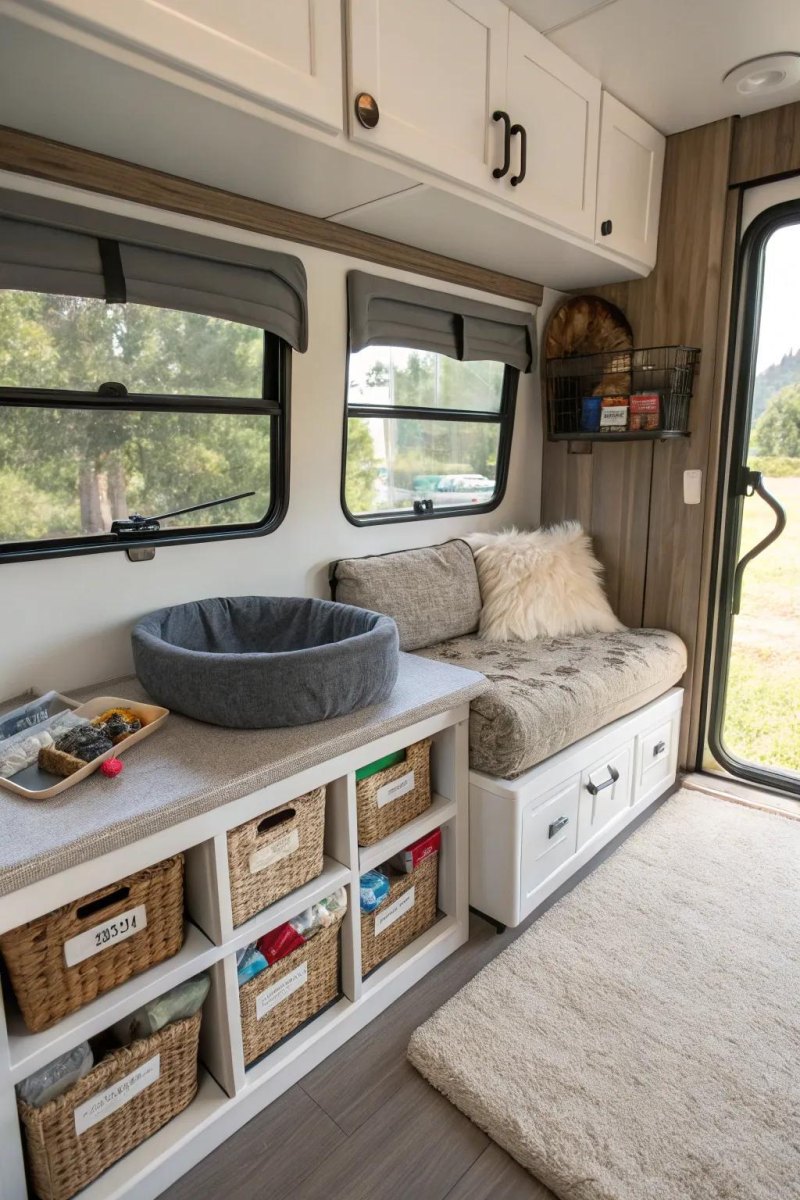
Pet bathroom supplies multiply quickly: bags, liners, cleaners, towels, scoops, and replacement pads all need a home. The best RV storage systems use small dedicated containers rather than scattered supplies.
- Cleaning bin: Gloves, spray, wipes, and towels.
- Backup bin: Extra pads, liners, and replacement items.
- Travel bin: Supplies needed when moving locations.
I like storage that can be lifted out as one piece. It makes campsite setup faster and prevents pet supplies from taking over every cabinet.
Making the RV Pet Bathroom Safe and Comfortable
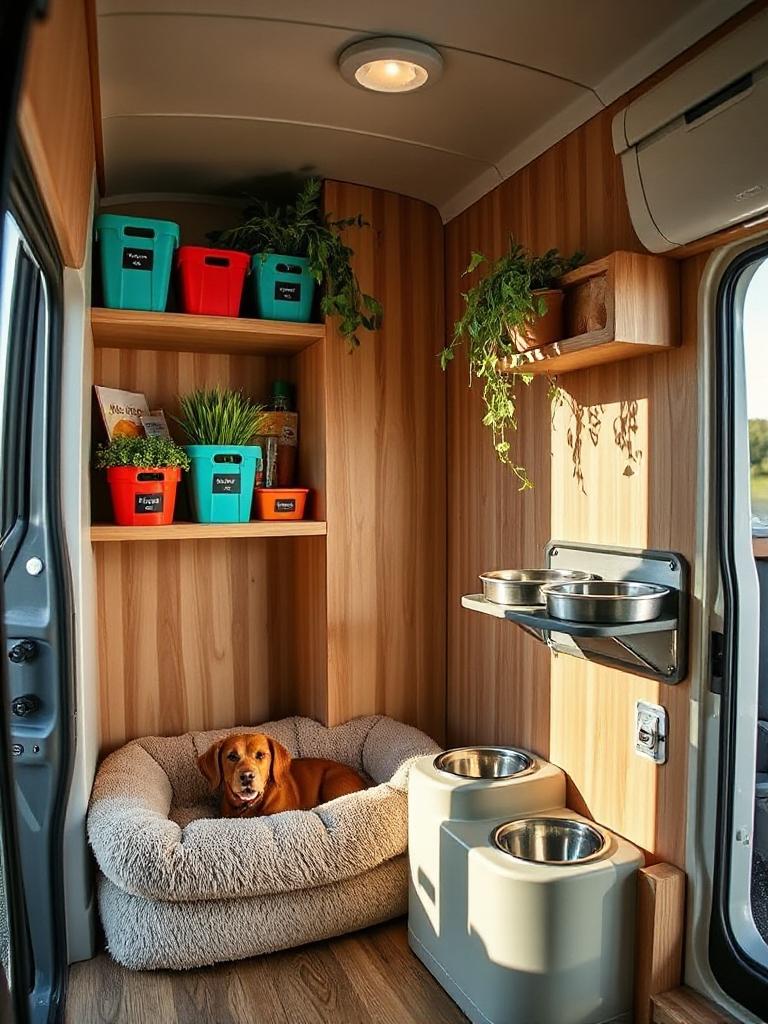
A pet bathroom should work for the animal first. Floors should be stable, access should be simple, and the area should not create hazards during travel. A comfortable setup supports consistent bathroom habits on the road.
Safety reminder
Never rely on a bathroom setup as a substitute for pet temperature protection. RV environments can change quickly with weather, power, or ventilation problems.
The best RV pet bathroom is the one that you can clean quickly, your pet accepts easily, and you can maintain on every travel day.
More Pinterest Visuals



 RV Maintenance & Care17 Essential RV Winter Storage Tips to Prevent Cold-Weather Damage
 RV Pet Travel11 RV Cat Tree Ideas That Make Small Spaces More Cat-Friendly
 Camping Gear & Planning15 RV Must-Haves for Beginners to Camp Safely and Comfortably
 Camping Recipes18 Easy RV Camping Snacks Ideas for Road Trips and Campfire Nights