Living in an RV with a cat can work well, but the details matter. A moving home changes everything from litter placement to temperature control, so the best setups are built around your cat’s habits instead of forcing a house routine into a smaller space.
Choosing the Right RV Setup for Living With Cats
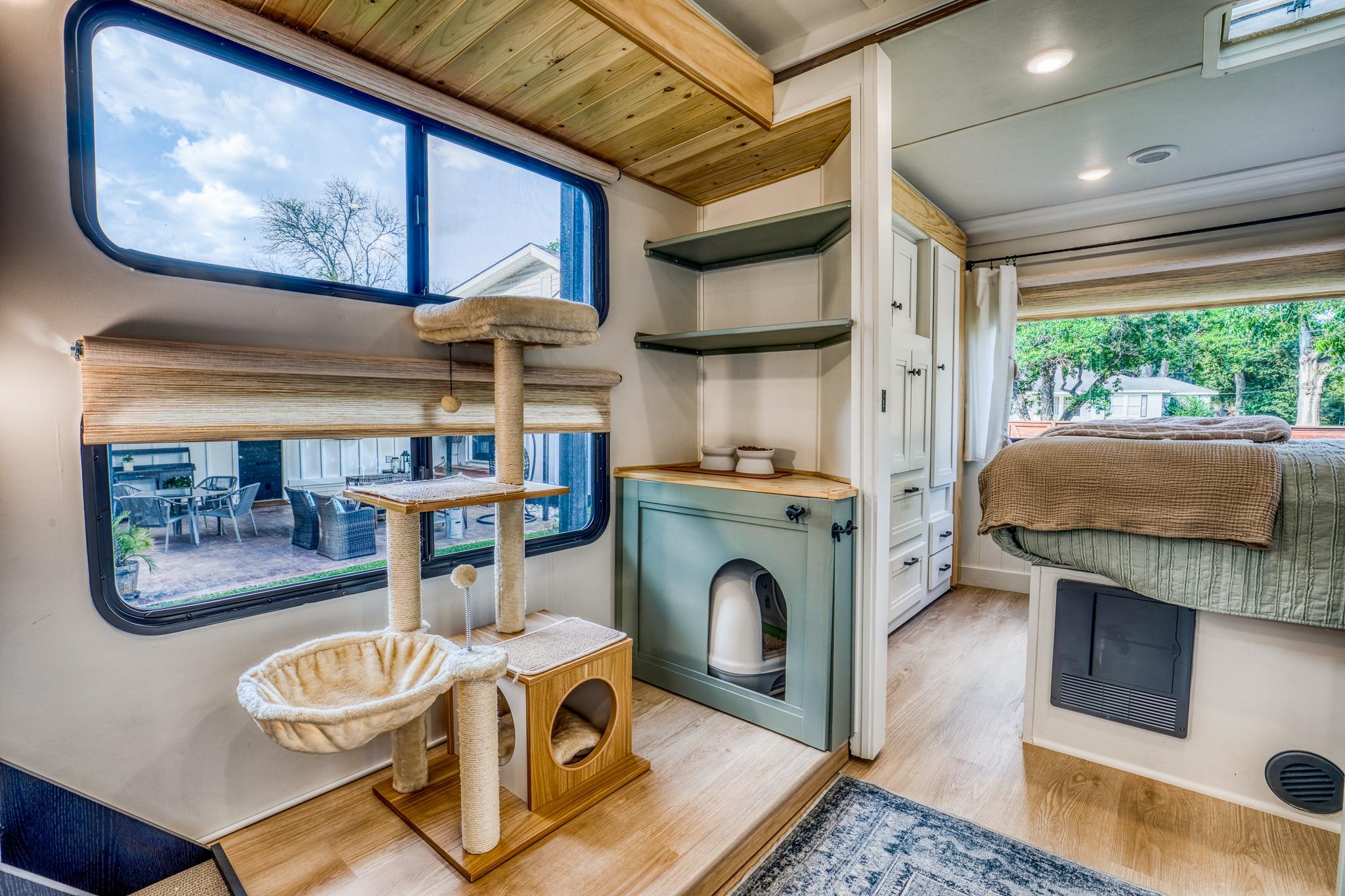
The right RV for cats is less about square footage and more about usable space. A van conversion, travel trailer, fifth wheel, and motorhome each create different challenges. A narrow van may be easier to secure but offers fewer climbing areas, while a larger trailer may provide room for scratching posts and hiding spots but requires more travel preparation.
Before buying or renting, look at the floor plan from a cat’s perspective. Sharp corners, loose cords, exposed storage areas, and noisy mechanical spaces can all become problems. A calm cat usually needs predictable places to sleep, observe, eat, and hide.
- Floor space: Enough room for movement, litter access, and feeding areas without blocking walkways.
- Windows: Secure screens and safe viewing spots can provide daily enrichment.
- Storage: Dedicated areas prevent food, litter, and medication from becoming clutter.
- Ventilation: Good airflow matters because RV interiors heat quickly.
A useful test
Spend a few nights in the RV before committing. Notice where your cat naturally chooses to rest and build the setup around those preferences.
Preparing Your Cat Before Moving Into an RV
A cat that has only known a house may find an RV overwhelming at first. The transition usually goes better when the vehicle becomes familiar before the first long trip.
- Introduce. Let your cat explore the parked RV while it is quiet and stationary.
- Create. Add familiar bedding, toys, and feeding items so the space carries recognizable scents.
- Practice. Take short drives before attempting full travel days.
- Observe. Watch for stress signs such as hiding, appetite changes, or litter box changes.
Microchipping, updated identification tags, and current veterinary records are especially important for RV cats because a lost pet may be far from home. Keep digital copies of vaccination records and your veterinarian’s contact details.
Avoid rushing the move
A cat that is comfortable in a parked RV is not automatically ready for a week-long road trip. Increase travel time gradually.
Creating a Safe Indoor Space for Cats in a Small RV
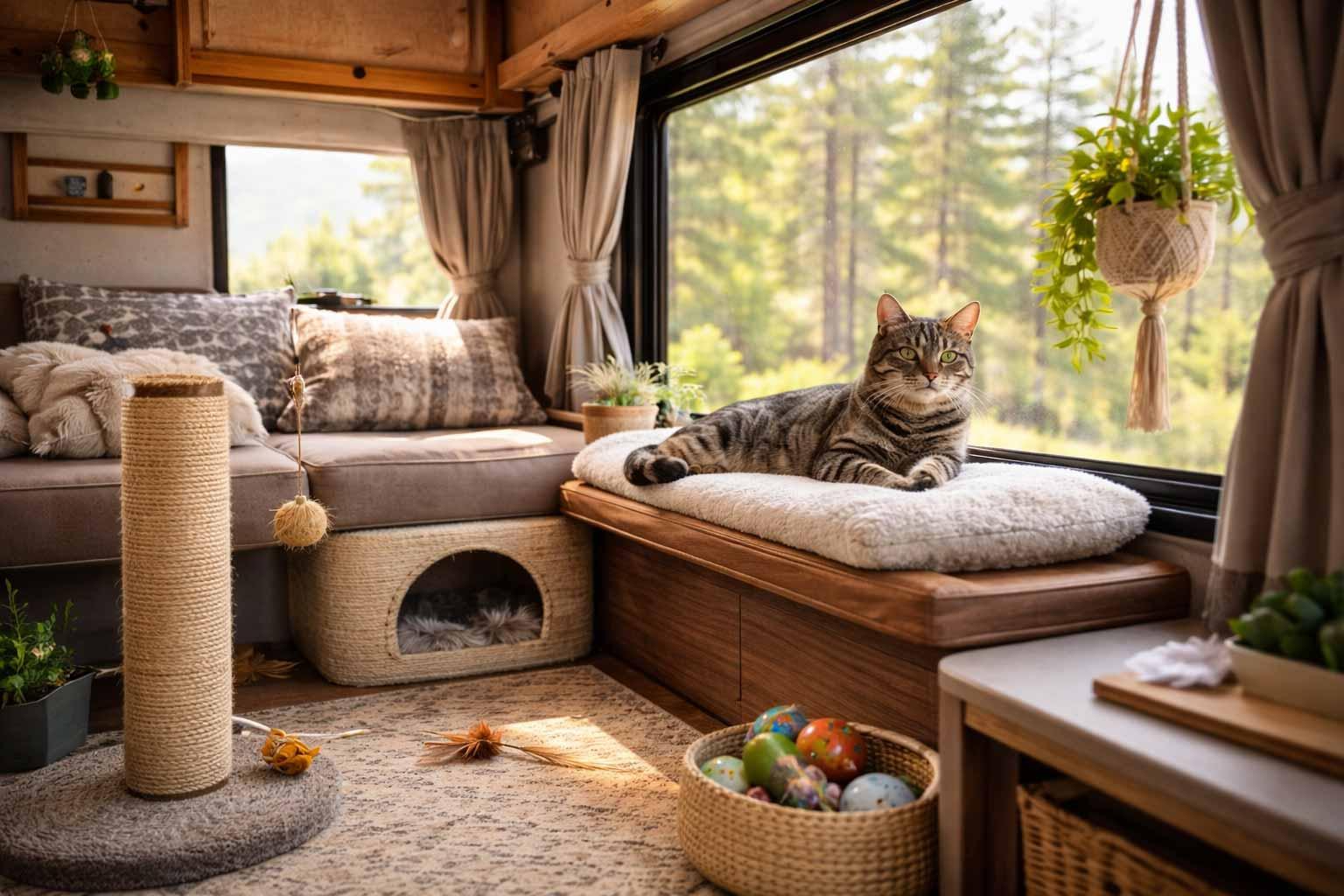
Small-space priorities
- Provide vertical space when floor space is limited.
- Secure loose objects before every travel day.
- Keep food, water, and litter separated.
- Create a quiet retreat area.
Small RVs can work for cats because many cats value territory and routine more than open space. A window perch, wall-mounted shelf, or sturdy cat tree can add useful vertical territory without taking over the floor.
Travel days require a different mindset. Anything that can fall, swing, spill, or break should be secured before moving. Check cabinet latches, close bathroom doors, and remove hazards such as strings or unstable decorations.
Benefits of an RV cat setup
- Consistent environment during travel.
- More time together with owners.
- New safe enrichment opportunities.
Challenges to plan for
- Limited indoor space.
- Temperature changes.
- More careful storage habits.
Managing Litter Boxes in an RV
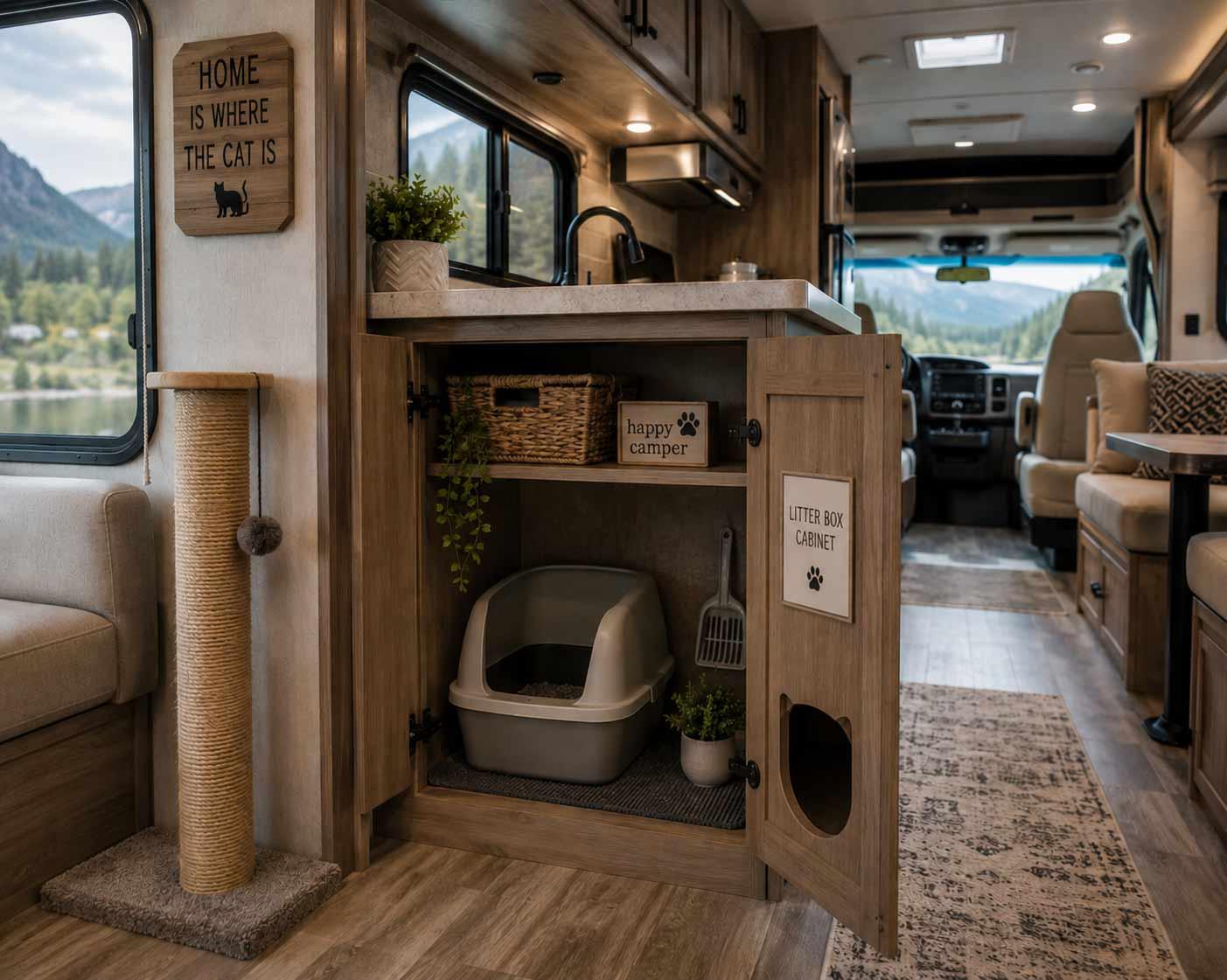
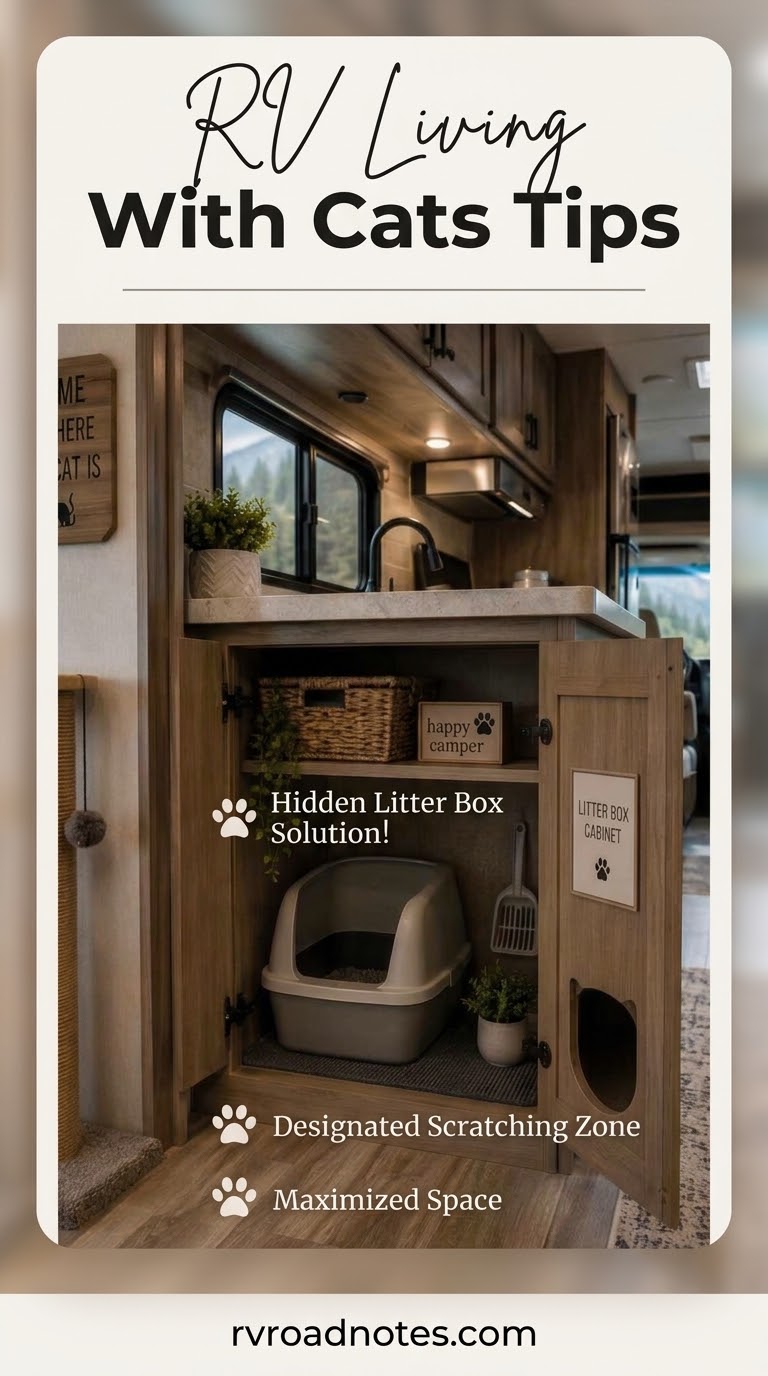
Litter management is one of the biggest practical issues in RV living with cats. The goal is simple: easy access for the cat and easy cleaning for the owner.
- Choose a location away from food and water bowls.
- Use a mat or tray to reduce litter tracking.
- Secure the box so it does not slide during travel.
- Keep extra litter stored in a sealed container.
- Clean frequently because smells become stronger in a small space.
Some RV owners use covered boxes for odor control, while others prefer open boxes because they are easier to access and clean. The best choice depends on your cat’s preference and the available ventilation.
Common mistake
Hiding the litter box in a difficult-to-reach cabinet often creates problems. Cats need reliable access, especially during travel stress.
Keeping Cats Comfortable During RV Travel Days
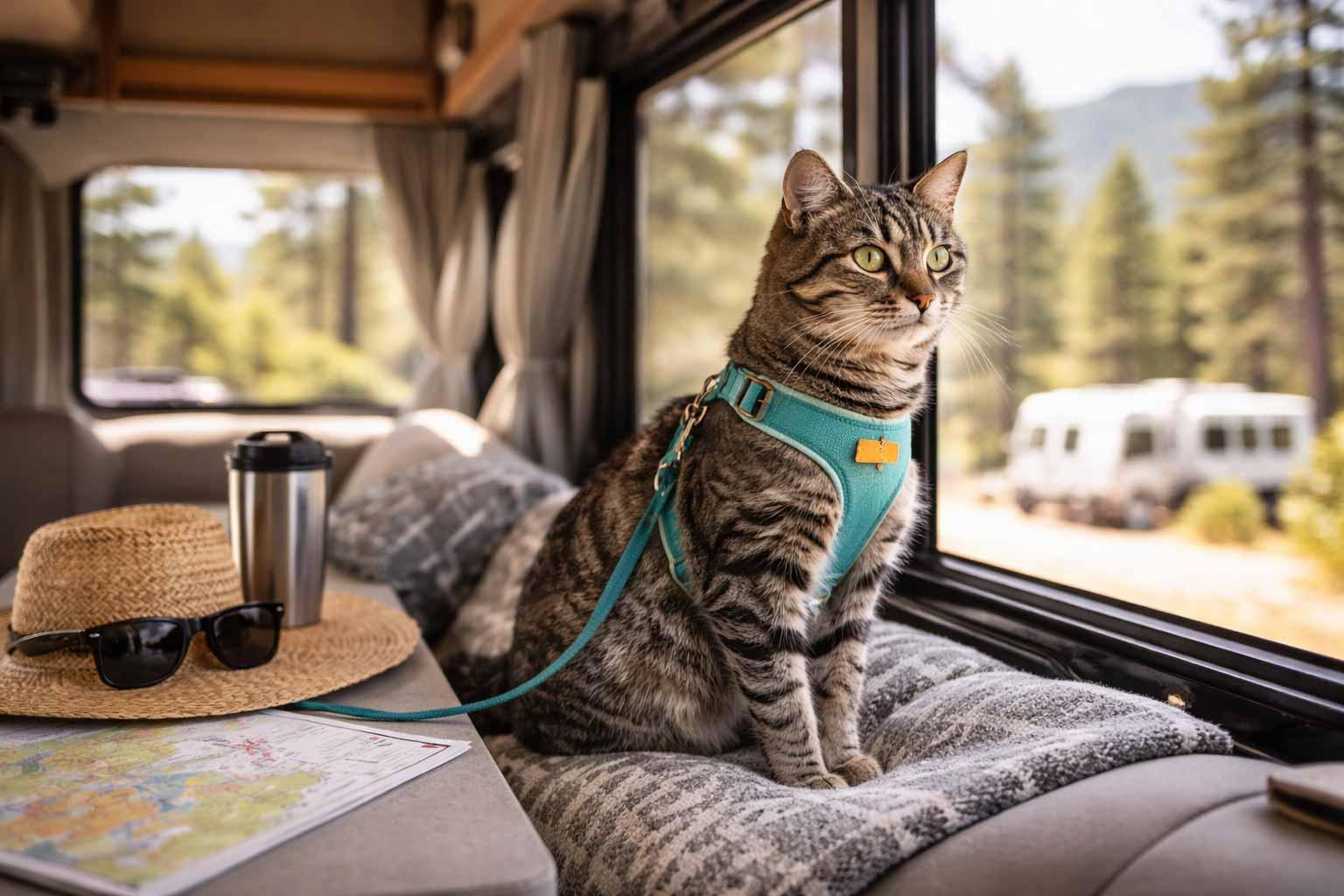
Travel days are where preparation pays off. Cats usually prefer stability, so sudden movement, noise, and unfamiliar stops can be stressful.
- Carrier: Use a secure carrier rather than allowing a cat to roam while driving.
- Temperature: Never assume an RV will stay safe while parked. Heat can build quickly, and air conditioning depends on reliable power.
- Stops: Offer water and check on your cat during longer travel periods.
- Routine: Keep feeding and medication schedules as consistent as possible.
A temperature monitor with alerts can add another layer of awareness, but it does not replace a safe plan. If power fails or conditions change, an animal may be at risk quickly.
The smoothest travel days are the ones where the cat’s routine changes as little as possible.
Dana Prescott
Building an Enriching Routine for Cats on the Road
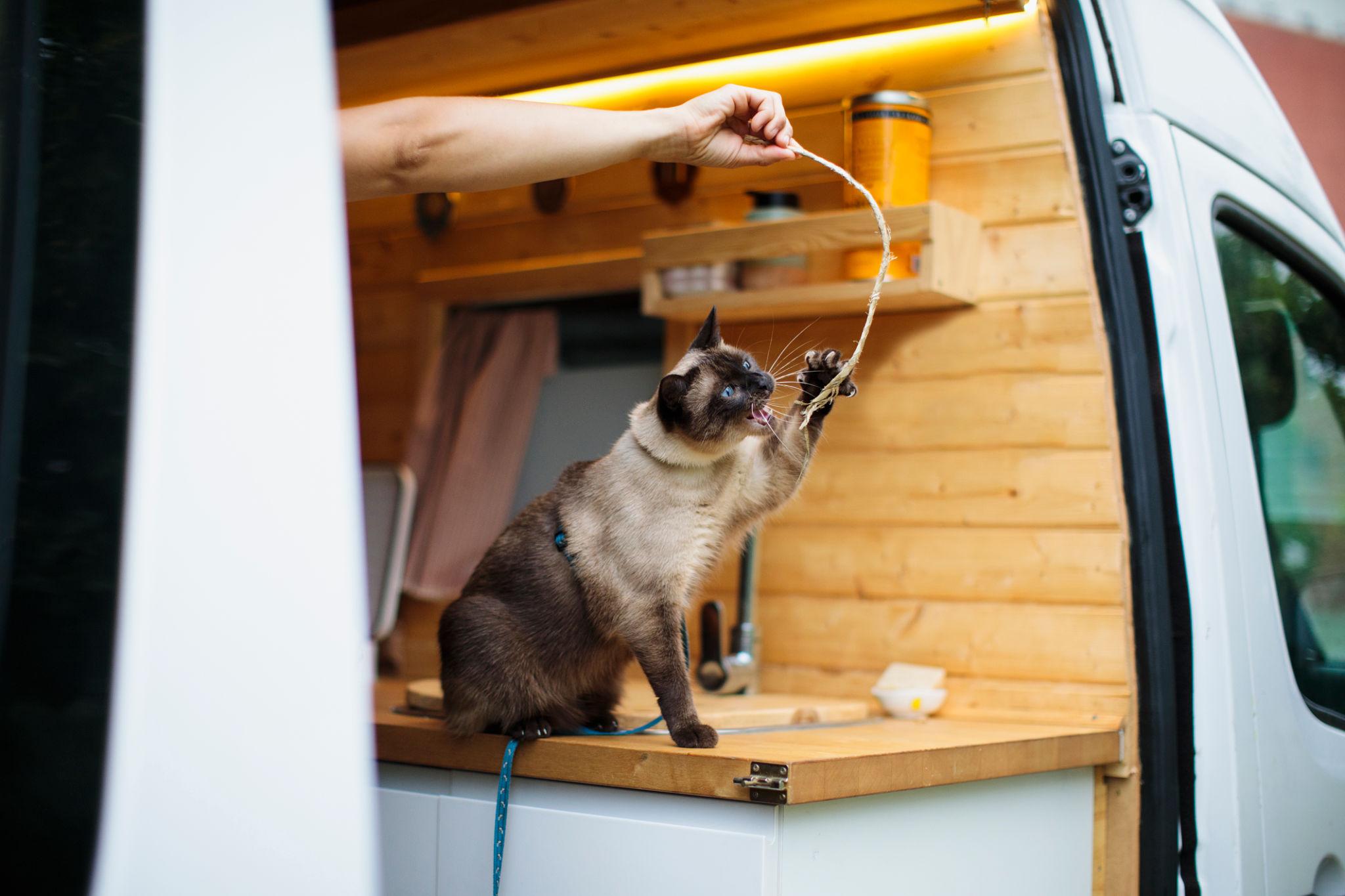
Life on the road can become repetitive for indoor cats, especially when campsite views change but the inside of the RV stays the same. Enrichment does not need to be complicated.
- Play sessions: Short daily sessions with toys help cats burn energy.
- Observation: Window time provides mental stimulation.
- Rotation: Switching toys keeps familiar items interesting.
- Training: Simple routines can improve confidence.
The overlooked benefit of routine
A predictable daily pattern helps many cats adapt to changing locations. Feeding times, play periods, and quiet hours create anchors when the scenery changes often.
Protecting Cats From Outdoor RV Hazards
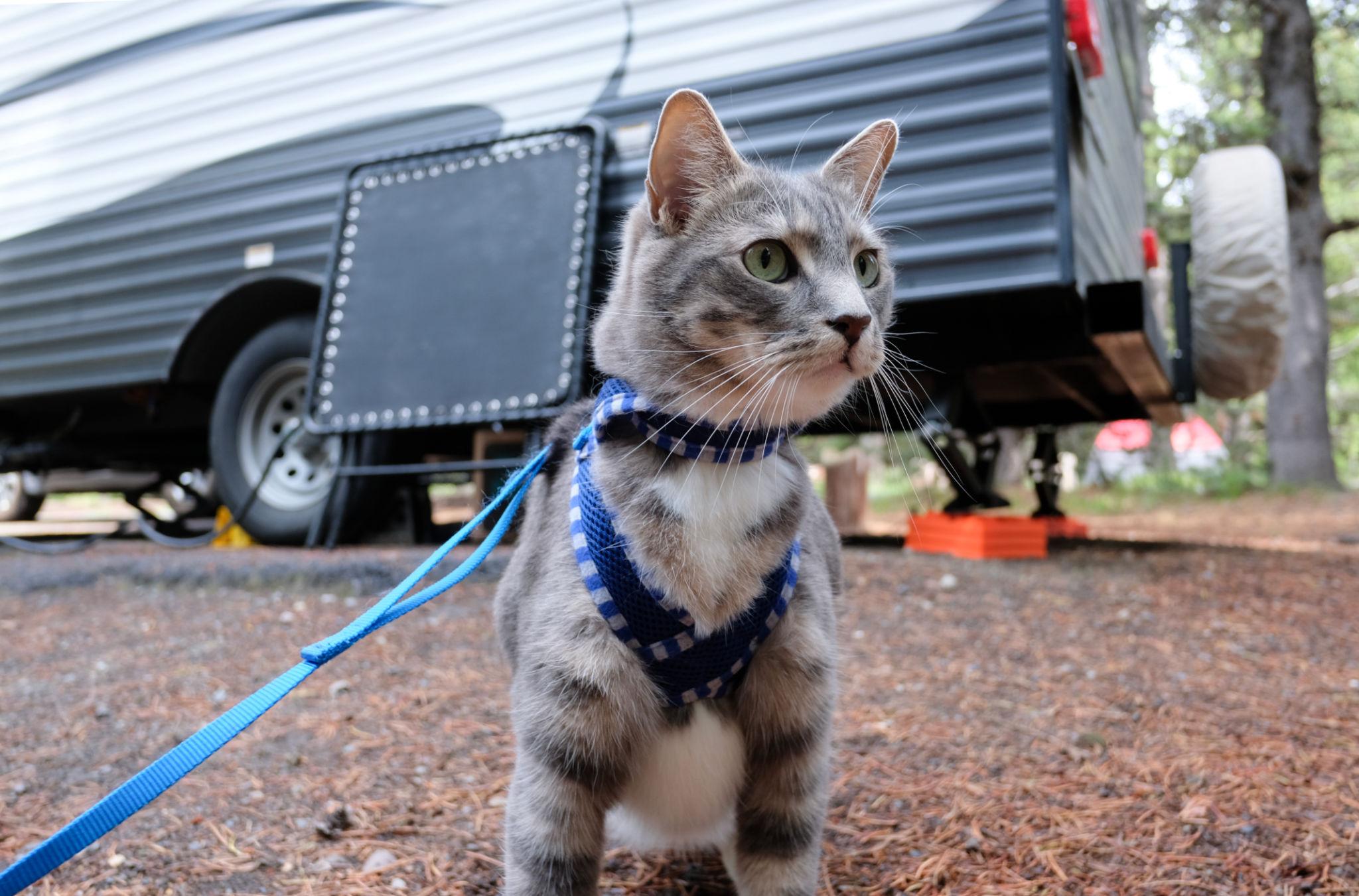
Outdoor exploration can be rewarding, but campsites introduce unfamiliar risks. Wildlife, traffic, toxic plants, and other animals are common reasons to use caution.
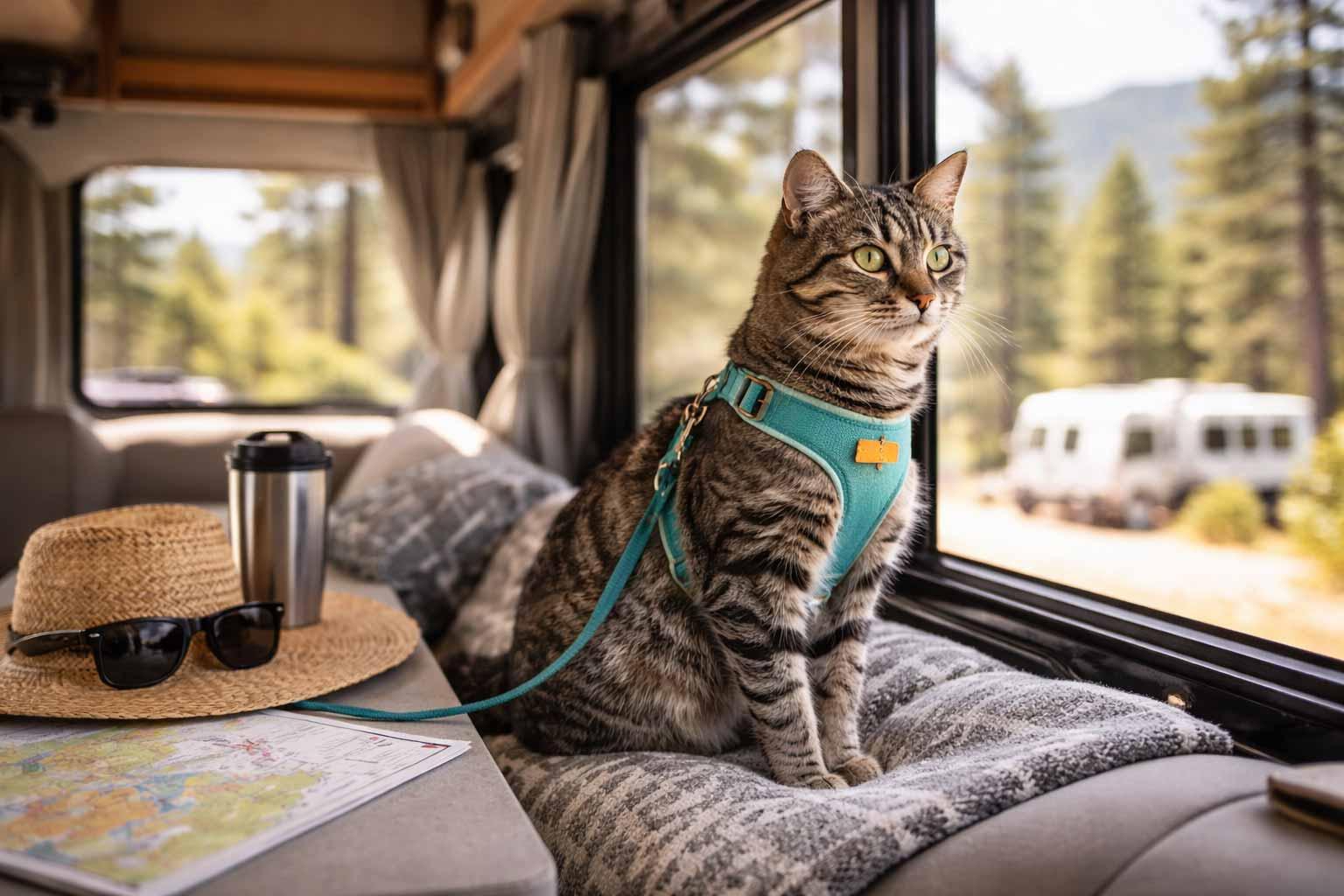
A harness and leash can allow controlled outdoor time for cats that enjoy it. Not every cat needs outdoor access, and forcing exploration can create unnecessary stress.
Campsite safety check
Before letting a cat outside, inspect the area for escape routes, nearby roads, other animals, and local restrictions. Follow campground and land-management rules.
Never leave a cat unattended outdoors at a campsite. A familiar RV does not make an unfamiliar location safe.
Health and Emergency Tips for RV Cats
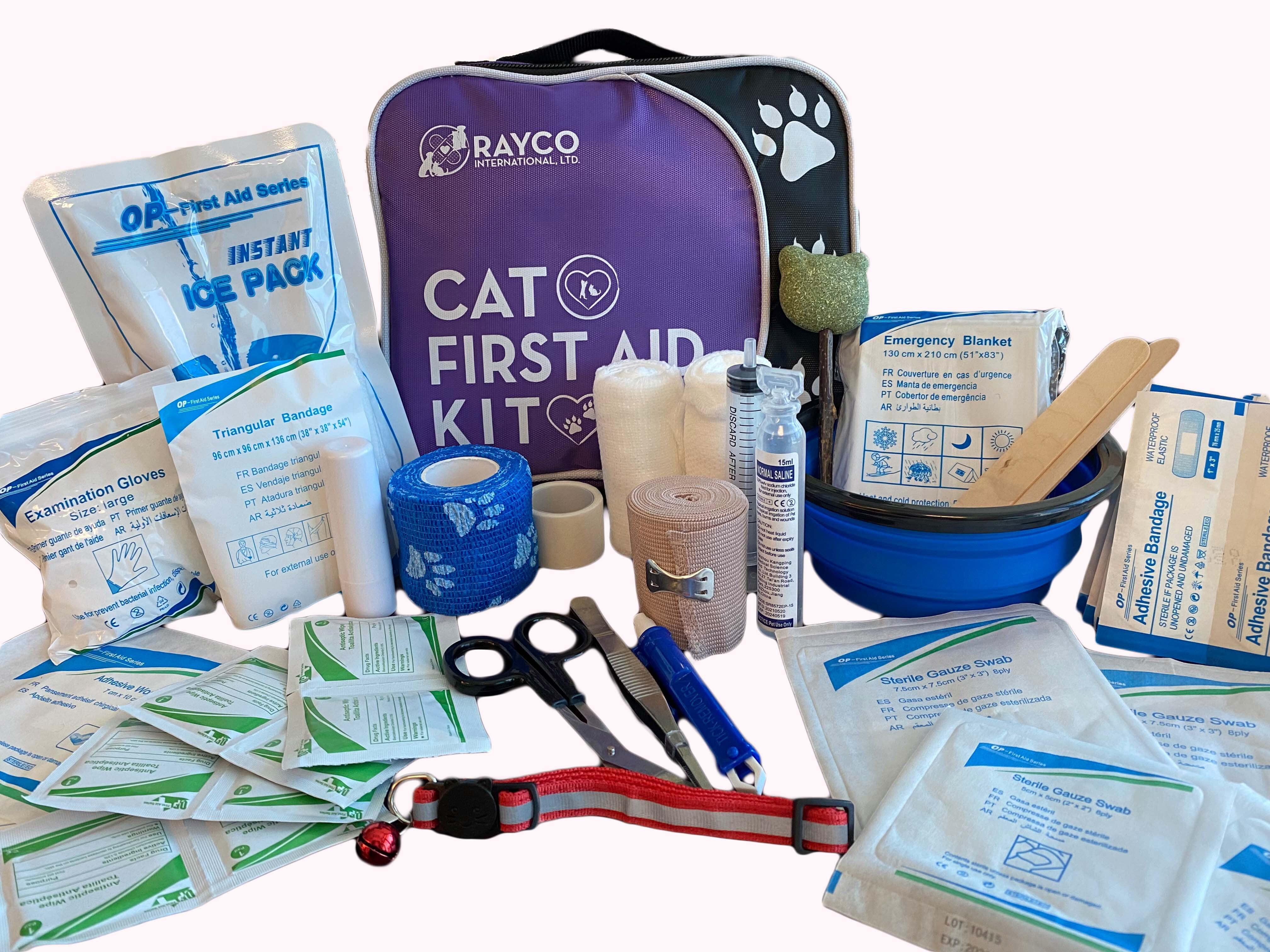
Veterinary planning becomes more important when travel distances increase. A small health issue can become a larger problem when the nearest clinic is hours away.
- Keep a first-aid kit designed for pets.
- Carry veterinary records and medication information.
- Identify emergency clinics along planned routes when possible.
- Schedule routine veterinary care instead of waiting for problems.
- Watch changes in eating, drinking, breathing, and litter habits.
24/7
Emergency planning matters because travel problems rarely follow business hours.
Rooster is my reminder that every animal has different needs, but cats especially benefit from preparation because they often hide stress until something is wrong. A simple plan for routine care, temperature safety, and emergencies makes RV life much easier for everyone.
RV cat questions
Can cats live happily in an RV?
Yes, many cats adapt well when they have safe spaces, consistent routines, and proper enrichment.
Should cats wear harnesses while RV camping?
A harness can be useful for cats that tolerate it, but outdoor access should always be supervised.
Where should a litter box go in an RV?
Place it somewhere accessible, ventilated, and away from food and water areas.
Can I leave my cat alone in an RV?
Only when conditions are safe and temperature, power, and emergency plans are reliable.



More Pinterest Visuals