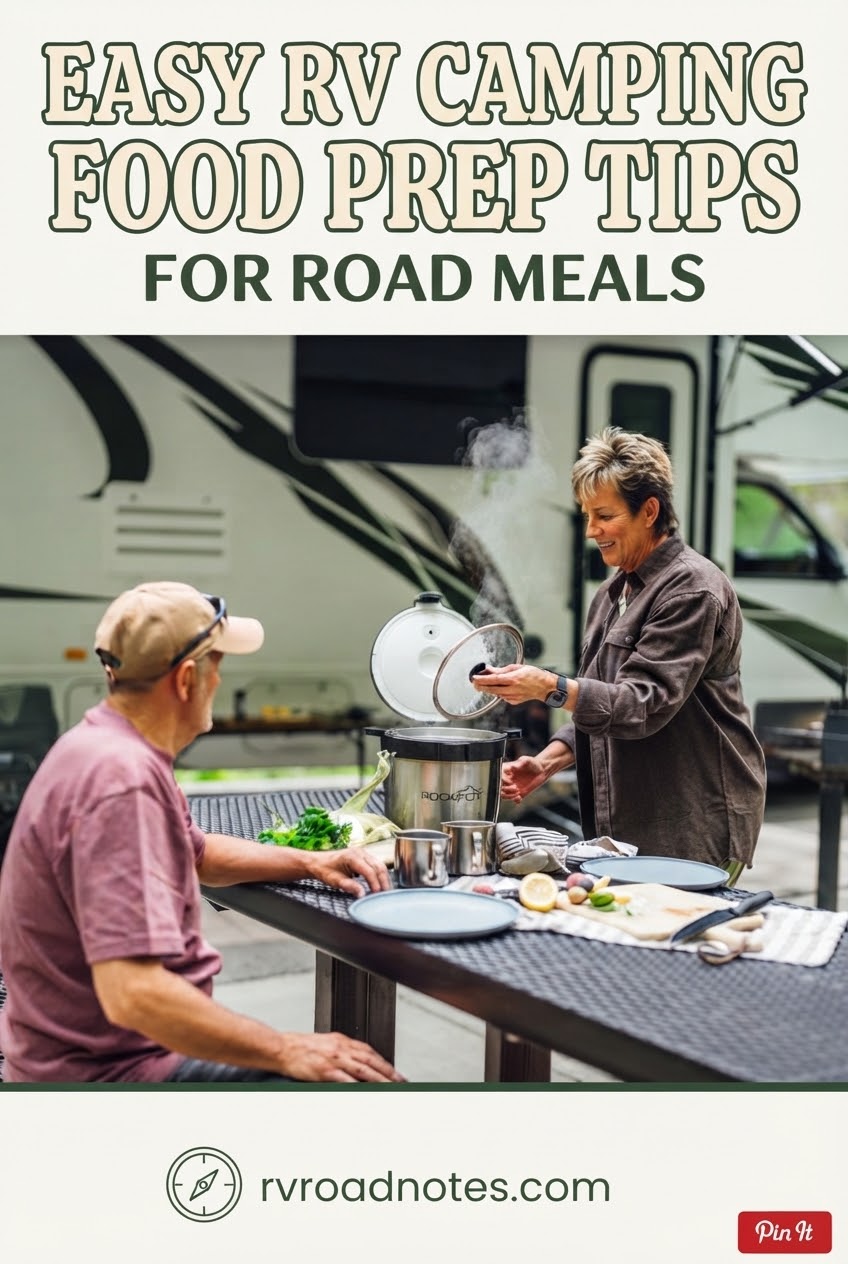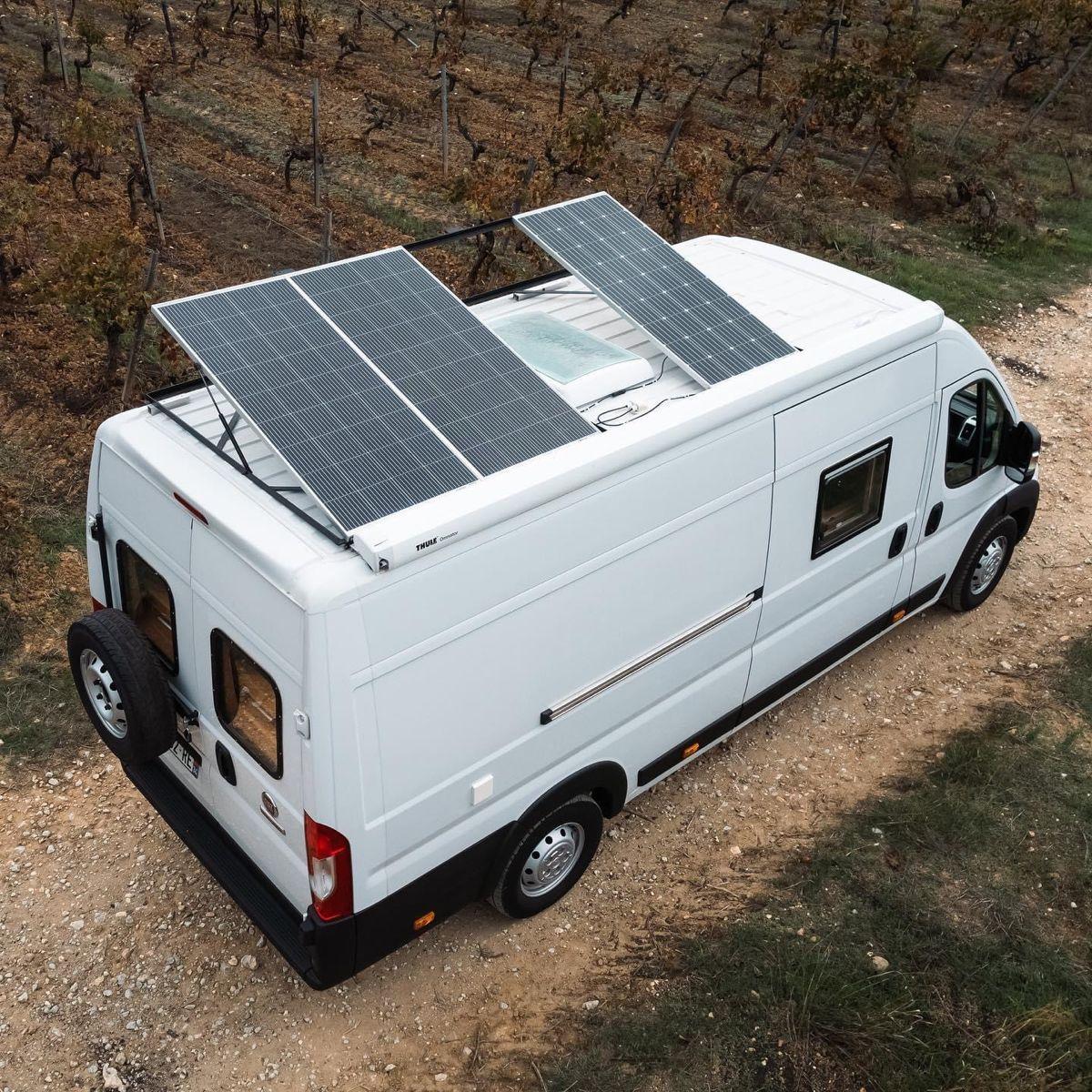
Good RV meals start before the campsite comes into view. After years of cooking in small spaces, the pattern is clear: simple food systems beat complicated recipes when storage, water, and counter space are limited.
This guide covers the parts that make RV camping food prep easier, from planning meals and organizing cabinets to storing ingredients safely and cleaning up without wasting supplies.
RV Camping Meal Planning Basics
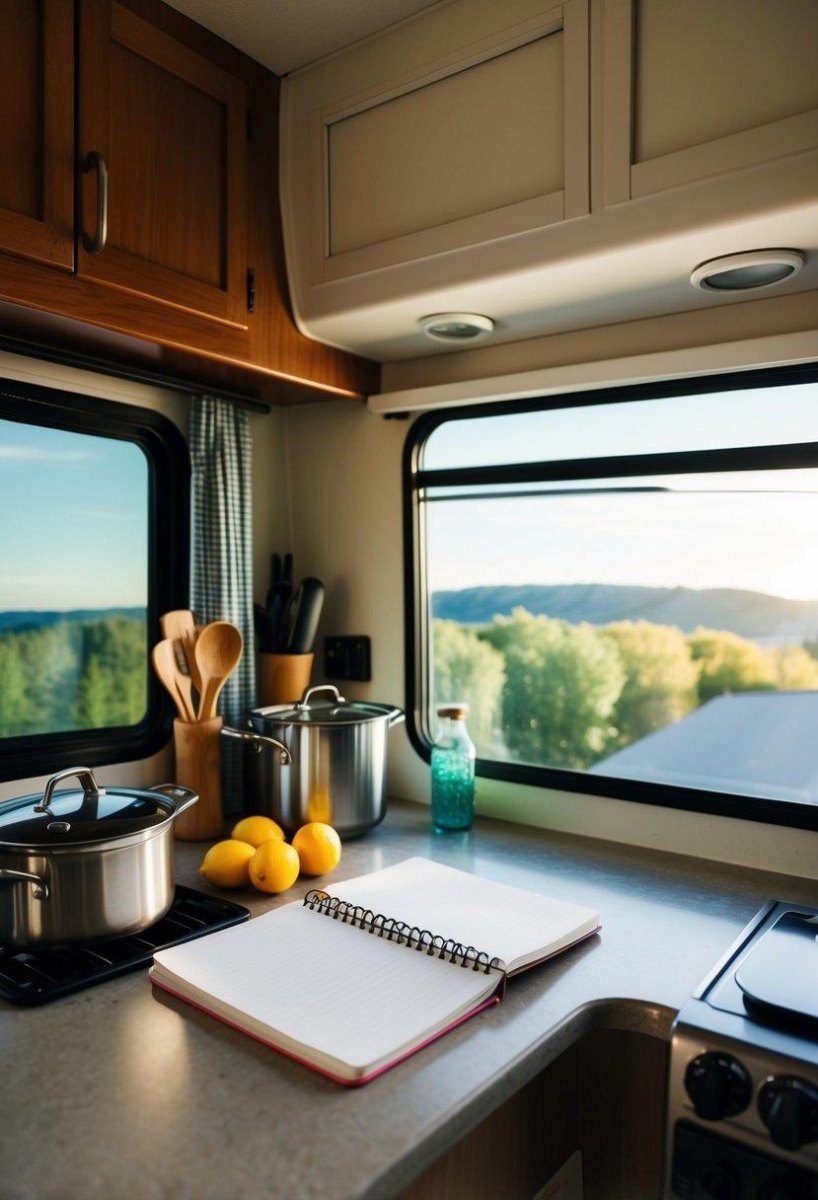
A meal plan does not need to be a rigid menu. I find it works better as a short list of flexible meals built around ingredients that can do double duty. Flexible meal planning helps when travel days change or a campsite has limited cooking options.
Before leaving, match meals to your trip length, fridge space, and cooking setup. A few repeat ingredients such as tortillas, rice, canned beans, vegetables, and proteins can cover several dinners without filling every cabinet.
Quick planning checklist
- Choose meals that share ingredients
- Plan for travel-day breakfasts and lunches
- Leave room for local food stops
Compact RV Kitchen Organization
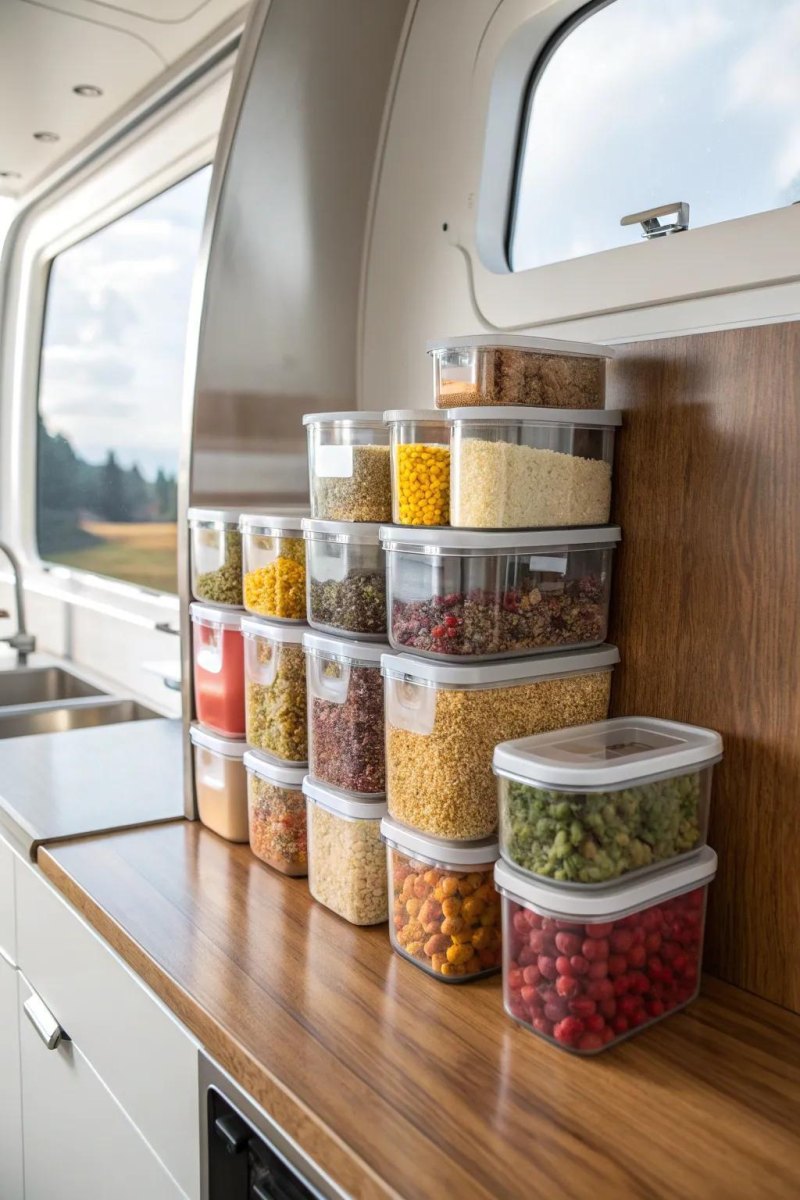
A small kitchen becomes easier when every item has a job and a home. Vertical storage, nesting cookware, and containers that prevent shifting are useful because RV cabinets are not designed like house kitchens.
I prefer organizing by frequency of use: daily cooking items near the front, occasional tools deeper in storage. It reduces the amount of unpacking required before making a basic meal.
Small-space tip
Do not buy organizers before measuring cabinets. A container that wastes two inches in a home pantry can waste a large percentage of an RV cabinet.
Prepping Fresh Ingredients Before the Trip
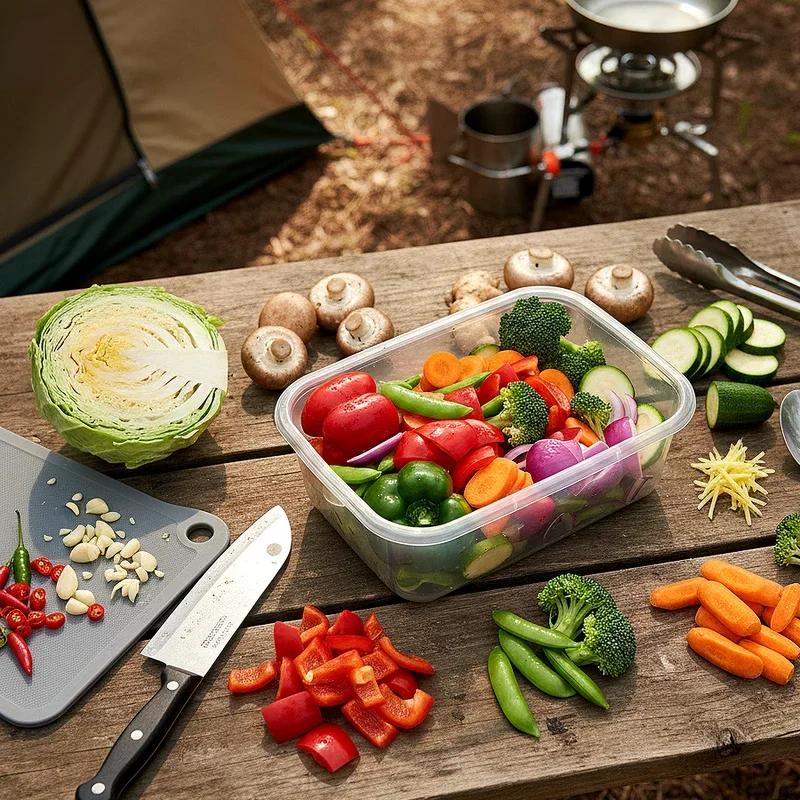
Prepping ingredients at home saves water, time, and mess at camp. Washing produce, portioning ingredients, and labeling containers creates a smoother first few travel days. Pre-trip ingredient prep is especially useful before arriving somewhere without easy grocery access.
Keep refrigerated foods cold during preparation and transport. Food safety guidance recommends keeping refrigerator temperatures at or below 40°F for safe storage.
- Wash. Clean produce and remove unnecessary packaging.
- Portion. Divide ingredients into meal-sized containers.
- Label. Mark dates and meal ideas.
Easy Make-Ahead Breakfasts for RV Travel
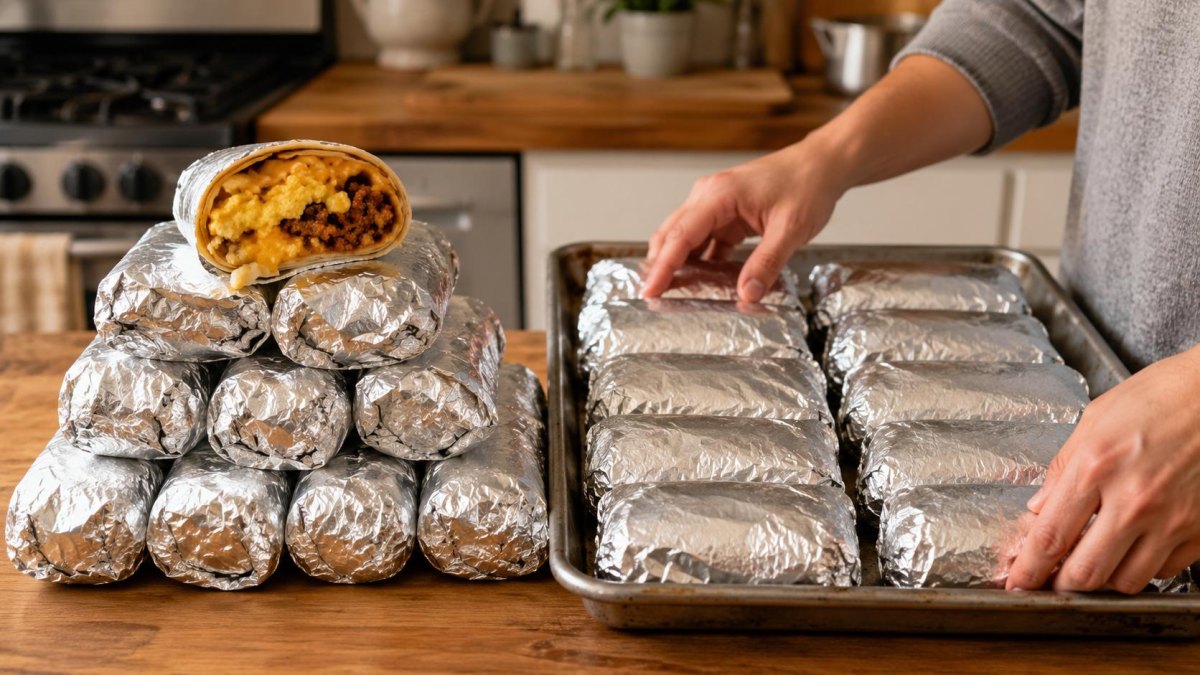
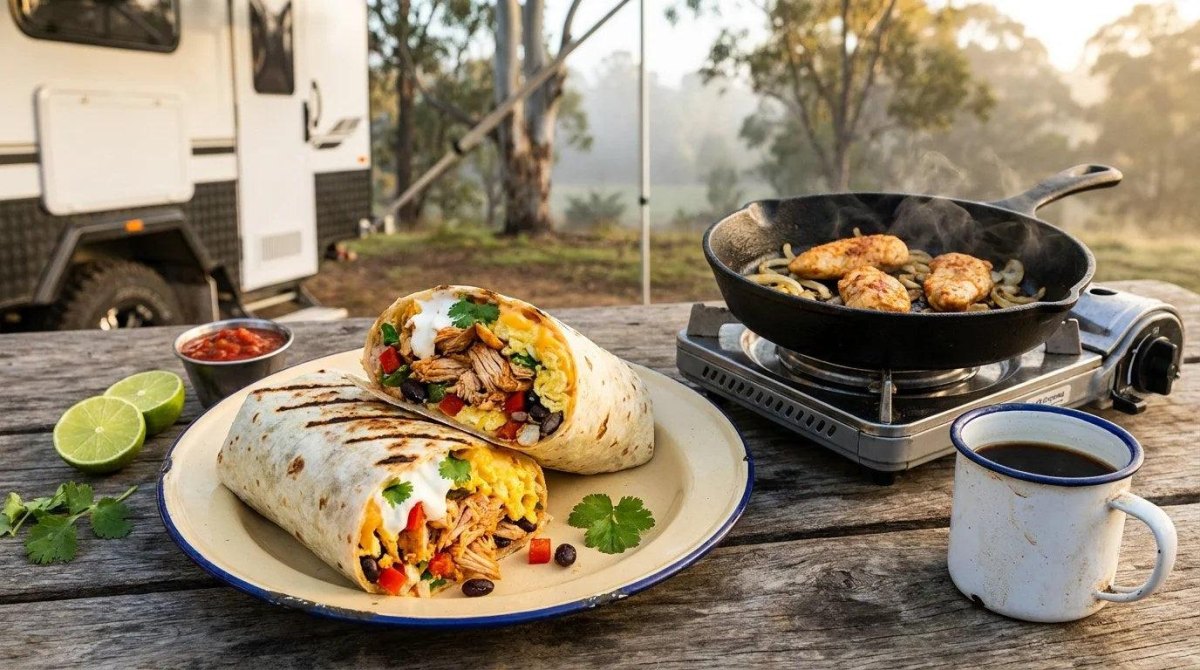
Mornings at camp are usually when complicated cooking plans fall apart. Make-ahead breakfasts such as overnight oats, breakfast burritos, and baked egg dishes reduce cleanup and get the day moving faster.
For short travel days, cold options are often enough. Overnight oats, yogurt combinations, and fruit require little equipment and almost no cleanup.
- Fast option: Overnight oats or yogurt cups
- Freezer option: Wrapped breakfast burritos
- Slow morning option: One-pan eggs and vegetables
Simple Lunches for Roadside Stops
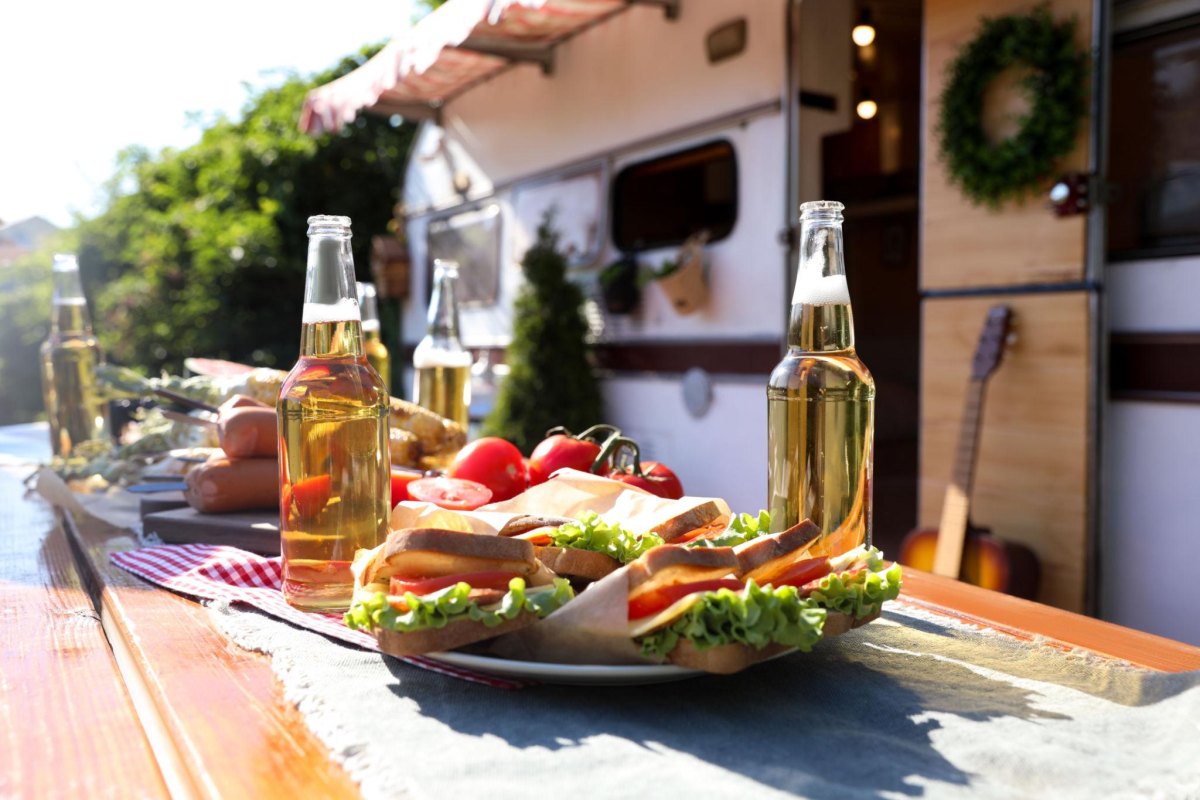
Lunch is where RV travelers often lose time. A good roadside meal should be easy to grab without turning a fuel stop into a full kitchen setup. Portable lunches like wraps, grain bowls, and prepared salads work well.
I keep lunch ingredients separate until needed because it prevents soggy textures and gives more flexibility when plans change. Balanced travel snacks and meals can also help avoid relying only on convenience stops.
| Meal | Prep advantage |
|---|---|
| Wraps | Quick assembly |
| Cold pasta salad | Uses leftovers well |
| Snack boxes | No cooking required |
One-Pot RV Dinner Recipes
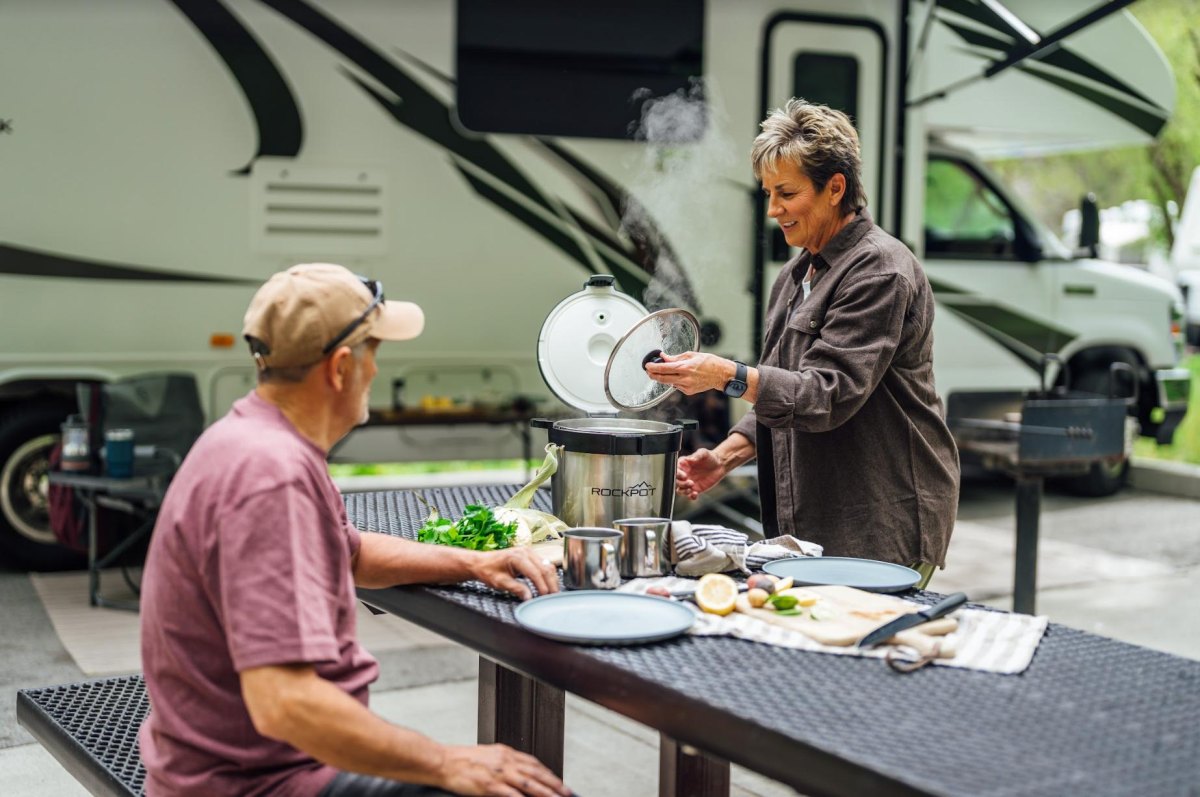
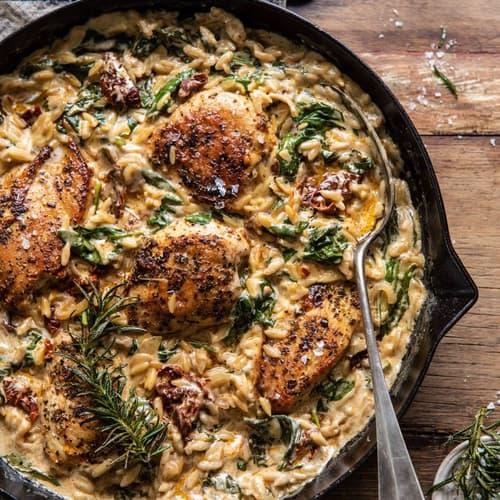
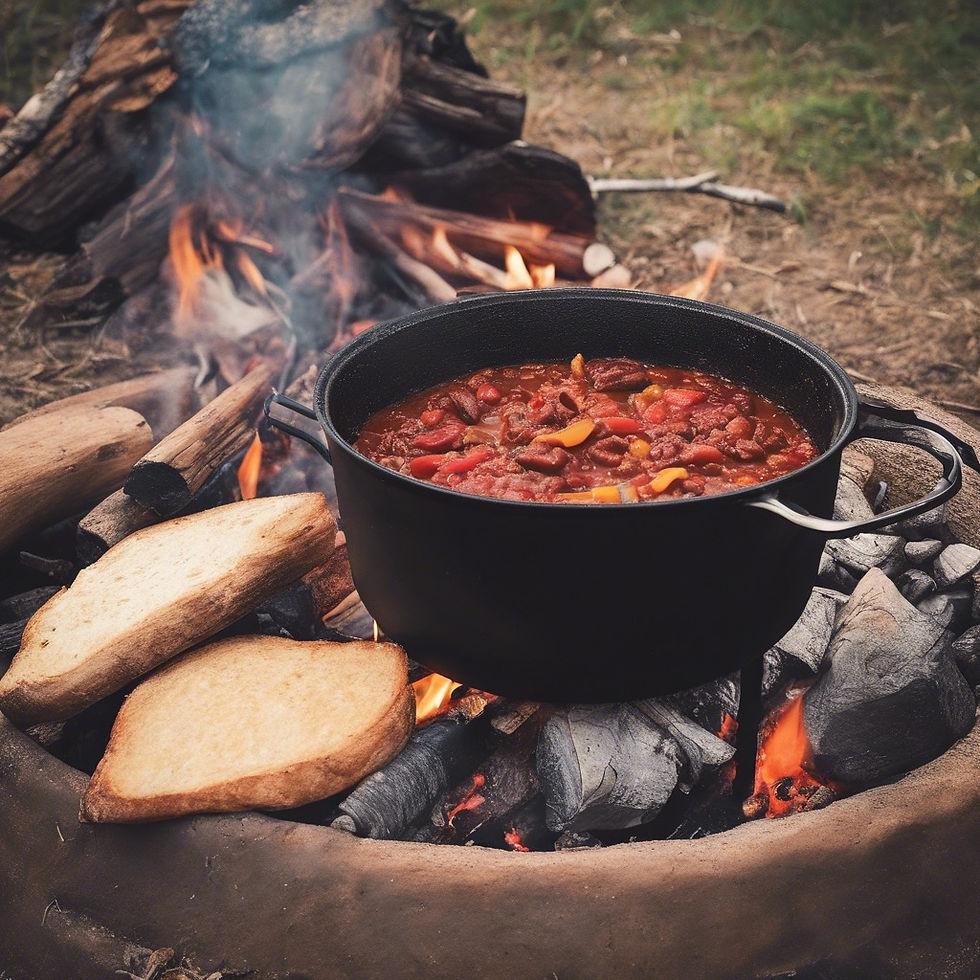
One-pot meals are a practical match for RV kitchens because they reduce dishes and use fewer cooking tools. One-pot dinners such as chili, pasta dishes, and skillet meals simplify evenings after a long driving day.
The best RV dinner recipes are not necessarily fancy. They are reliable, adaptable, and easy to portion for leftovers.
Benefits
- Less cleanup
- Fewer ingredients
- Easy leftovers
Challenges
- Limited texture variety
- Requires planning
Campfire Cooking Food Preparation
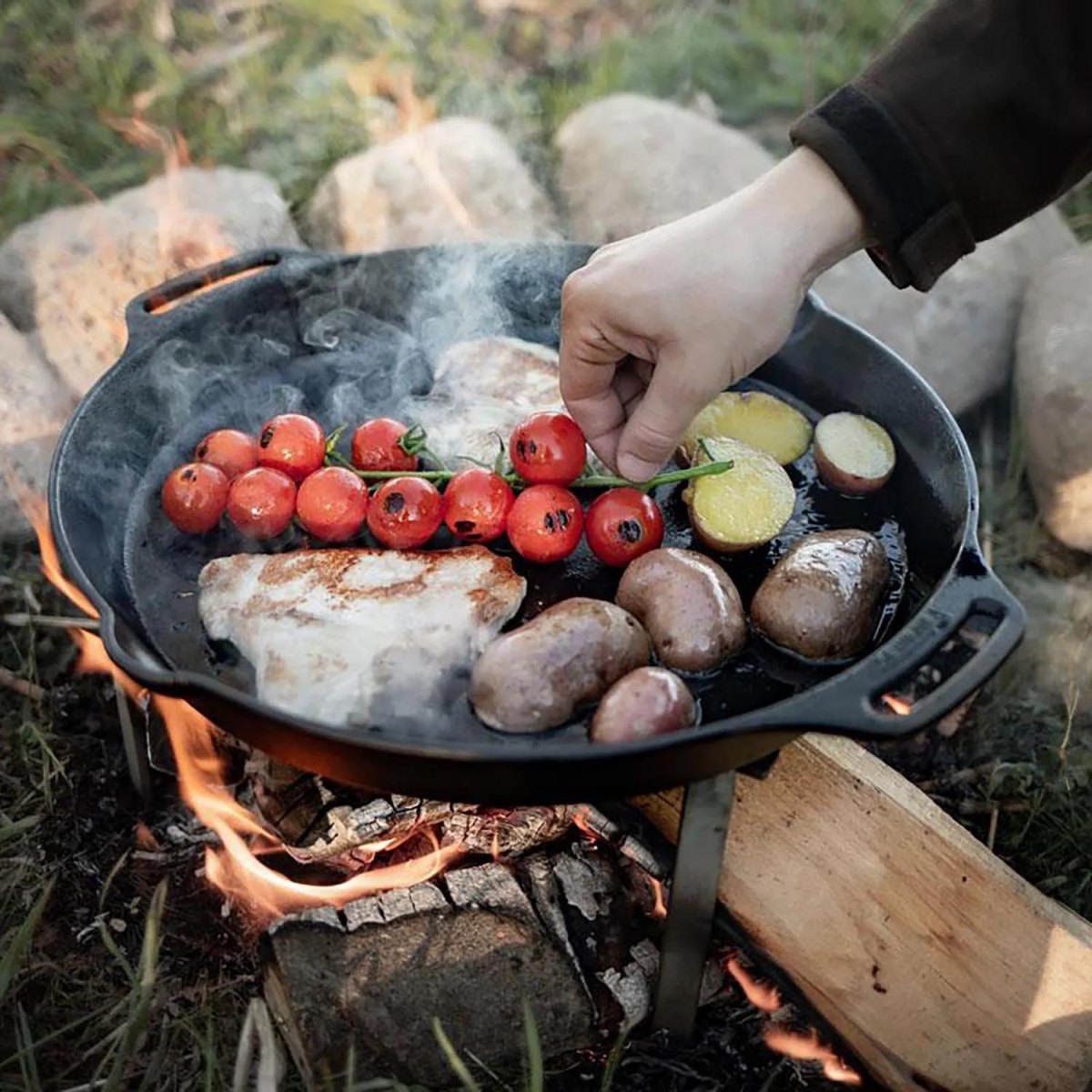
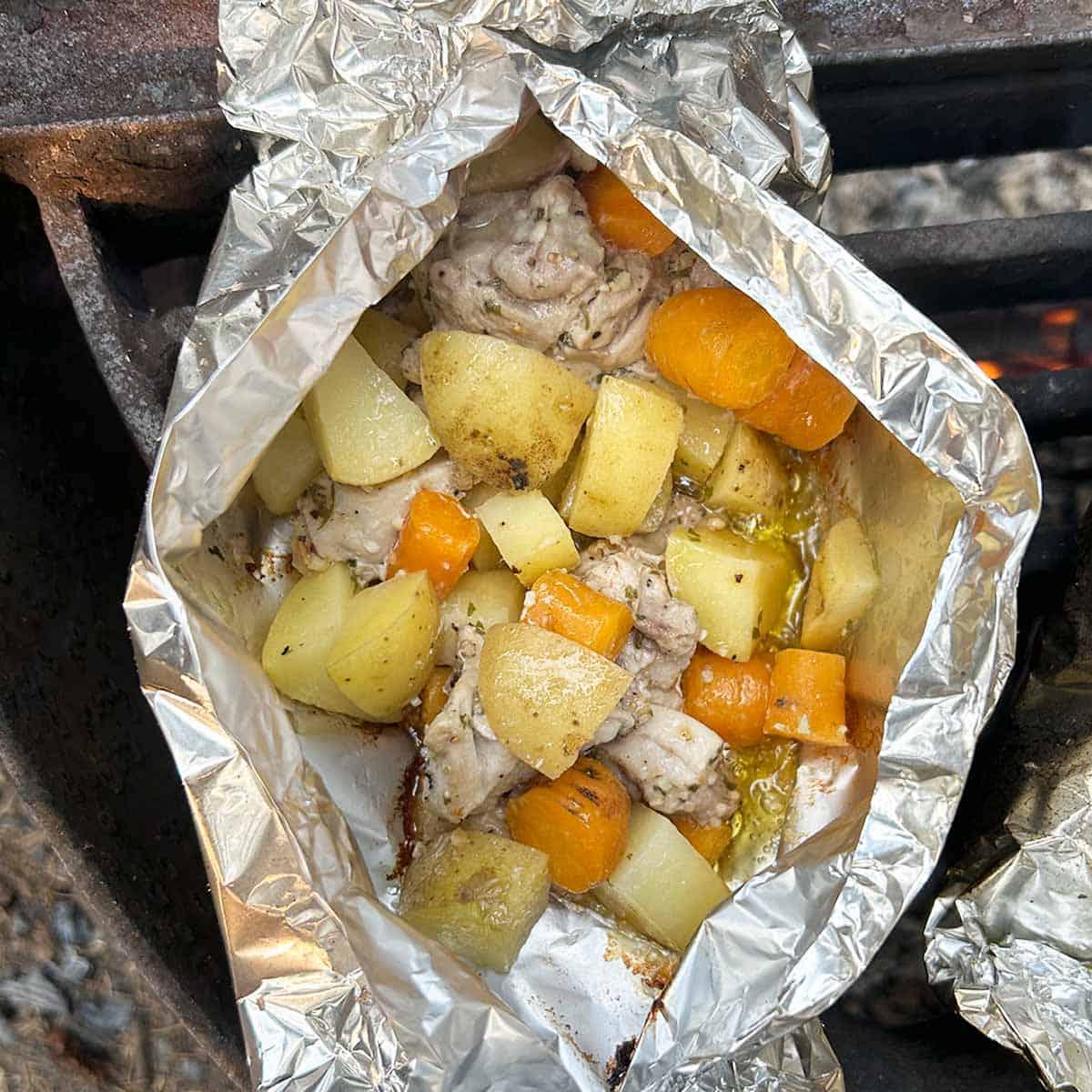
Campfire cooking works best when the preparation happens before the fire starts. Campfire meal prep means chopping ingredients, packing tools, and checking local fire restrictions before cooking outdoors.
Never assume a fire is allowed. Restrictions can change with weather conditions, and following posted rules protects campsites and future access.
Safety reminder
Never use a campfire, grill, or cooking appliance as a substitute for indoor heating. Follow appliance instructions and local fire rules.
Smart RV Food Storage Solutions
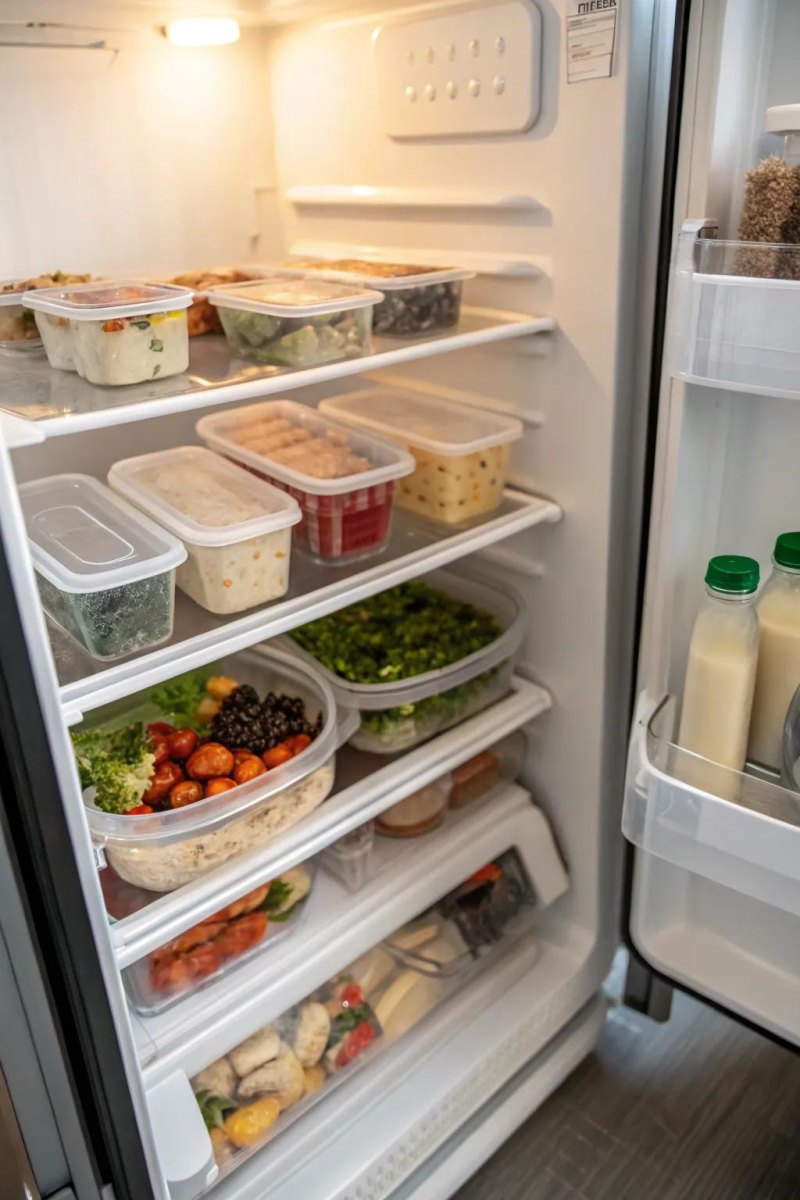
Food storage in an RV is about access as much as capacity. Smart food storage keeps ingredients visible, secure during travel, and easy to rotate before they expire.
Clear containers, grouped categories, and smaller portions usually work better than large packages that occupy valuable cabinet space.
- Secure containers before driving
- Store frequently used foods within reach
- Rotate older items forward
Freezer-Friendly Meals for RV Trips
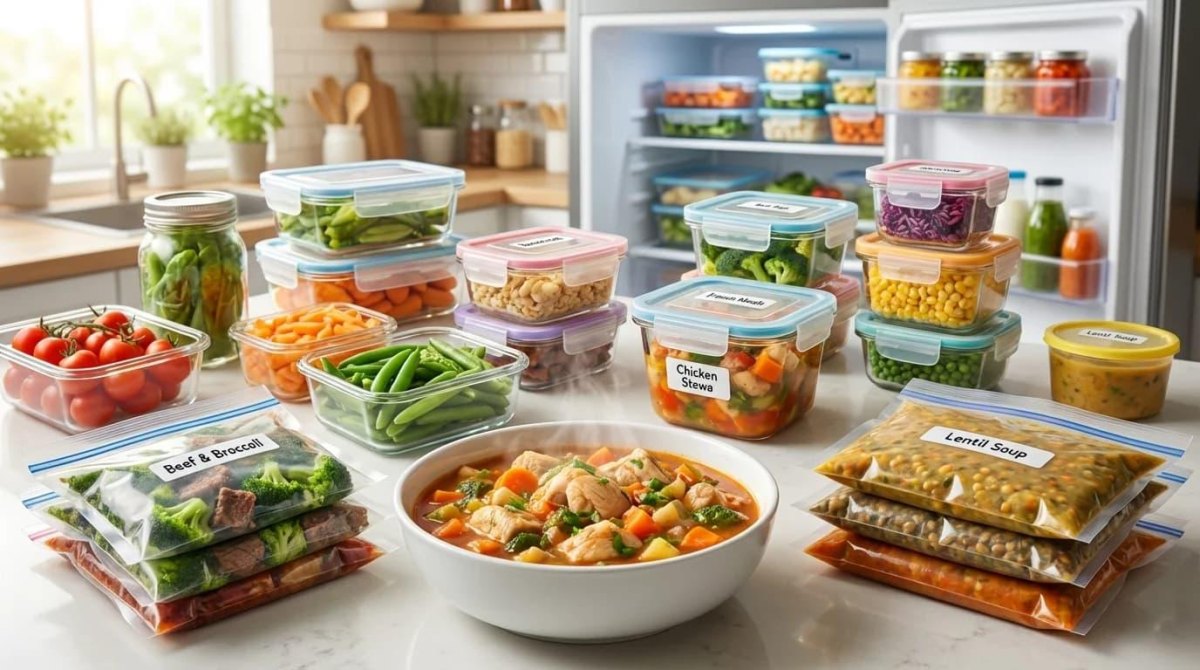
Freezer meals can remove a lot of cooking pressure during busy travel weeks. Freezer-friendly recipes such as soups, casseroles, and prepared proteins provide backup meals when cooking time disappears.
The key is matching freezer space to trip length. A freezer full of meals sounds efficient until it leaves no room for unexpected leftovers or local ingredients.
1 plan
A few versatile freezer meals can cover multiple travel days
Healthy Snacks for Long RV Drives
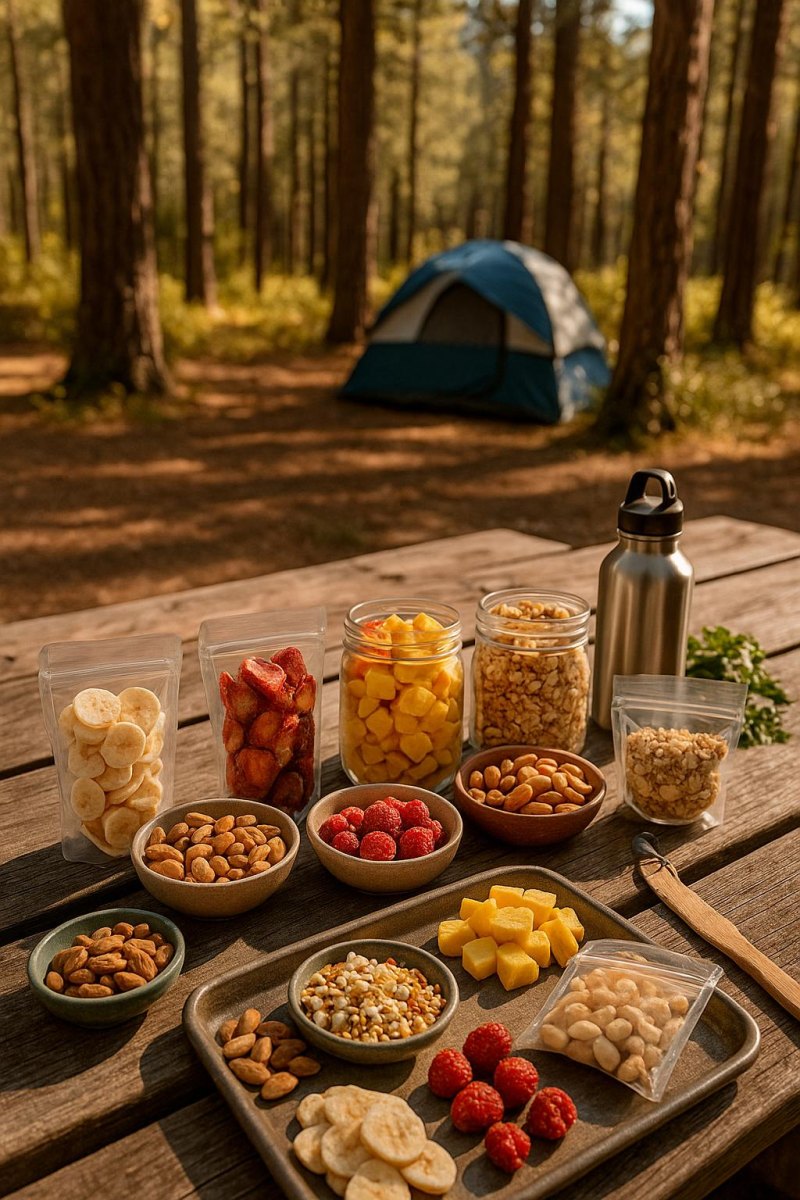
Long driving days make snacks part of the meal plan. Healthy road snacks that combine protein, fiber, and convenience are easier to manage than stopping whenever hunger appears.
Good options include nuts, fruit, vegetables with dips, trail mix, and shelf-stable protein snacks. Portioning them before leaving keeps the snack drawer from becoming a mystery pile.
Road-ready snack idea
Create small snack bags with nuts, dried fruit, crackers, and a protein item for simple grab-and-go choices.
Water and Cooking Supply Preparation
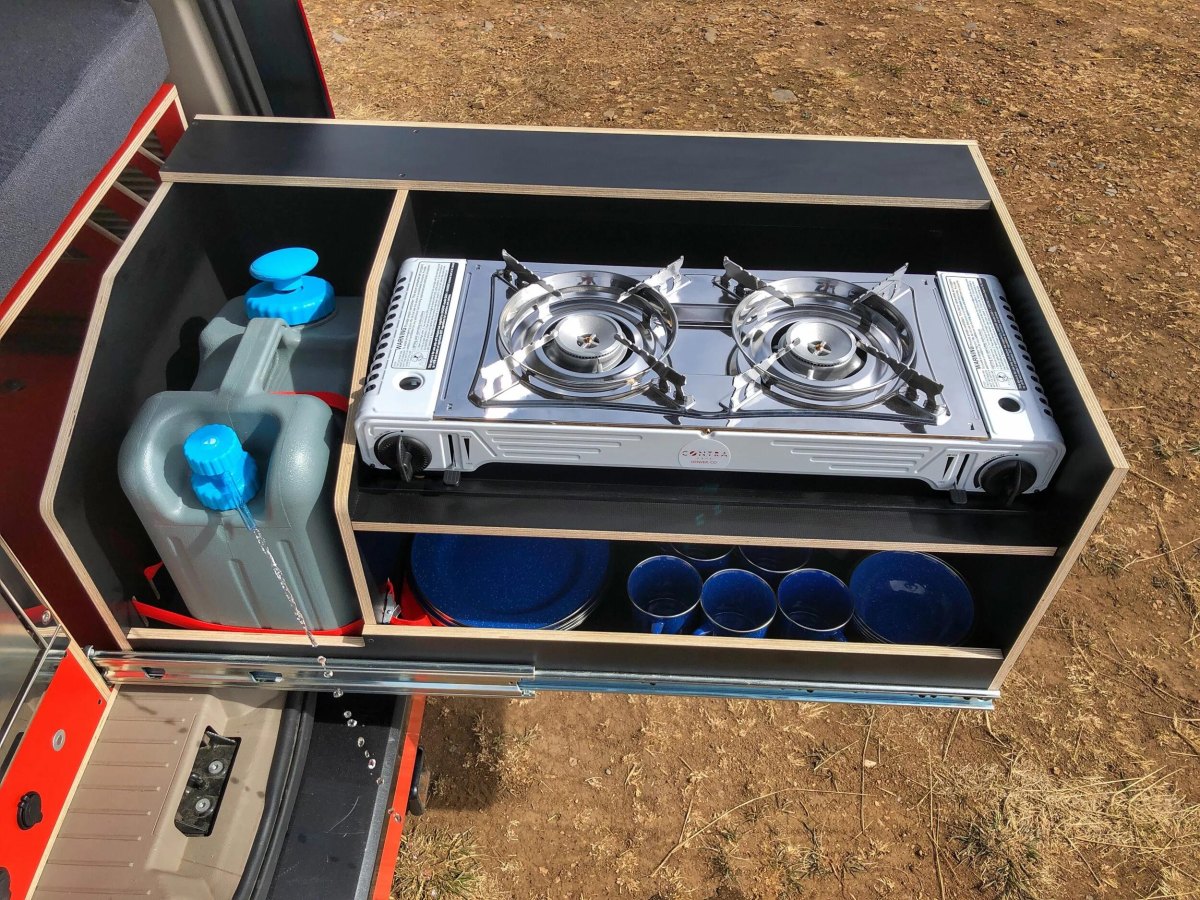
Cooking supplies deserve the same planning as food. Water preparation, dish supplies, and cooking tools should match whether you have full hookups or are camping without services.
Bring only the tools that earn their storage space. A compact cutting board, reliable knife, cooking pan, and cleaning supplies usually cover most RV meals.
Planning note
Use potable water sources and follow campground or agency rules for water handling and disposal.
Cleaning Up After RV Meal Prep
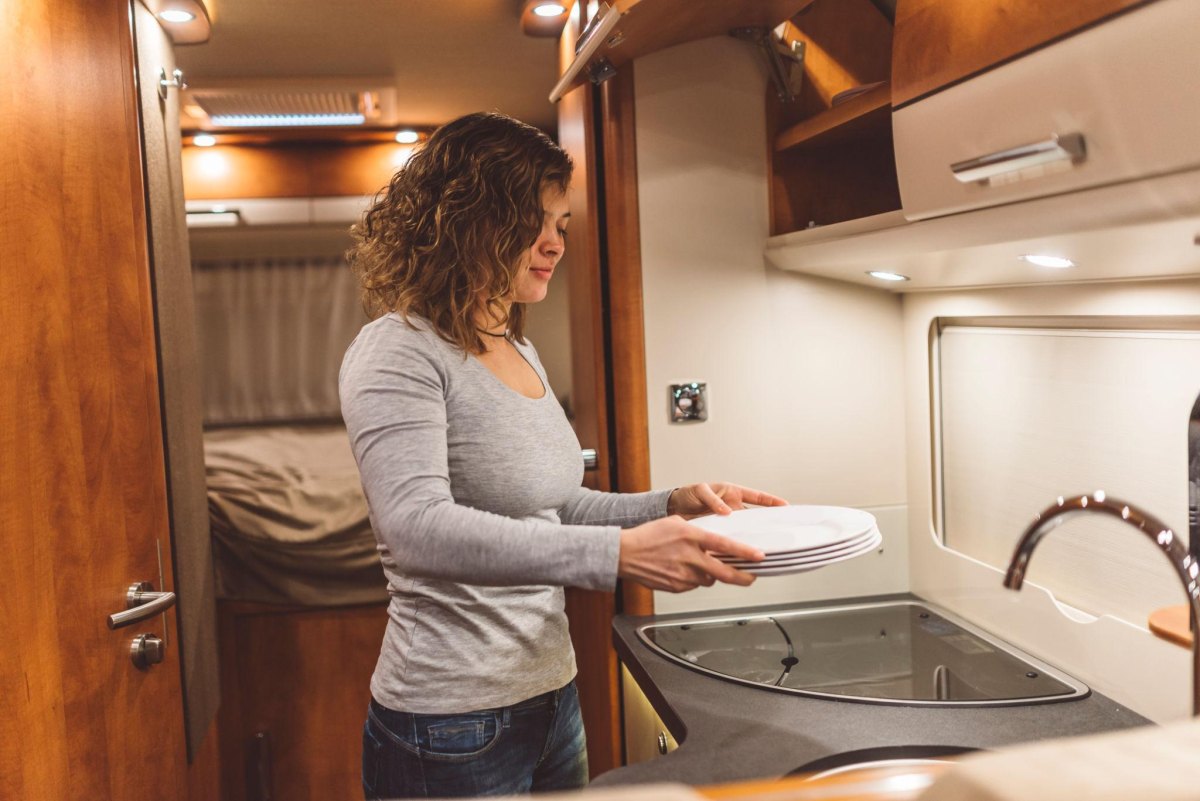
Cleanup is part of the meal plan, not an afterthought. Efficient RV cleanup saves water, protects small sinks from clutter, and makes the next meal easier to start.
Simple habits help: scrape plates first, wash in an organized order, and clean cooking tools immediately after use.
- Scrape. Remove food scraps before washing.
- Wash. Clean the least dirty items first.
- Reset. Return tools to travel-safe storage.
More Pinterest Visuals