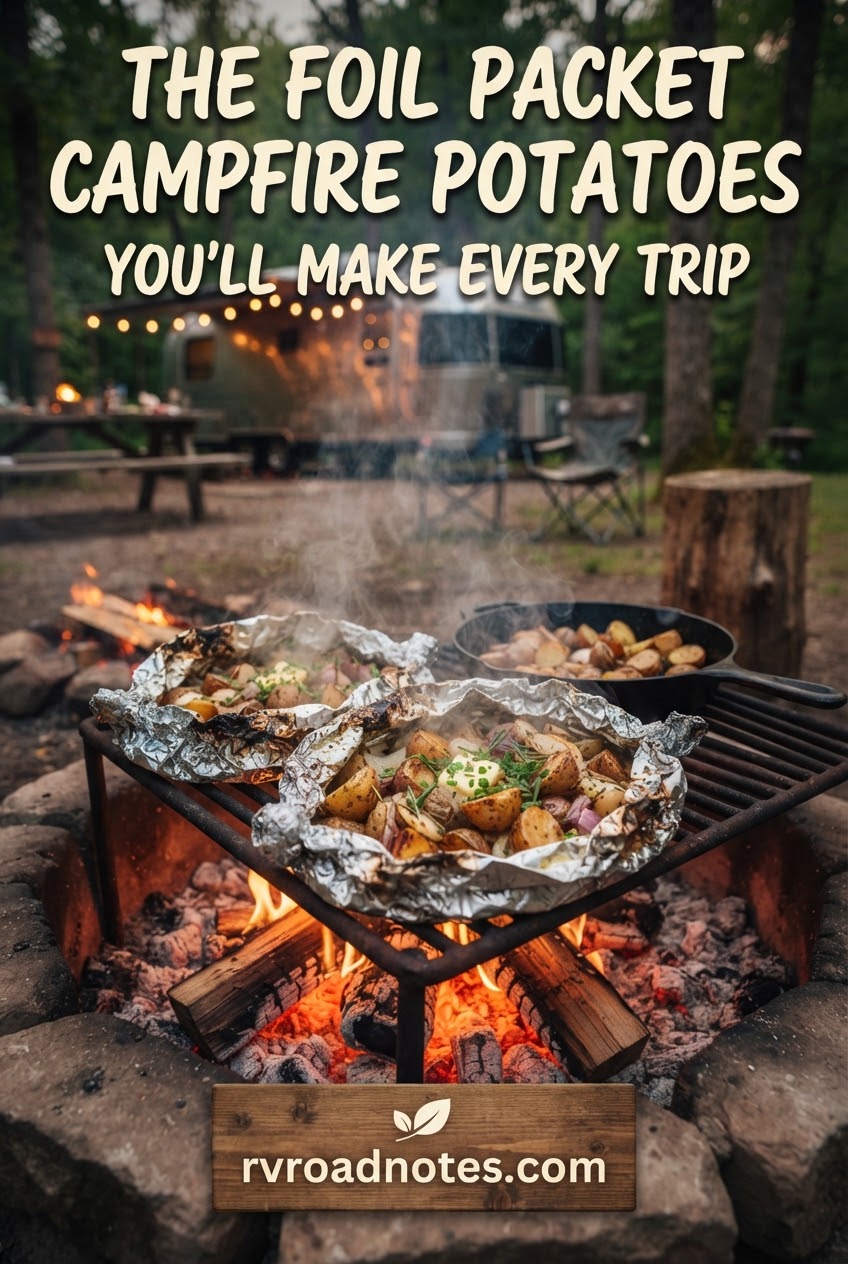
Six years of camp cooking with a propane oven the size of a shoebox taught me to love anything that skips the rig kitchen entirely, and foil packet potatoes over coals are my most-repeated dinner for that reason. This is the version I actually make at my picnic table with a cutting board, one mixing bowl, and whatever fire I'm legally allowed to build that night. No special gear, minimal water for cleanup, and it holds up whether you're at a paid site with a fire ring or dispersed camping where you're using an existing pit.
Setting Up the Camp Kitchen
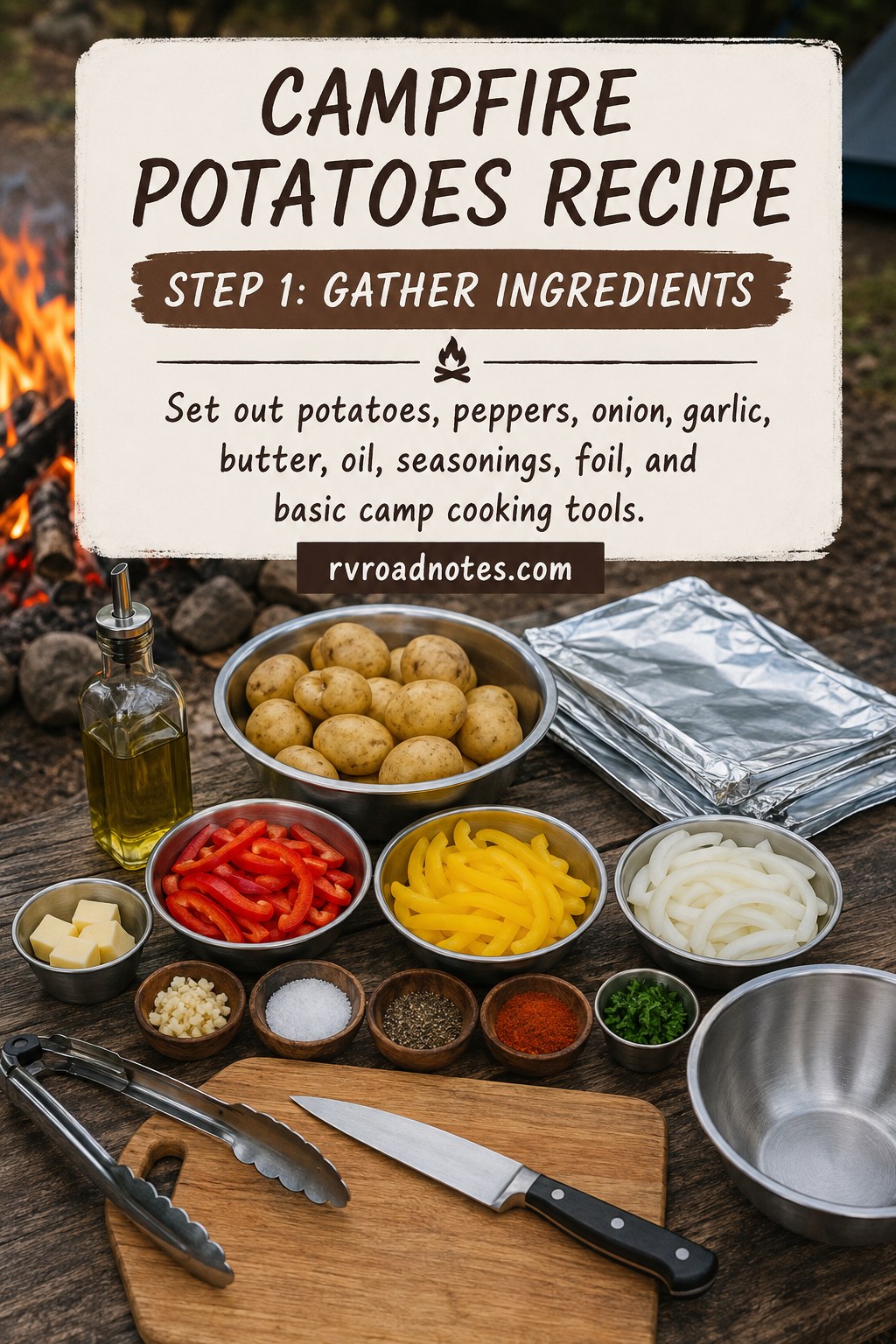
My rig has maybe eighteen inches of usable counter, so most of my real prep happens outside on a cutting board balanced on the picnic table, which is exactly what's set up here. Before I strike a match on anything, everything gets laid out and measured: potatoes, red and yellow bell peppers, onion, garlic, butter, olive oil, and a small lineup of seasonings — salt, pepper, paprika, and fresh chopped parsley for the end.
- Tongs — for handling the packet once it's on coals, not the food before that
- A sharp knife and stable board — a wobbly cutting surface at a picnic table is how you cut yourself, not the potatoes
- Heavy-duty foil — the regular household kind tears at the seams and you lose everything into the coals
I keep the tools minimal on purpose. Fewer dishes means less of my limited water going to cleanup later.
Slicing for Even Cooking
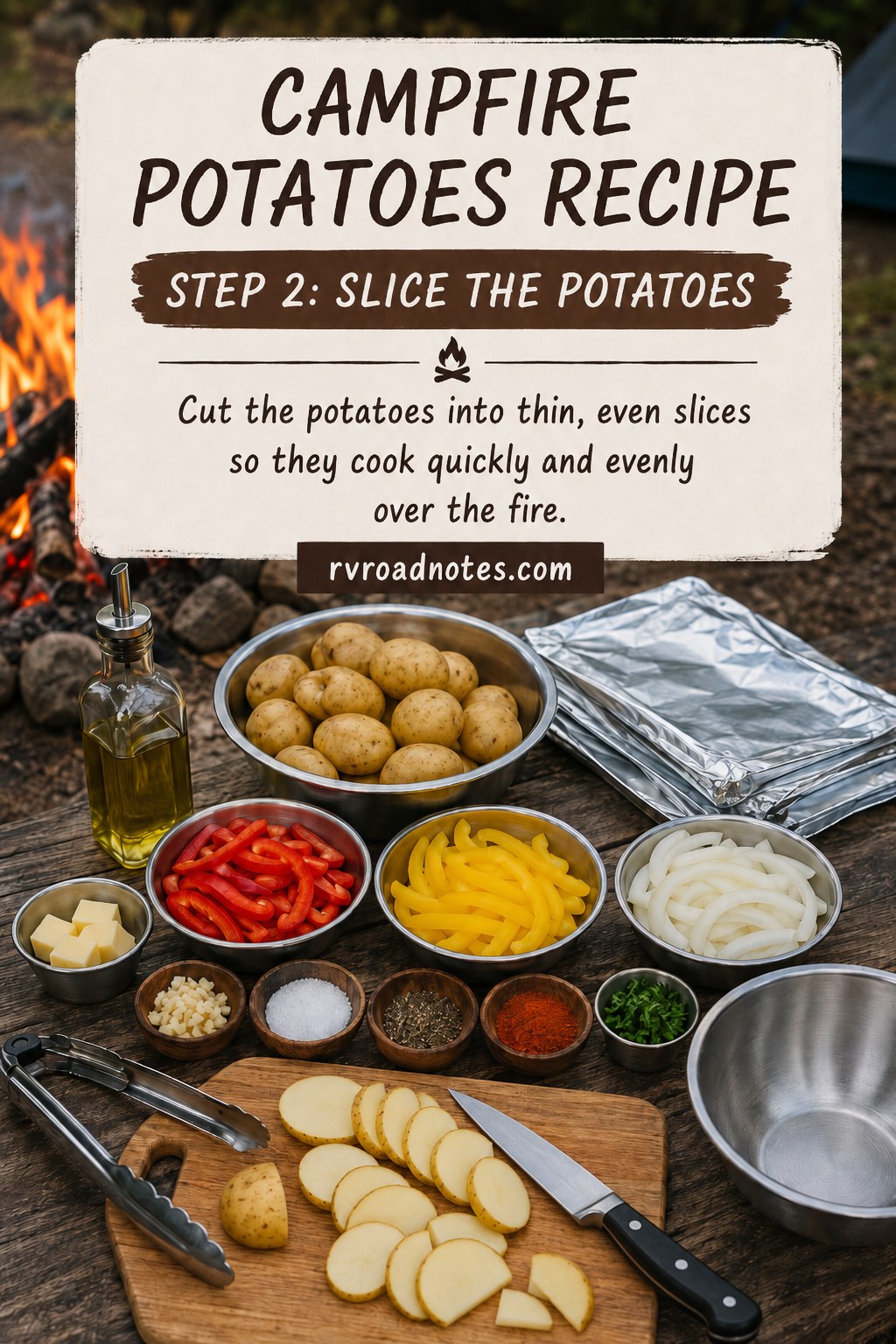
This is where most first attempts at campfire potatoes go wrong, and I know because my first version came out with raw centers and blackened edges. The fix is thin, even slices — roughly a quarter inch, no thicker — cut straight through unpeeled baby potatoes, skin left on for texture and one less thing to prep.
Even thickness matters more than exact size. A rocking cut with the knife tip anchored gives you consistent rounds fast, and consistency is what lets every piece hit fork-tender at the same time instead of some going mushy while others stay hard.
If a slice is thick enough that you can't see light through it, it's going to fight you on the coals — that's the rule I go by now.
I sanitize my hands and the board before this step, same as I do year-round, because a boondocking fridge running on propane through a hot afternoon isn't the place to get lazy about food safety.
Building the Vegetable Mix
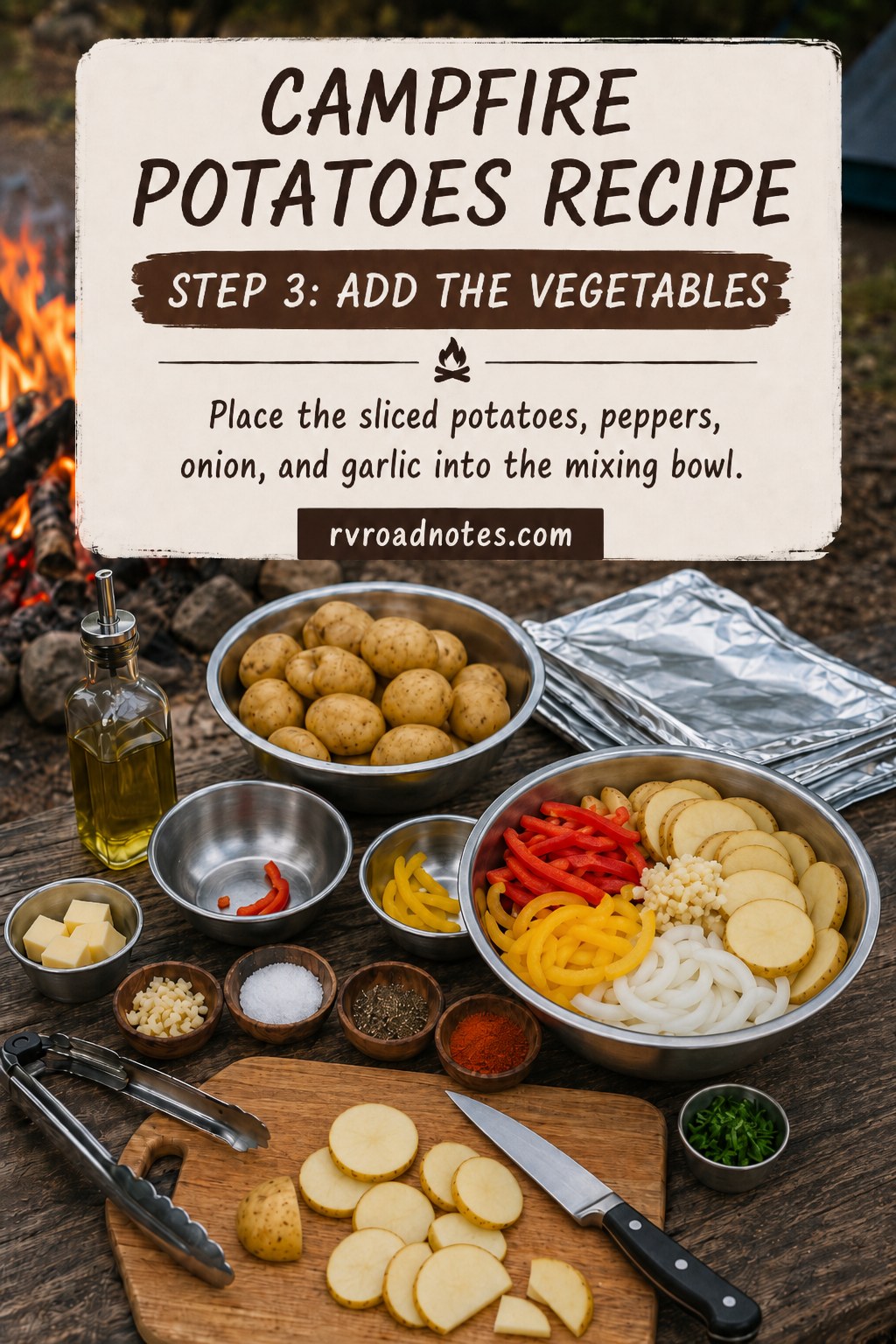
Everything sliced goes straight into one mixing bowl — potatoes, peppers, onion, and minced garlic — and that's the entire dishwashing footprint for this recipe besides the cutting board and knife. When water is something I'm hauling in jugs rather than running from a tap, a one-bowl system isn't a preference, it's arithmetic.
The layering in the bowl doesn't need to be careful. What matters is that the peppers and onion are cut to roughly match the potato slices in size, so nothing cooks faster or slower once it's sealed in foil. I go heavier on potatoes than peppers by volume, since they're the part that has to actually cook through, not just soften.
- Garlic goes in whole cloves, minced fine — it burns fast if left in large chunks near direct heat
- Onion in half-moons, not rings — they hold together better through the tossing and the fire time
Seasoning Before the Fire
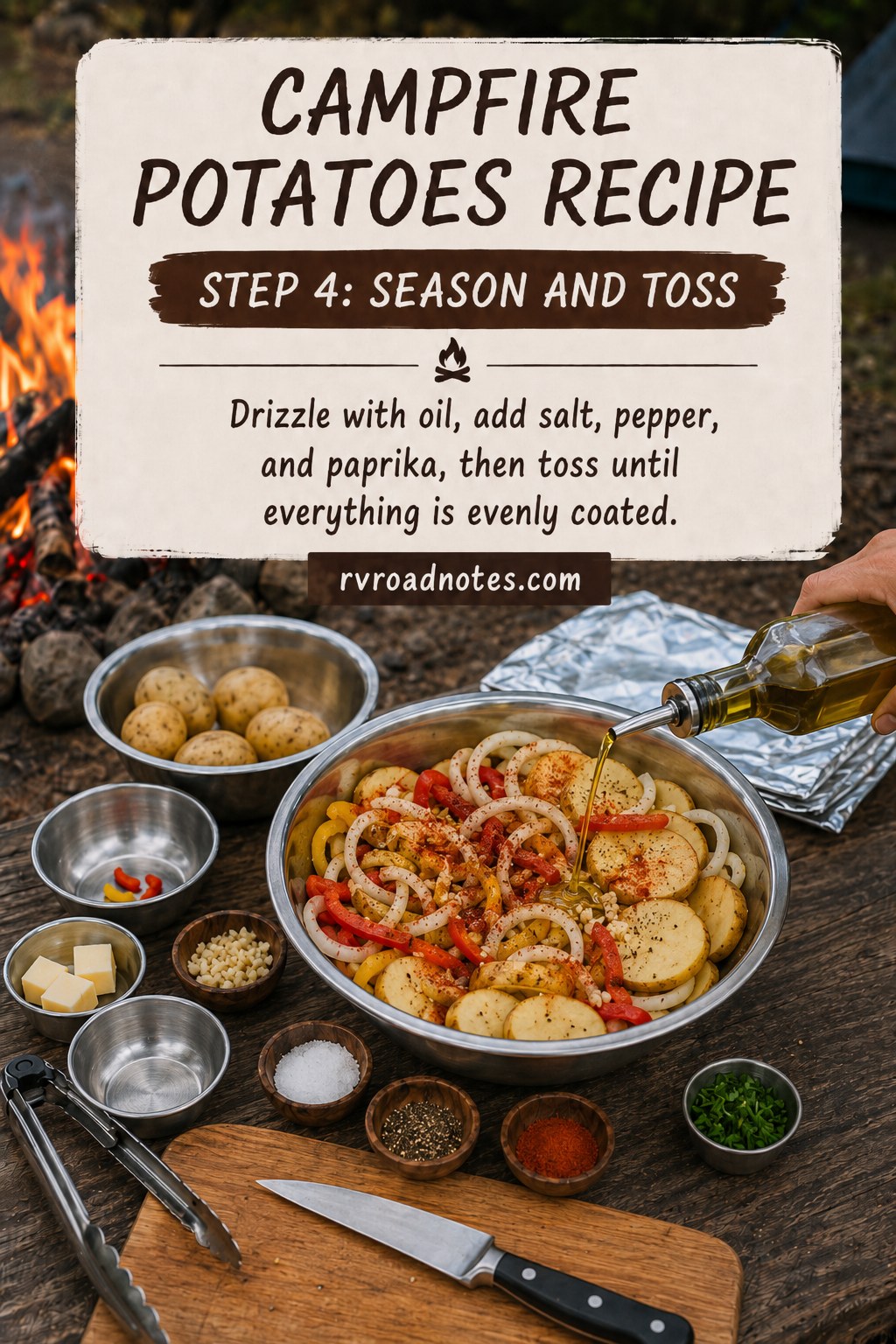
Oil goes on first, drizzled directly over the mixed vegetables, then salt, pepper, and paprika, tossed by hand until every slice has a visible coating. The paprika is doing more than color here — it's the seasoning that survives sealed foil cooking best without turning bitter, unlike some dried herbs that go flat under sustained heat.
I taste-test the seasoning level generously at this stage because there's no adjusting once the packet is sealed and on the coals. If it looks under-seasoned in the bowl, it will taste under-seasoned twenty minutes later, and reopening a hot packet to fix that costs you heat and time you don't get back.
What I've learned to skip: fresh herbs at this point. Anything delicate gets scorched near the coals — parsley and chives go on at the very end, after cooking, not before.
Assembling the Foil Packet
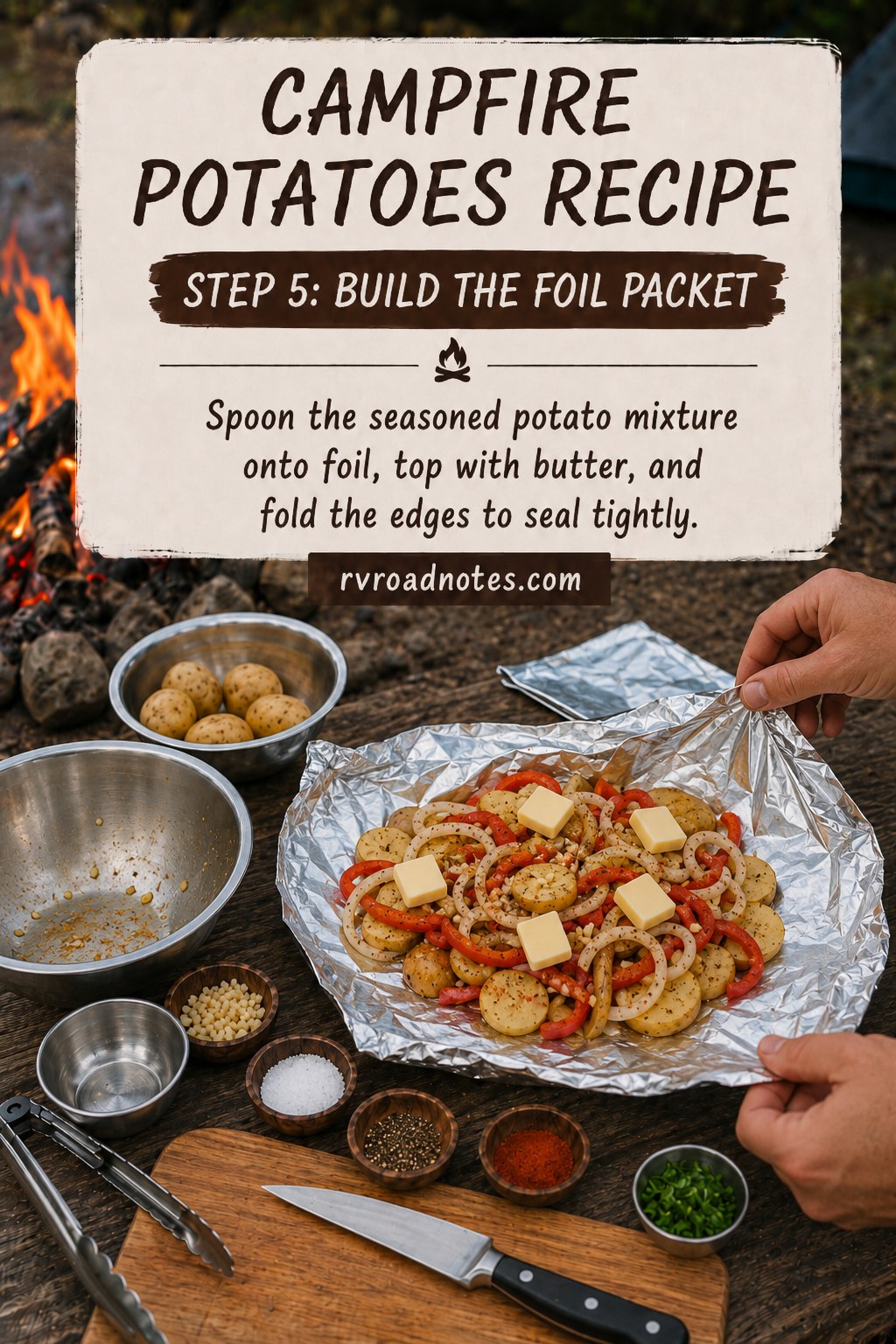
I use two layers of heavy-duty foil, not one, laid flat with the seasoned mixture spooned into the center rather than spread edge to edge — that center placement is what lets you fold and seal without the contents pushing through a weak seam. Pats of butter go on top before sealing, not stirred in, so they melt down through the layers as the packet heats rather than pooling in one spot.
The fold matters more than people expect. I bring the long sides together first and crimp down tight, then fold both ends up and in, twice each, so steam can't find a gap. A packet that leaks steam loses moisture fast, and dry potatoes over coals turn leathery instead of tender.
- Double-layer the foil before adding anything
- Center the mixture, leave slack on all sides
- Crimp seams twice, don't just fold once and hope
Cooking Over the Coals
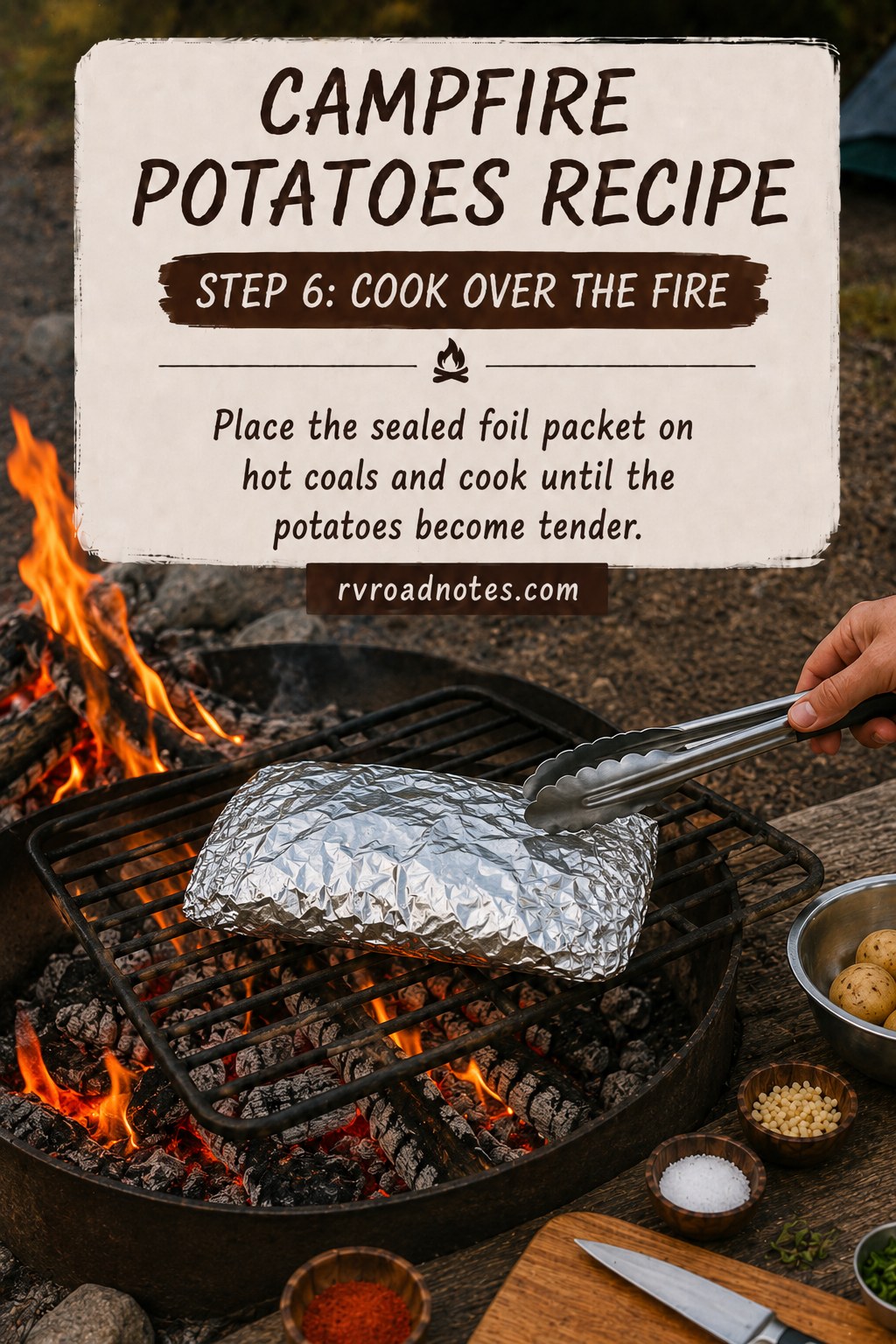
The packet goes on a cast iron grate set over hot coals — not directly in open flame, and not balanced on burning logs. Flame licking directly at foil scorches one side while the rest stays underdone, and it's the single most common reason people give up on foil packet cooking. Coals give steady, even heat instead.
I run these roughly 20 to 25 minutes, flipping the packet once around the halfway mark with tongs, never bare hands. Before any of this, I check current fire restrictions for the area — dispersed camping in dry country means fire bans can be in effect with zero warning signs posted, and that's on the camper to know, not the land.
I never leave a fire unattended while this cooks, and I keep a way to fully extinguish it within reach the entire time. A generator or stove is never a substitute for actual ventilated outdoor cooking, and carbon monoxide risk from any combustion source near an enclosed space is not something to gamble on.
Checking for Doneness
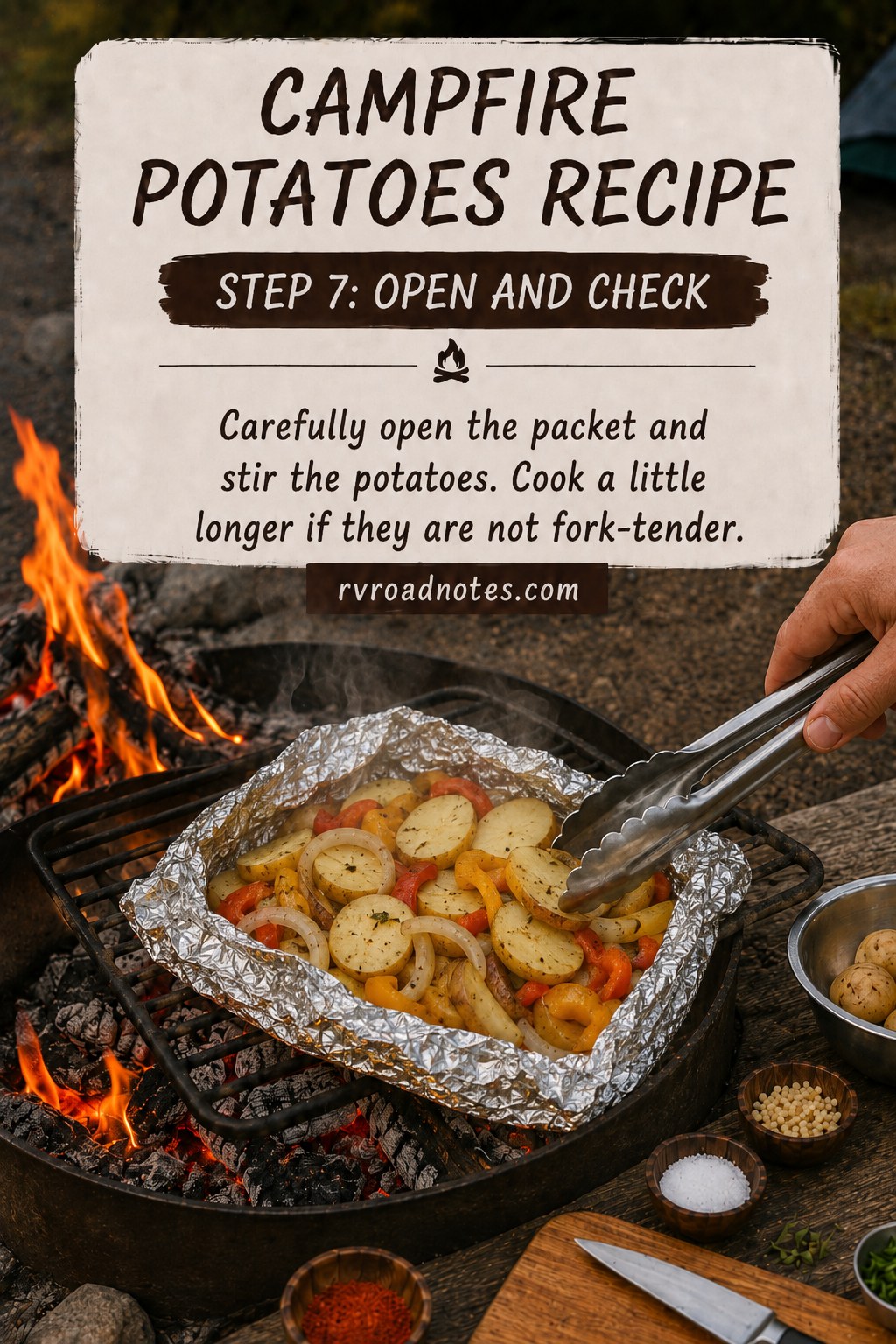
At the twenty-minute mark, I pull the packet with tongs and open it carefully, angling the foil away from my face since the steam that rushes out is genuinely hot enough to burn. A quick stir redistributes anything that settled against the hotter side, and a fork through the thickest potato slice tells you everything.
If it slides through with no resistance, it's done. If there's any bite left, reseal the packet — pinch the foil back closed rather than re-crimping from scratch — and give it another 5 to 10 minutes on the coals.
I only open the packet once to check, not repeatedly. Every open-and-reseal cycle bleeds heat you have to earn back, and a packet that's been opened three times cooks slower than one left alone with a single check.
Serving It Hot
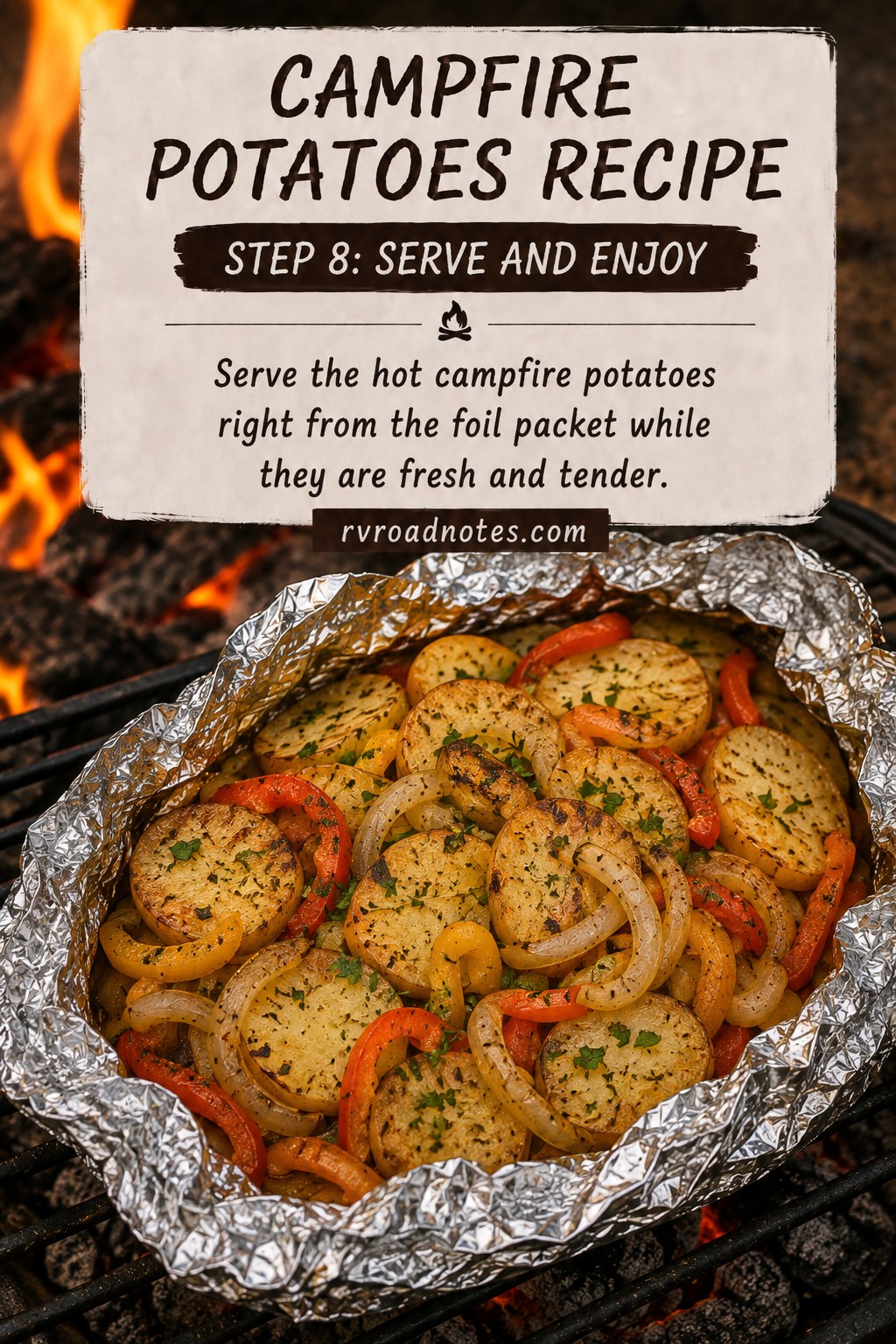
These get served straight from the foil, no plate transfer needed, which is exactly the kind of low-cleanup finish I plan every camp meal around now. A scatter of fresh parsley on top right before eating adds the color and brightness that got left out during the actual cooking, and it costs nothing in dishes.
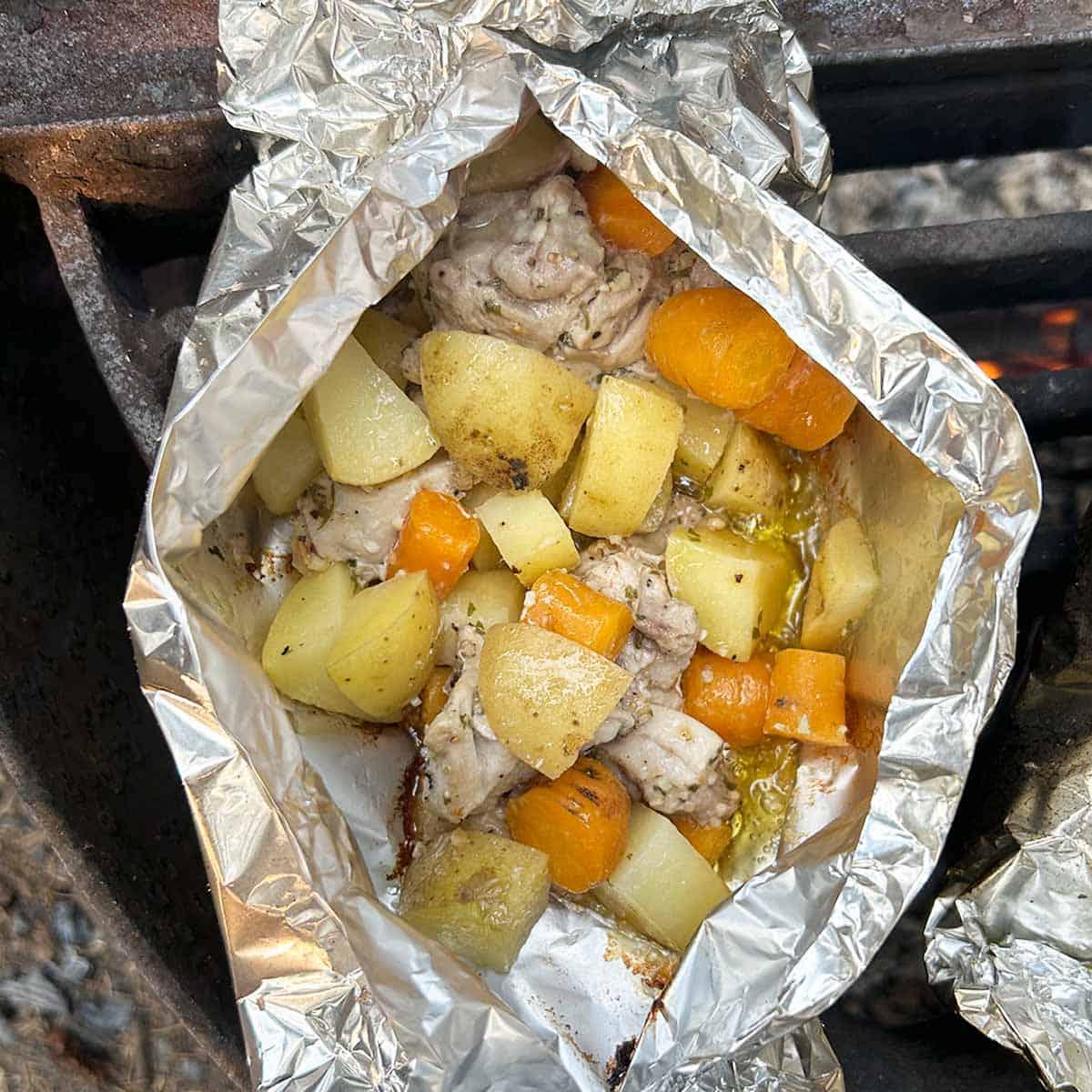
Eaten within a few minutes of coming off the coals, the potatoes hold a soft, almost creamy center under that lightly charred edge you can see where the packet touched the grate hardest. That contrast is the entire point of cooking this way instead of just boiling potatoes on a camp stove.
One packet per person is a reasonable serving if this is a side; split two packets across four people if it's the main event alongside something off the grill.
I've made this same packet at a paid site with a fire ring and out on BLM land with an existing pit, and it holds up either way as long as the fire itself is allowed and attended. It's become the meal I default to when I don't want the propane oven running and don't want to think too hard about dinner.

- Vegetables
- Seasoning and fat
- For serving

Frequently Asked Questions
Can I set the foil packet directly in the flames instead of on a grate over coals?
I'd skip it. Direct flame scorches whichever side faces the fire while the rest of the packet stays undercooked, and it's the fastest way to burn through the foil entirely. Hot coals under a grate give steady, even heat the potatoes actually need.
How many times should I open the packet to check if it's done?
Once, ideally, at the twenty-minute mark. Every time you open a hot packet you lose heat you have to earn back, so check with a fork, decide if it needs more time, and only reopen once more if absolutely necessary.
Can I make this in my rig's propane oven instead of over a fire?
Yes — a sealed foil packet works at around 425°F in a propane oven, checked around the 25-minute mark, though I'd still recommend the fire version when you have one, since it uses less of your onboard water and doesn't heat up the cabin.
Is there a carbon monoxide risk with this recipe?
Not from an open outdoor fire with normal airflow, but I'll say it anyway because it matters: never cook with a generator running near an intake or window, never use a camp stove for cabin heat, and keep your rig's CO detector tested on a regular interval regardless.