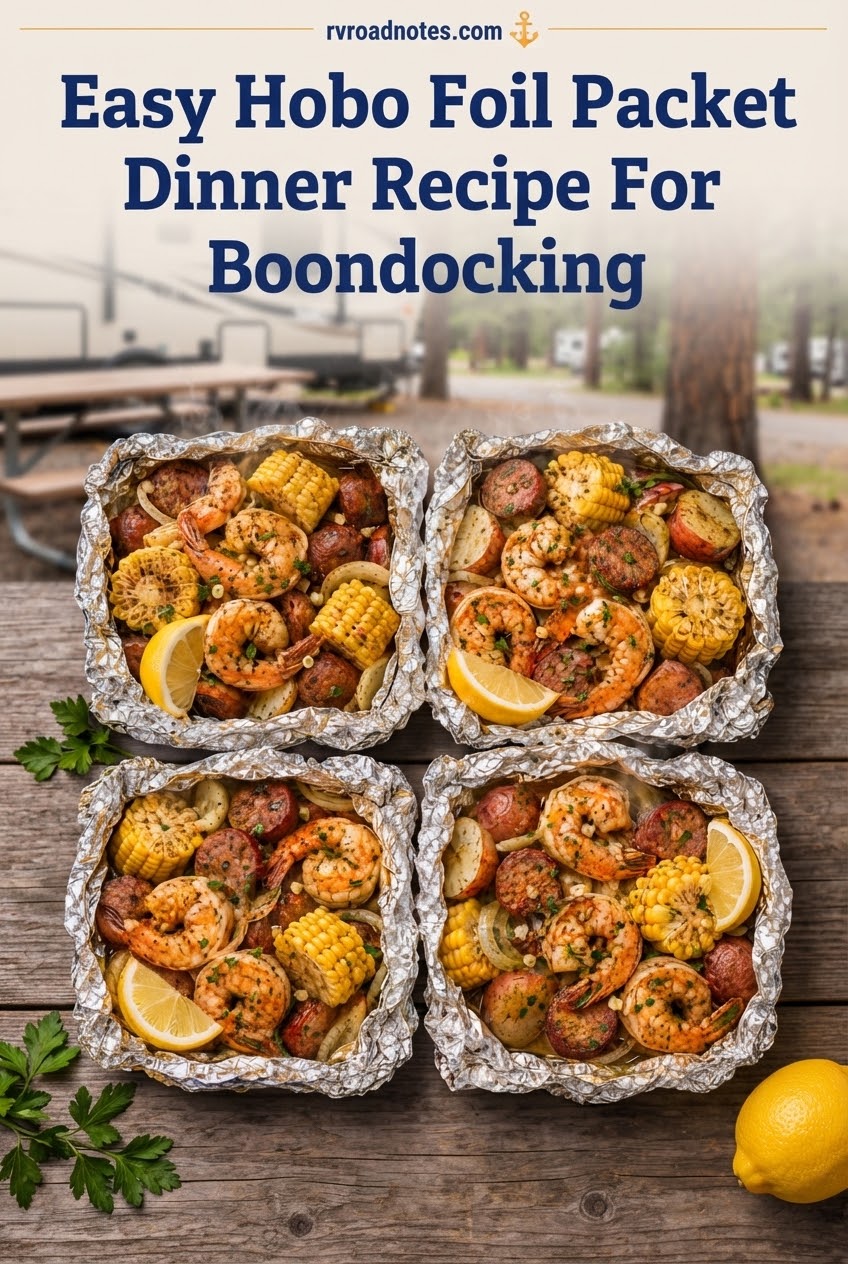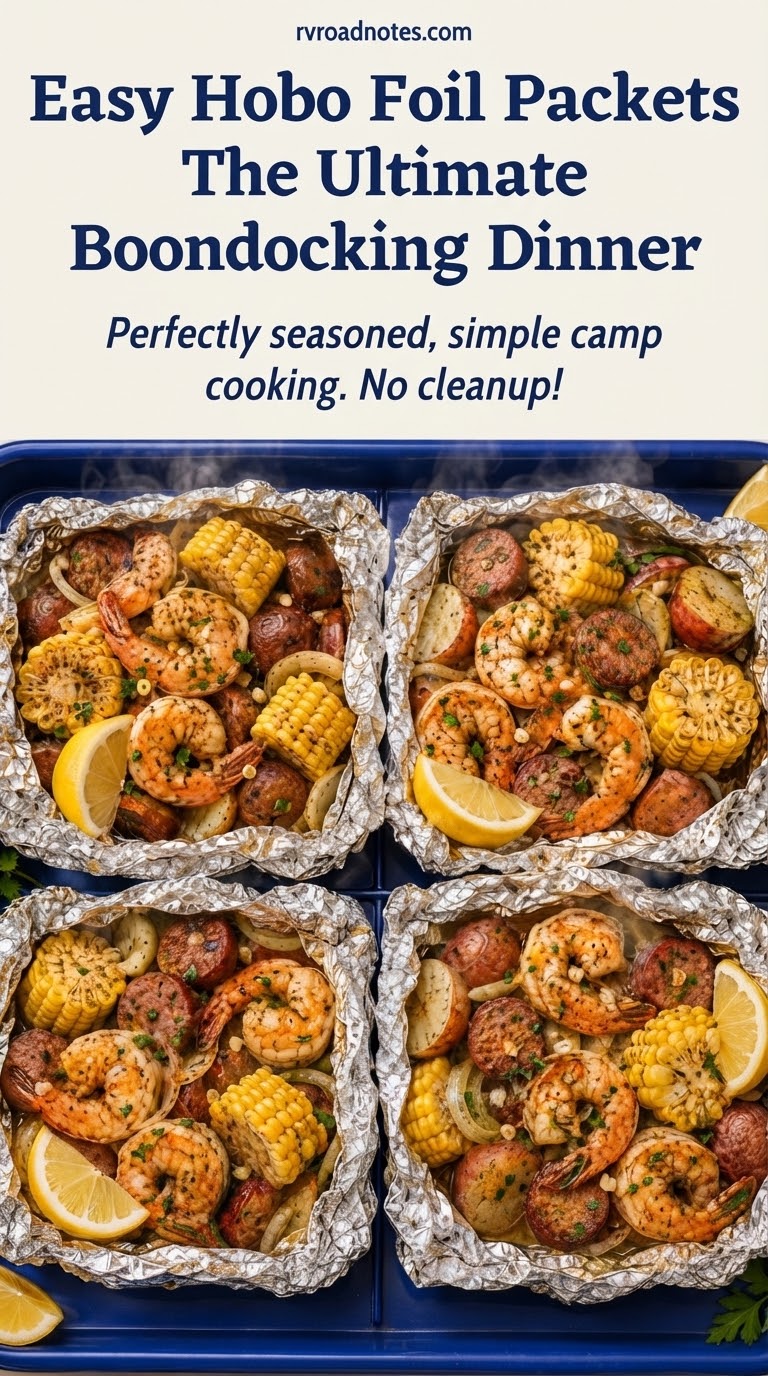
Six years of boondocking has taught me that the best camp dinners are the ones that don't need a sink full of water afterward, and hobo foil packets are about as close to that ideal as I've found. This is the shrimp boil version I make most, cooked either in my rig's small propane oven or on the grill grate outside, and every dish it uses is a mixing bowl I was going to wash anyway.
Gather Ingredients & Supplies
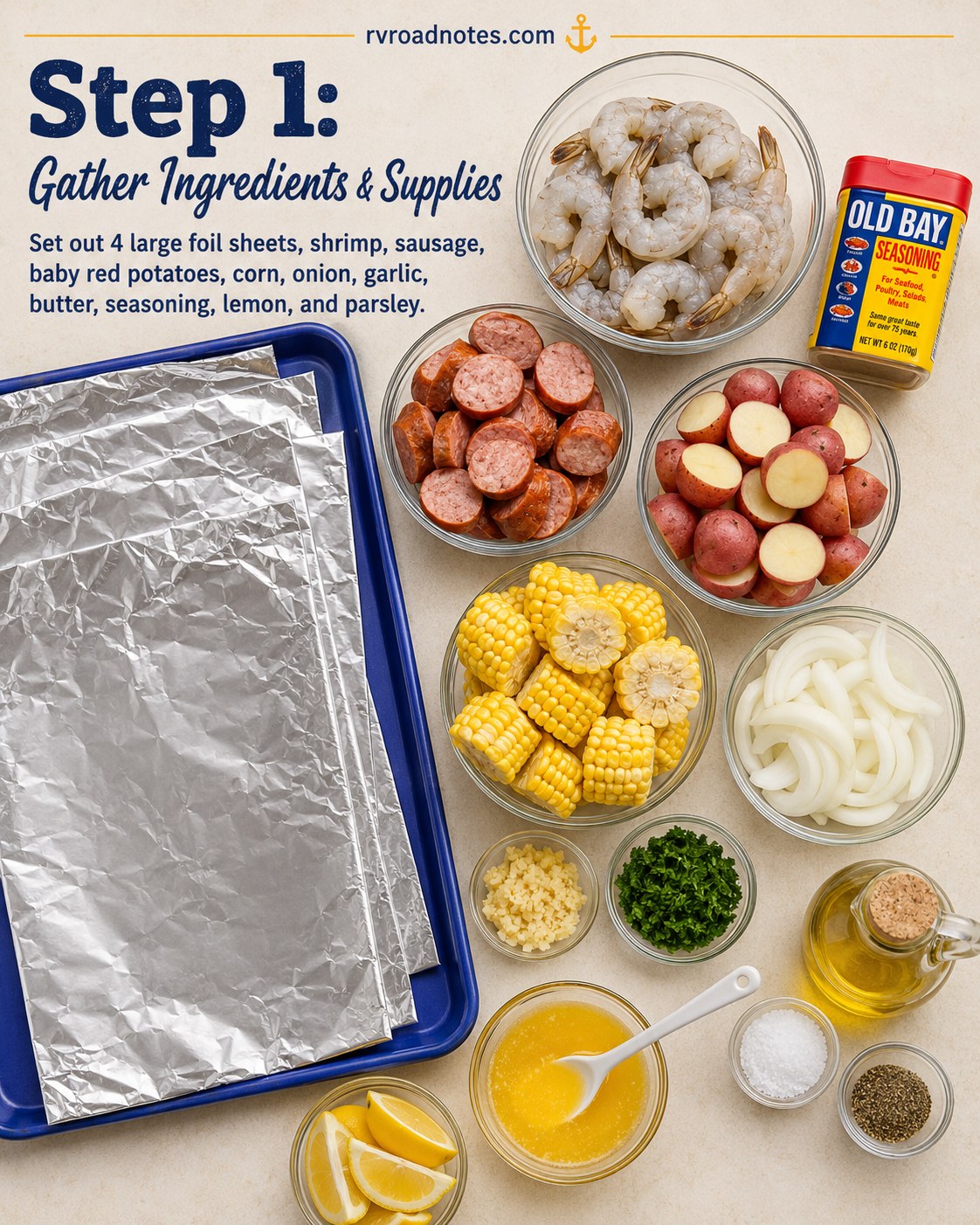
My counter space in the 1998 Class C is about two square feet once the cutting board is down, so I do all the chopping before anything touches foil. Four large heavy-duty foil sheets, shrimp, sausage, baby red potatoes, corn, onion, garlic, Old Bay, butter, lemon and parsley — laid out in bowls like an assembly line because that's genuinely the only way this works in a small kitchen.
- Buy shrimp pre-peeled and deveined if you can — one less thing using water you don't have unlimited amounts of.
- Heavy-duty foil only. The regular stuff tears at the fold and you'll lose butter through the crimp.
- Pick sausage that's already fully cooked — kielbasa or andouille — since it's only in the oven to warm through and pick up flavor.
This whole spread runs me around fourteen dollars for four servings at 2024 grocery prices, which I'd call solidly mid-range for a protein dinner out here.
Build the Vegetable Base
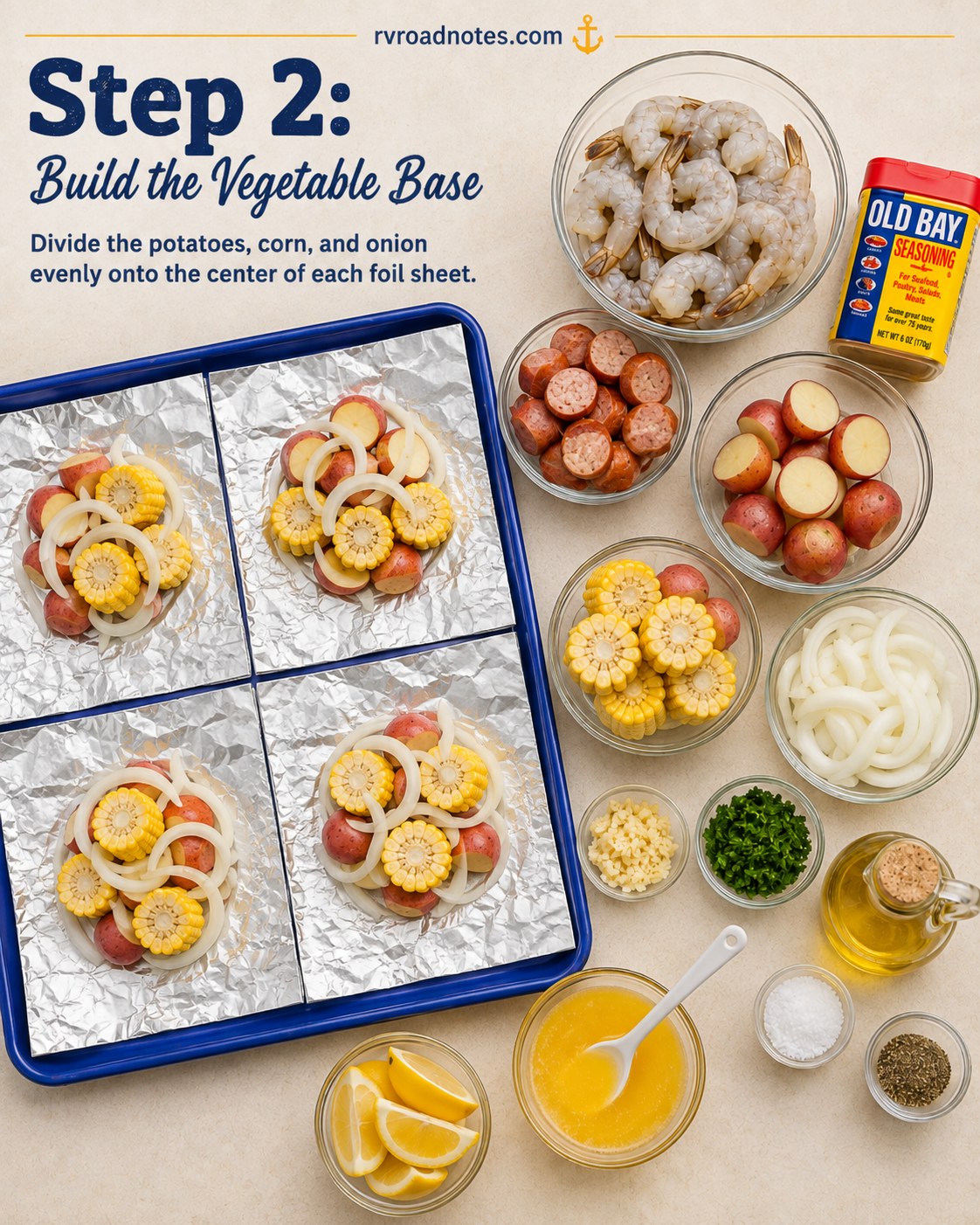
Potatoes, corn and onion get divided evenly onto the center of each foil sheet — and evenly matters more than it sounds like it would. Uneven portions mean uneven cook times, and I've pulled a packet with rock-hard potato chunks because I eyeballed one pile heavier than the rest.
Cut your potatoes small — quartered, not halved, if they're bigger than a golf ball — because a foil packet in a 20-25 minute window doesn't have the steam power of a full pot of boiling water. This is the one place people get impatient with hobo foil packets and end up with crunchy potatoes and perfectly done shrimp, which is a bad trade.
If the potato pieces are bigger than a bite, cut them smaller. The packet only has so much steam to work with.
I use the one cutting board for everything here, rinse it once at the end, and call that my dishwashing for the night.
Add Sausage & Shrimp
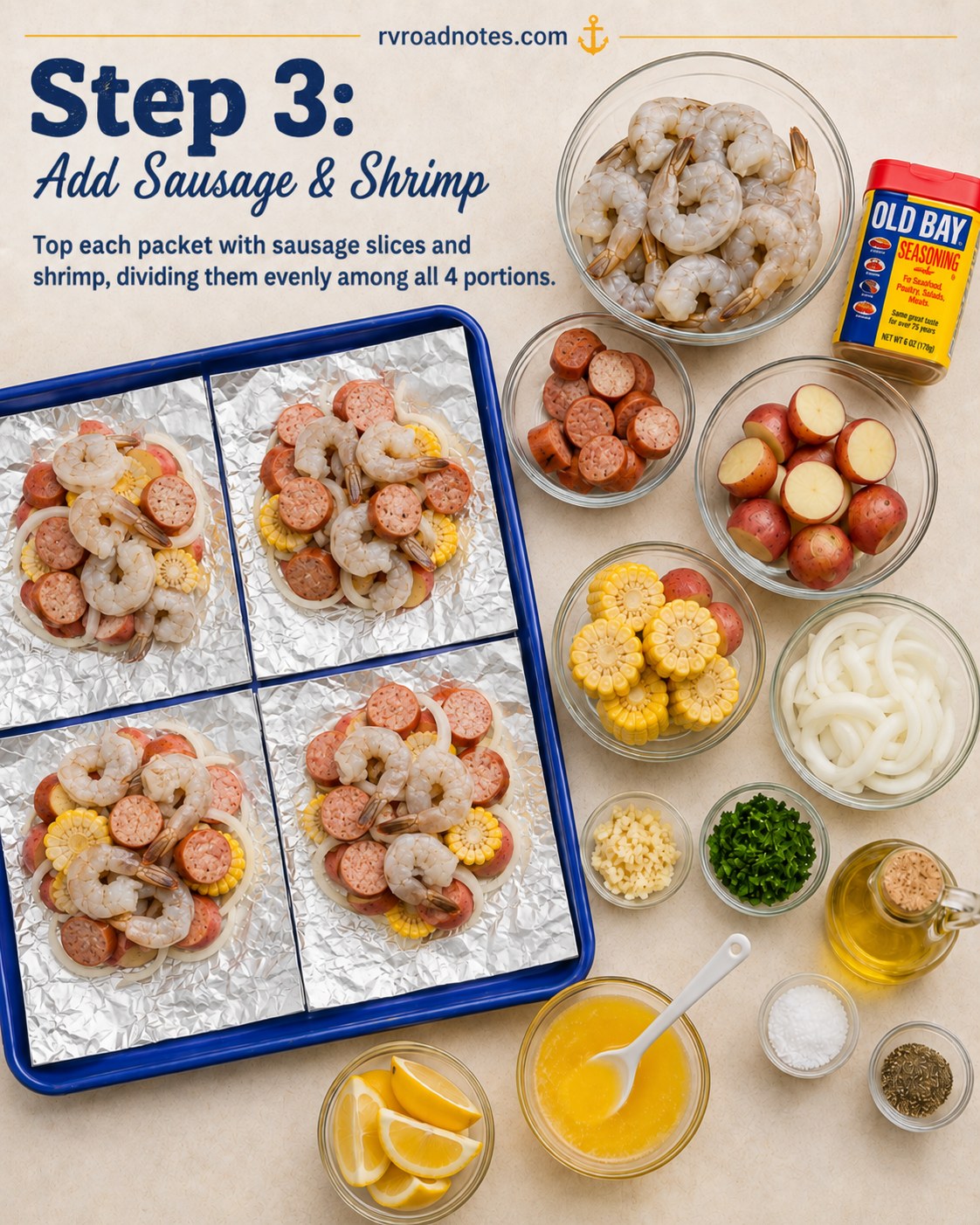
Sausage rounds and shrimp go on top, divided across all four portions. This is also the moment I think about my propane fridge, which runs a wider temperature swing than a residential unit, especially in summer heat when I'm pulling shrimp out for the third meal that week.
Shrimp should come straight from the fridge to the foil — not left sitting on the counter while I finish everything else, and not thawed twice if I bought it frozen. Seafood is the one ingredient in my rig where I don't cut corners on the cold chain, because a propane fridge that's been opened and closed all afternoon in a hot campsite isn't holding 40°F as reliably as I'd like.
- Smell test before you cook: shrimp should smell like the ocean, not ammonia.
- If in doubt, throw it out — a ruined dinner is cheaper than a night of food poisoning three hours from a clinic.
Season & Add Butter
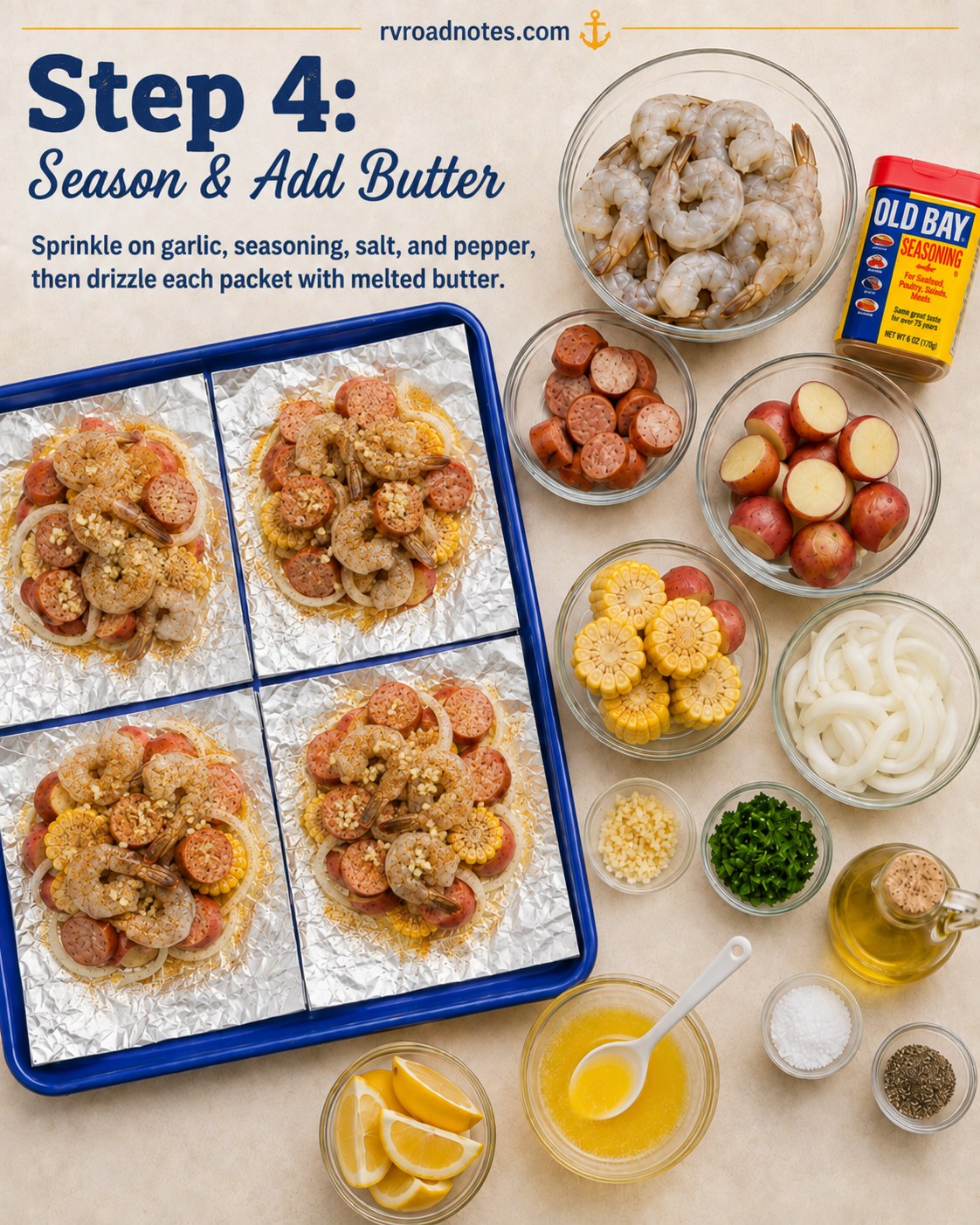
Garlic, Old Bay, salt and pepper get sprinkled over everything, then each packet gets a drizzle of melted butter. I melt the butter on the stovetop in the same small saucepan every time — one pan, one job — because in a rig kitchen, extra dishes are extra water, and extra water is extra jugs to haul.
Old Bay is doing most of the flavor work here, so don't be shy with it — I use closer to a tablespoon per packet than the half-teaspoon a normal recipe would call for, because foil packet cooking mutes seasoning more than you'd expect. Taste your butter before you pour it if you want to adjust; it's the easiest checkpoint you'll get before the packets are sealed shut.
What I'd change if I were rationing water
Skip the extra rinse on the saucepan between melting butter and the next meal — wipe it with a paper towel and it's fine for another round of the same recipe.
Add Lemon & Parsley
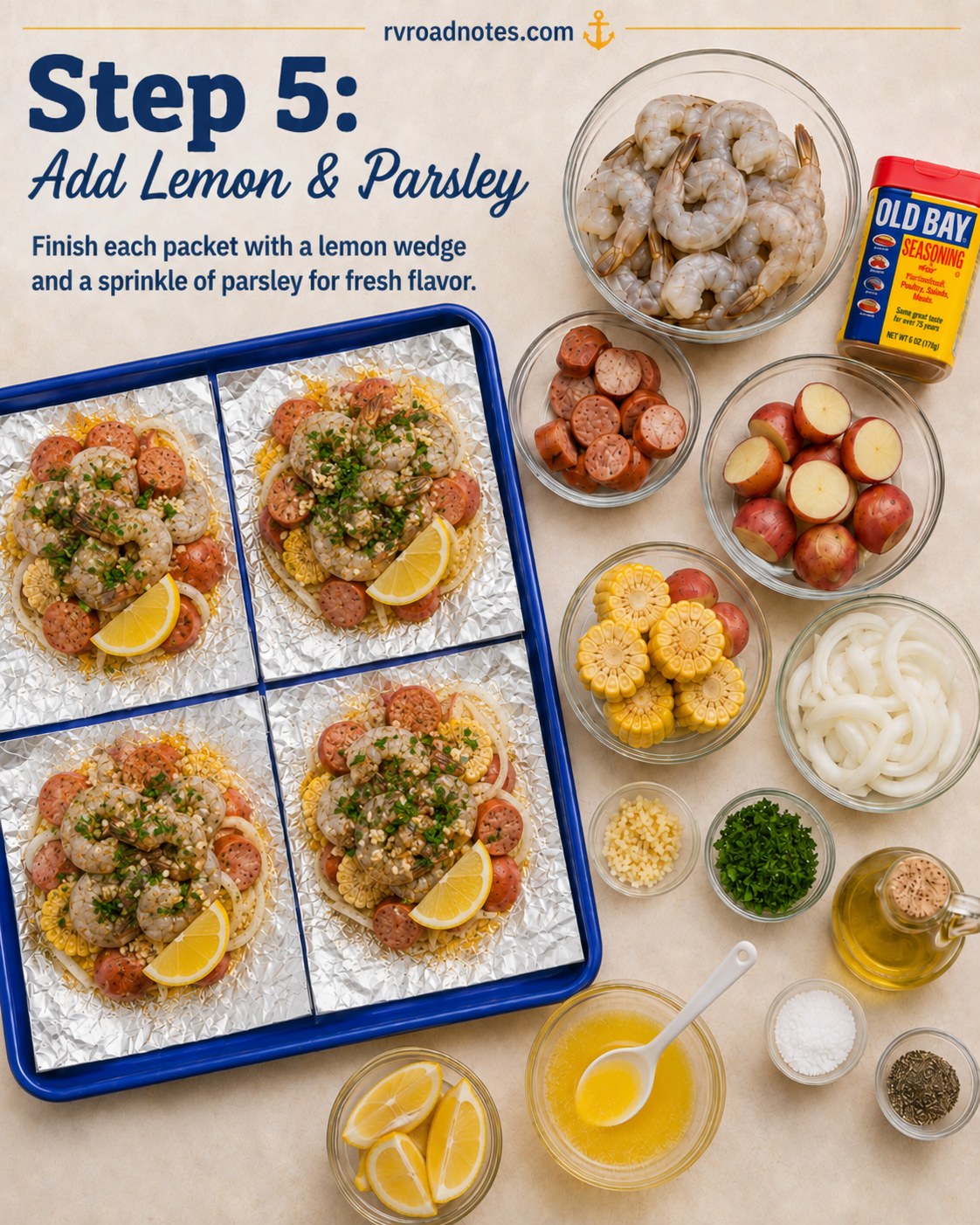
A lemon wedge and a scattering of fresh parsley finish each packet before sealing, and it's a small step that makes a real difference once everything's steamed and buttery. Fresh herbs are one of the few things I actually plan a grocery stop around, since they don't last long in a fridge that's cycling temperature all day, and I'd rather buy a small bunch and use it across two meals than let it wilt in a drawer.
The lemon does double duty — it cooks down slightly in the packet and cuts the richness of the butter, and the leftover rind goes straight into my food scraps, not tossed on the ground. Citrus peel doesn't belong in the desert or the woods any more than a candy wrapper does; it just takes longer to look like litter.
Fold & Seal Packets
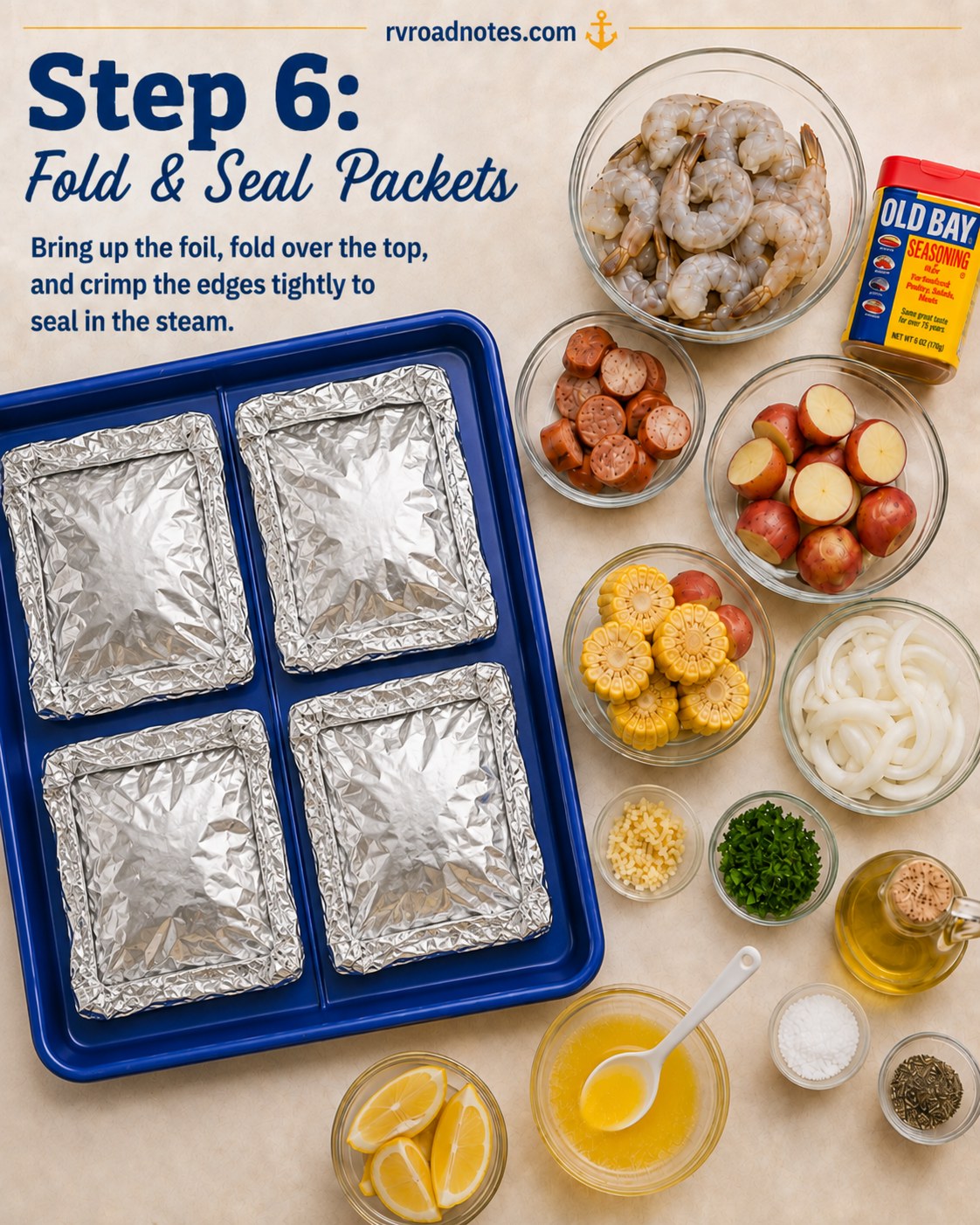
This is the step people rush, and it's the one that determines whether you get steamed shrimp or a foil pouch weeping butter all over your baking tray. Bring the foil up and over, fold the top down twice, then crimp both side edges tightly — you're building a seal that has to hold pressure, not just cover the food.
- Fold the top seam first, pressing it flat with your fingers before moving to the sides.
- Crimp the side edges upward, not just pinched flat, so any butter that escapes pools rather than drips.
- Check for pinholes by holding the packet up to the light — a second layer of foil over a weak spot beats a leak on the grill.
I learned this one the hard way with a packet that lost half its butter through a corner I didn't crimp properly — the shrimp still cooked, but dinner was noticeably drier than it should've been.
Cook the Packets
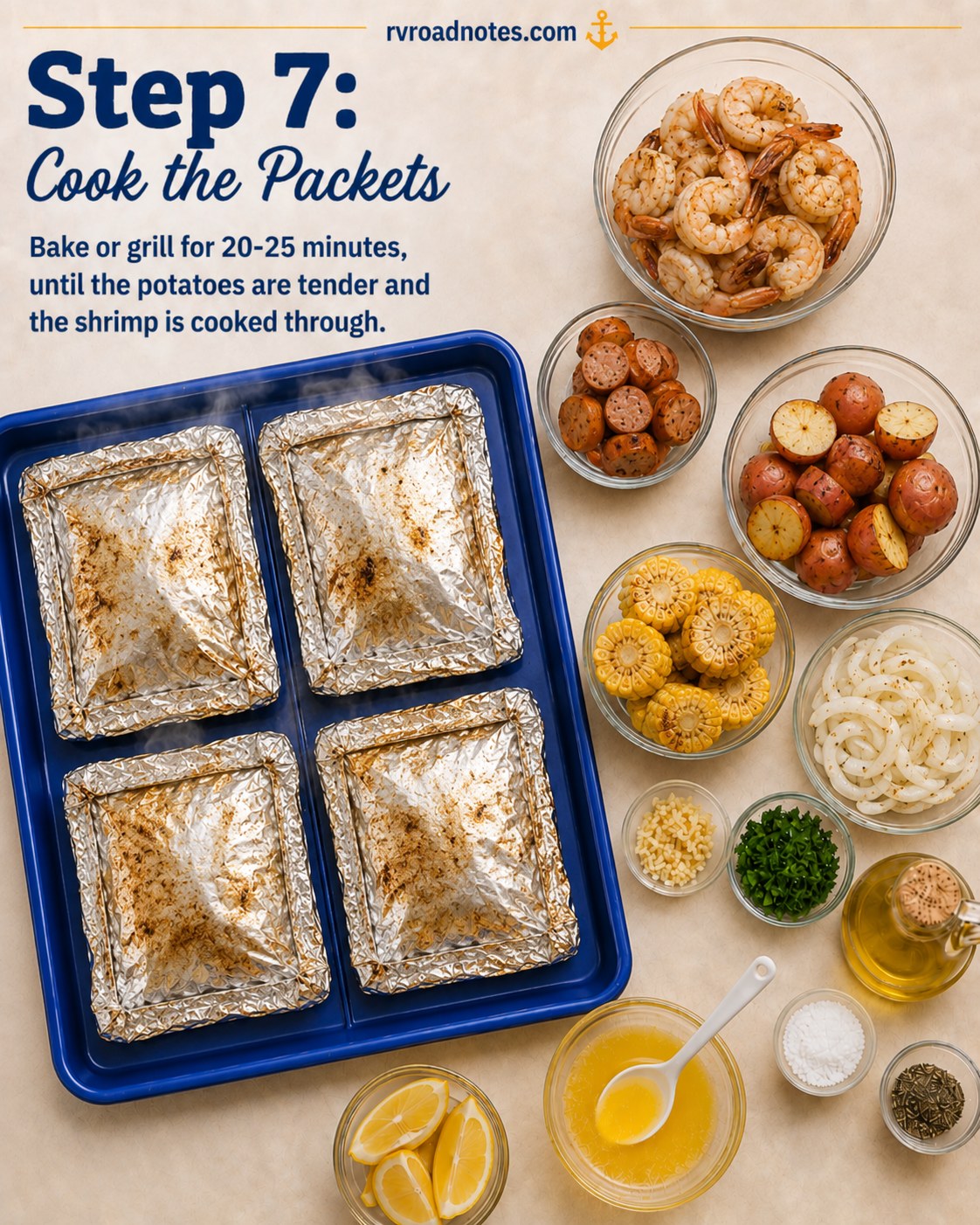
Bake or grill for 20 to 25 minutes, until the potatoes are tender and the shrimp is cooked through and opaque. My propane oven runs a good 15 to 20 degrees hotter in the back corner than the dial suggests, so I keep an oven thermometer clipped to the rack and check the packets at the 20-minute mark before committing to the full 25.
If you're grilling instead — direct heat, lid down, same 20 to 25 minutes — set the packets well clear of any vent or window, and never run this near the rig's intake or under an awning where smoke and carbon monoxide can pool. A working CO detector inside the rig, tested monthly, isn't optional whether you're cooking on propane or charcoal outside.
You'll know it's done when the packet feels firm and full of trapped steam, and a fork slides into the potato with almost no resistance.
Open & Serve
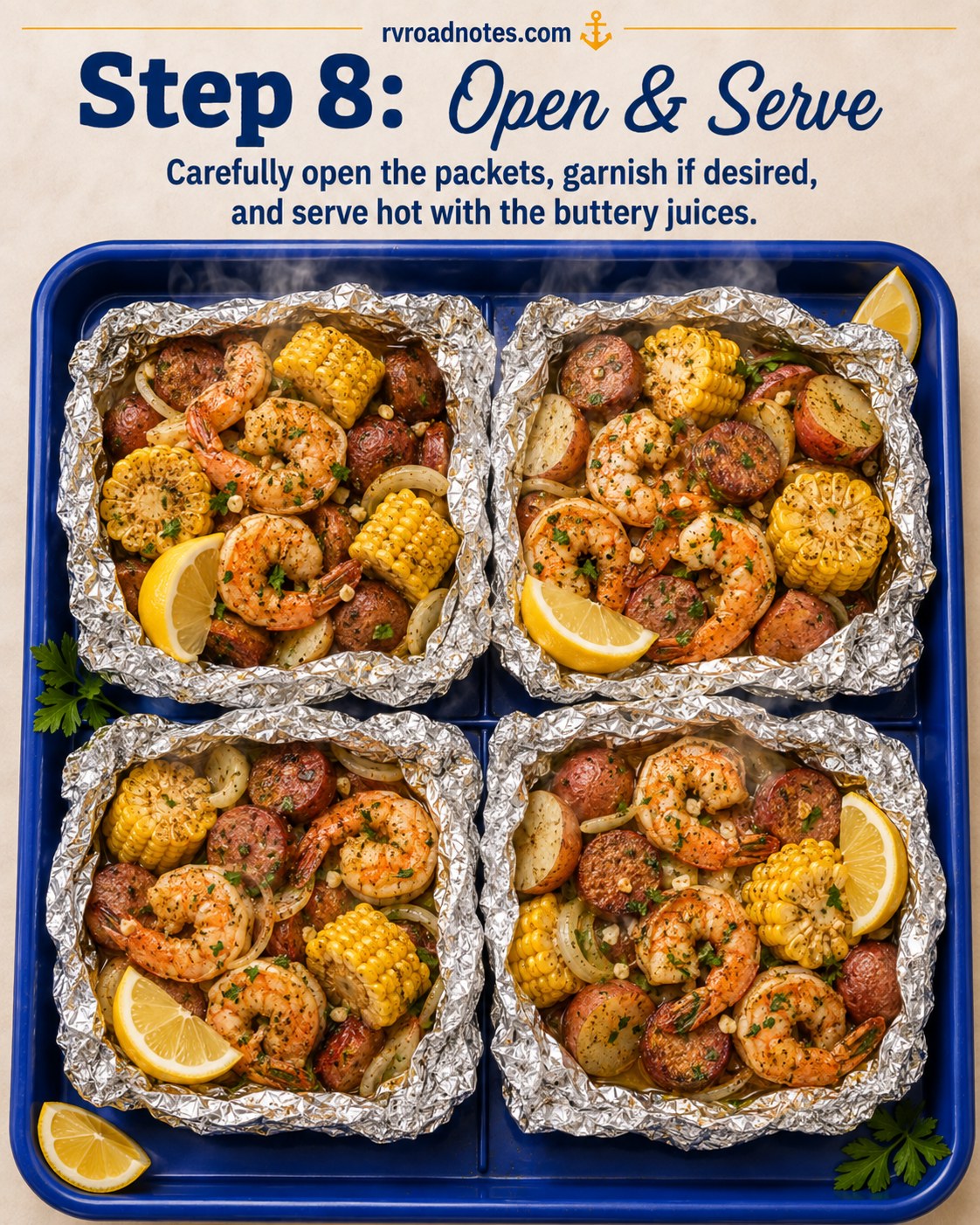
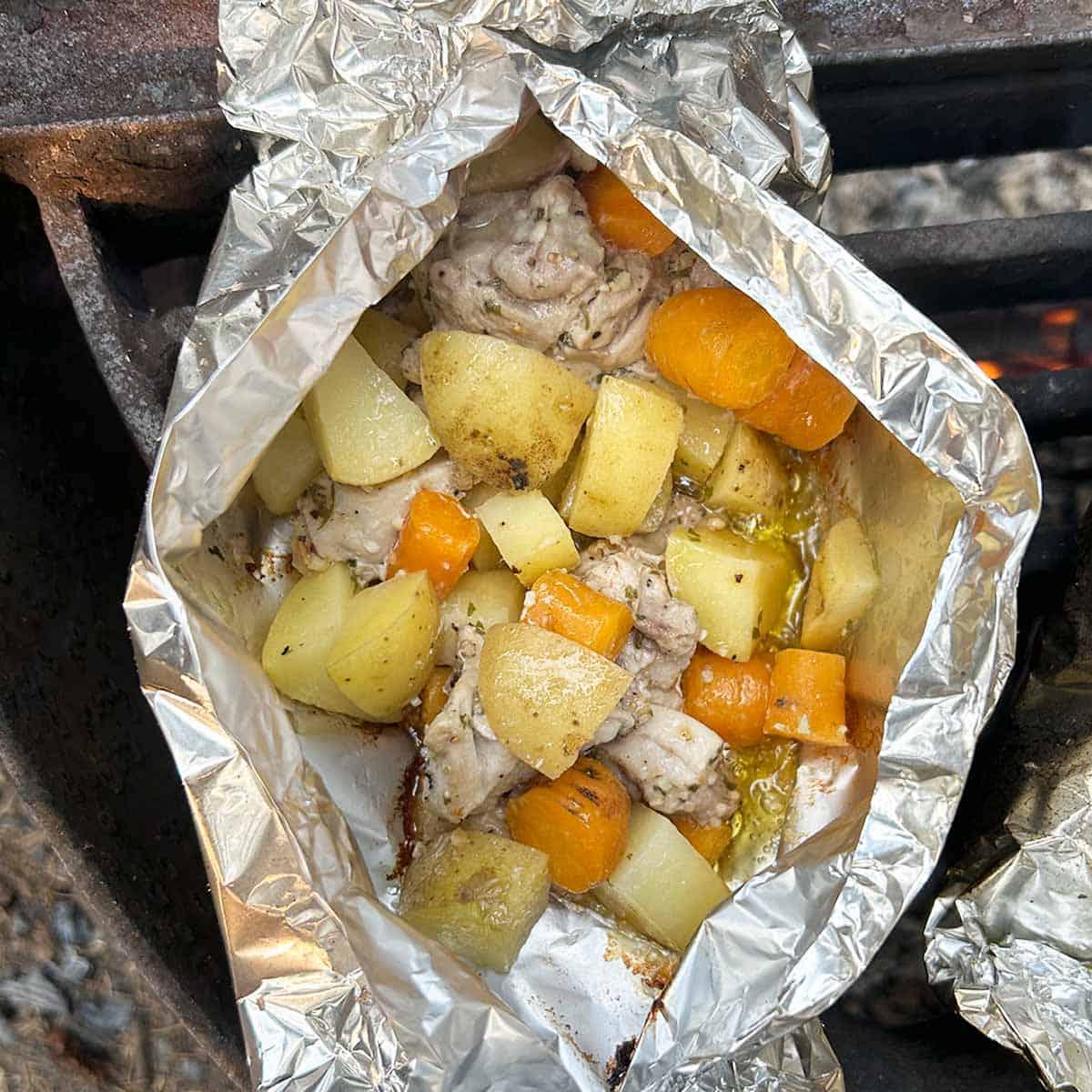
Open the packets carefully — the steam that comes off them is genuinely hot enough to burn, and I say this as someone who's done it twice. Garnish with a bit more parsley if you want, and serve right in the foil with the buttery juices pooled at the bottom; nobody at my site has ever asked for a serving plate.
This is the whole point of hobo foil packets for boondocking: dinner, plate and cleanup are the same piece of foil. Let it cool, fold it down small, and pack it out with your trash — never leave foil in a fire ring, since it doesn't burn and it's the kind of thing that gets a dispersed site closed for everyone behind you.
Four packets, four servings, one saucepan and one cutting board to wash. That's the math that actually matters out here.
This is one of maybe five dinners I make on repeat out here, mostly because it scales the effort to match the payoff — real flavor, almost no water used on cleanup, and Rooster sitting exactly as close to the tray as I'll allow him.

- For the packets


Common Questions
Can I make hobo foil packets ahead of time and cook them later?
You can assemble and seal them a few hours ahead if they're going straight back into a cold fridge, but I wouldn't hold raw shrimp in a packet longer than that, especially with a propane fridge that swings more than a residential one. Cook the same day you build them.
Do these work on a campfire instead of a grill or oven?
They can, set on coals rather than open flame, but you lose the temperature control you get from an oven or grill, and I've had uneven results — one side scorched, the other underdone. I stick to the grill or my propane oven for consistency.
What's the safest way to check the shrimp is fully cooked?
Look for opaque, pink shrimp that's curled into a loose C shape — a tight, tiny curl usually means it's overcooked. If you're unsure, open one packet at the 20-minute mark and check before committing the rest to the full 25.