I stopped hauling a carton of eggs on travel days about three years ago, after one too many cracked shells leaking down the fridge shelf on a washboard BLM road. A mason jar solves that particular mess, and it solves the smaller-fridge problem every Class C owner knows about too well. Here's the exact prep, photographed step by step at my counter, that gets breakfast ready before I've even hooked up water at the next site.
Why a Jar Beats a Carton on Travel Days
My fridge is 6 cubic feet, propane-capable, and it does not forgive an egg carton wedged sideways for a four-hour drive on rough gravel. A mason jar stands up straight, seals tight, and takes the shape of whatever narrow gap is left on the shelf. It also means one container instead of a dozen fragile ones bouncing around.
The other reason I do this: on a travel day I'm not always plugged into shore power, and my fridge runs warmer on propane when it's tilted even slightly off level, which happens more than I'd like on backroads in eastern Oregon. Pre-cracked eggs in a sealed jar, packed into a separate cooler with ice, take that variable out of the equation entirely until I'm parked and level.
Gather Your Supplies
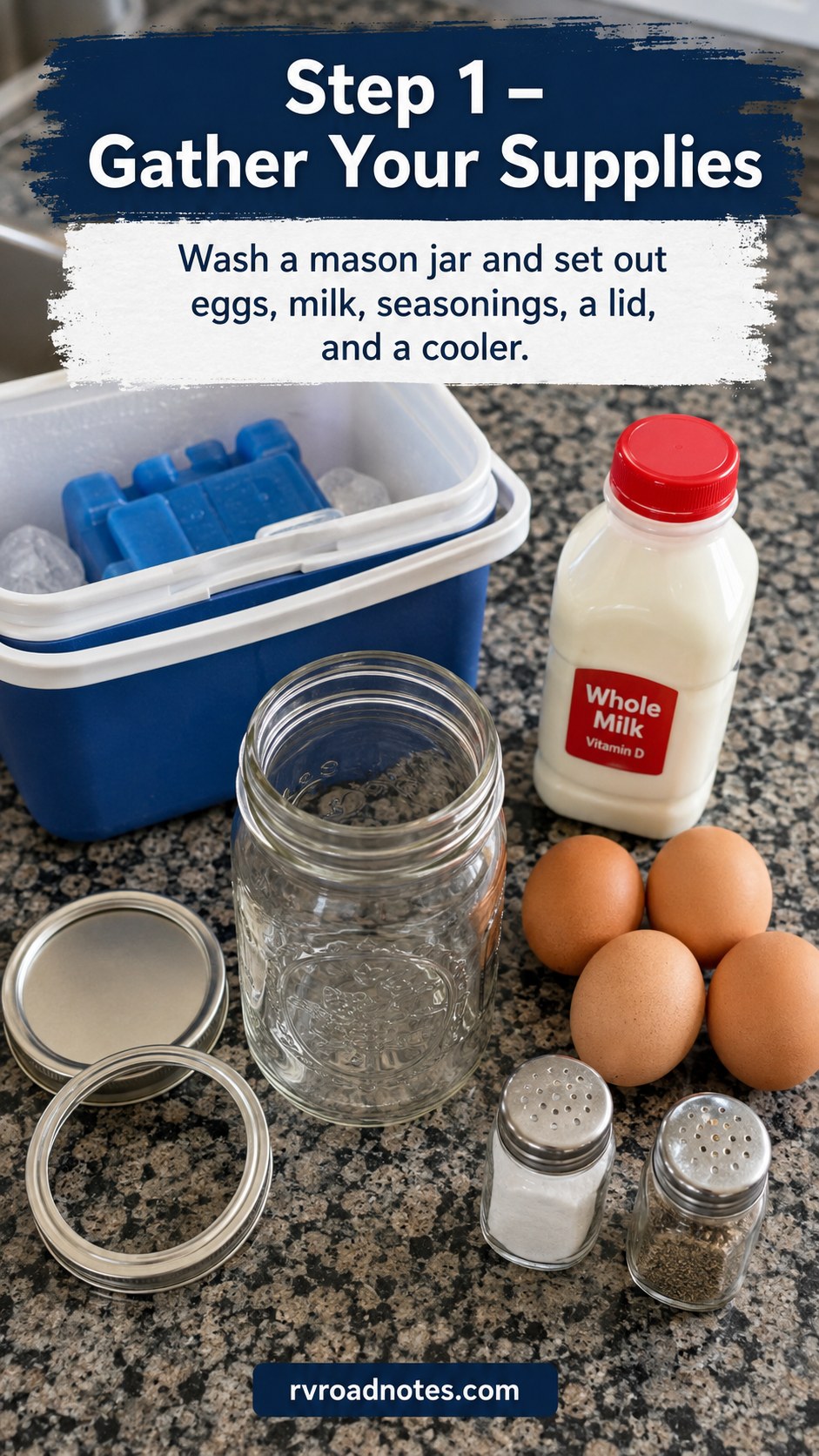
I wash the mason jar in hot, soapy water and rinse it well before anything touches it — this is not optional, since raw egg sitting in a jar that wasn't properly cleaned is exactly how you get a bad afternoon later. Everything else lines up on the counter the same way it does in the photo: eggs, whole milk, salt and pepper shakers, the lid and ring set aside, and the cooler already loaded with ice packs so it's ready the second the jar is sealed.
- Jar: a wide-mouth pint or quart works best — narrow-mouth makes cracking eggs a fight
- Cooler: pre-chilled with ice packs before you start, not after
- Lid and ring: check the seal isn't warped or dented
Crack the Eggs
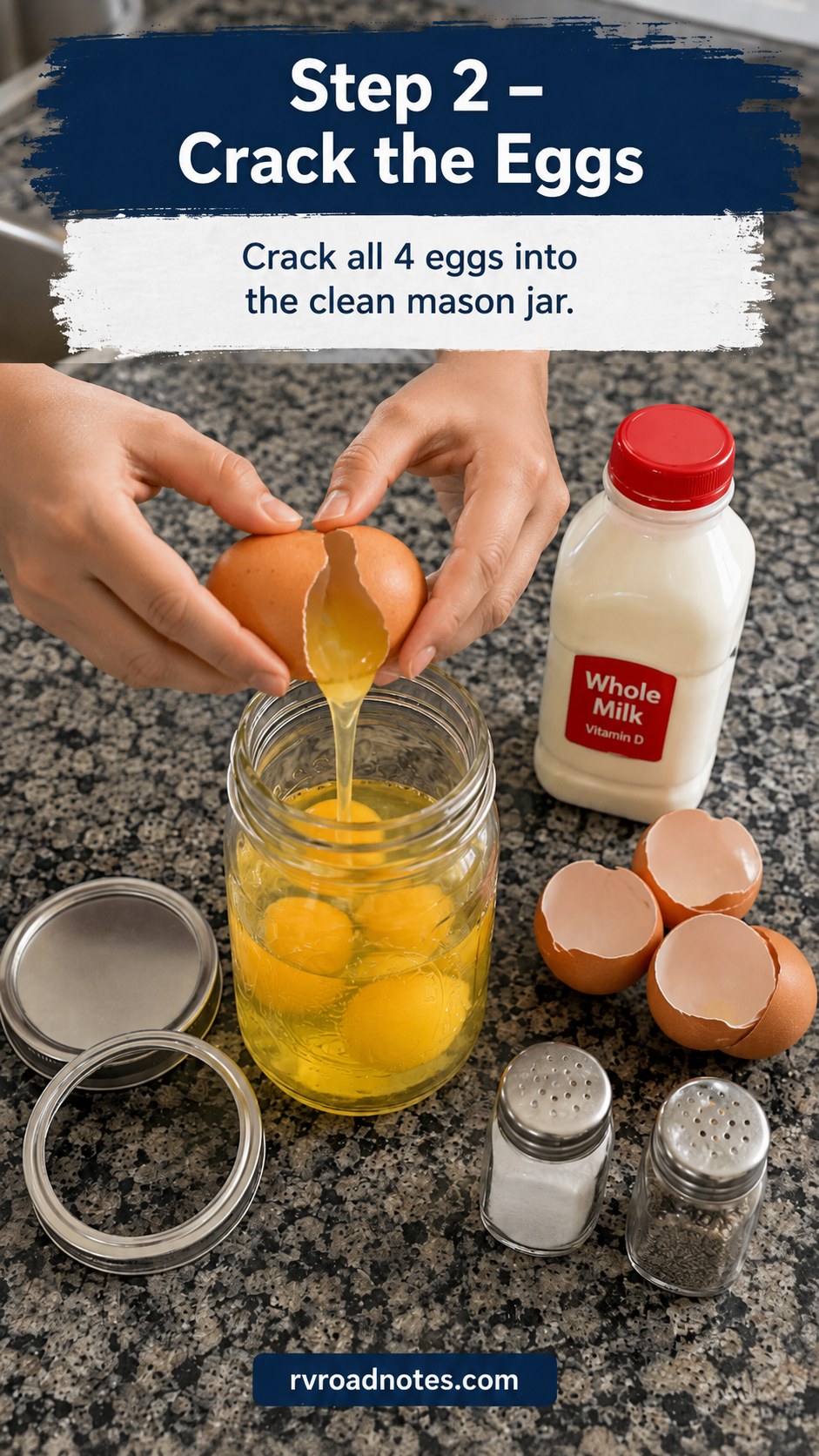
Four eggs, cracked straight into the clean jar. I do this over the sink edge of my counter, not because I'm graceful about it but because shell fragments in a jar you're about to seal and shake are a genuinely annoying cleanup later. You can see in the photo the yolks are still whole and separate at this stage — that changes fast in the next step, so don't worry about the mess yet.
Crack each one into a small dish first if you're at all worried about a bad egg; I skip that step now because I know my source, but I didn't always, and it's a smart habit for the first few times you do this.
Add a Splash of Milk
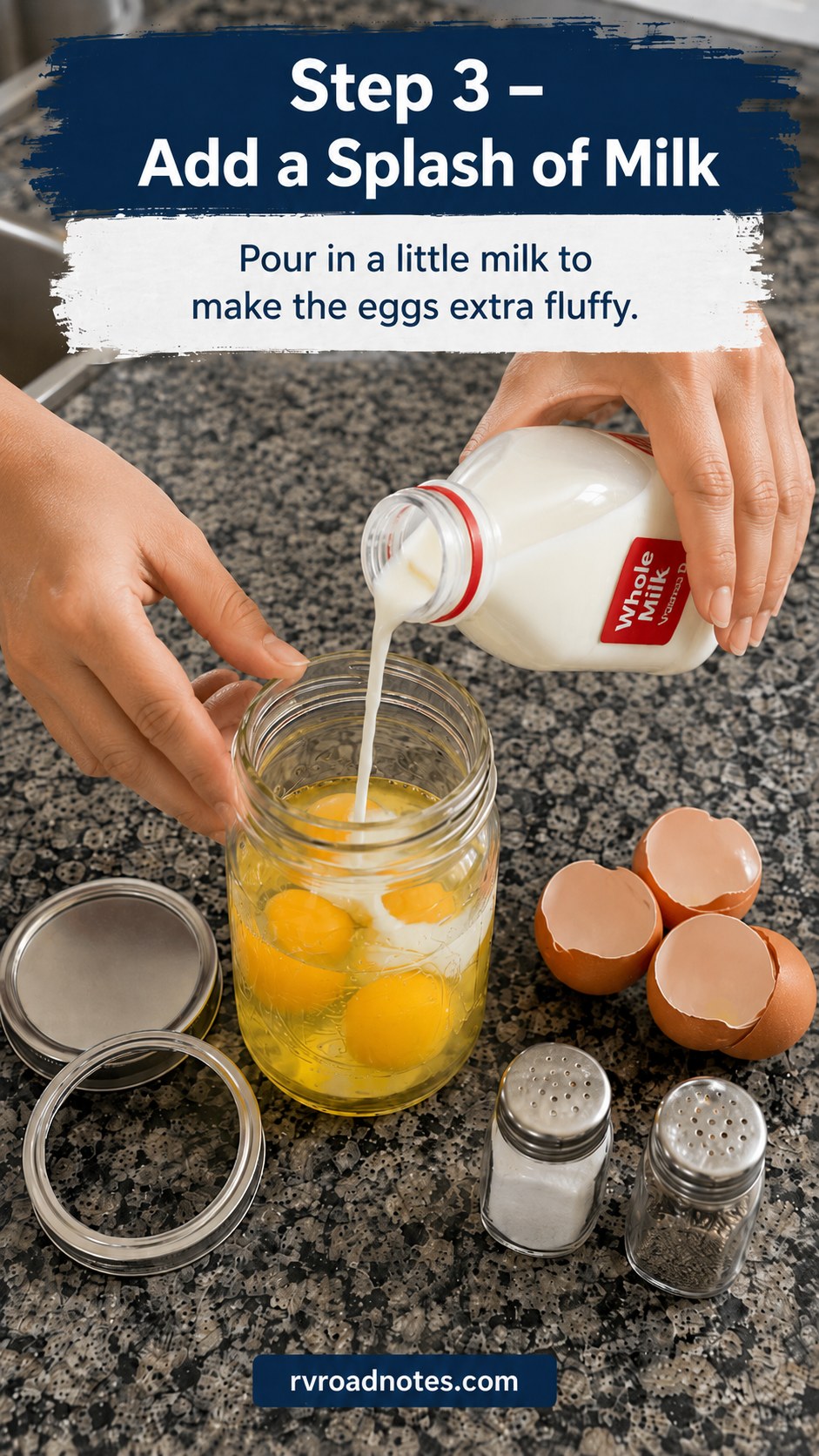
A couple tablespoons of whole milk goes in next, poured slowly so it doesn't splash the yolks up the side of the jar. This is the difference between eggs that scramble dry and rubbery on a propane stove and eggs that stay soft — milk fat buffers the proteins as they cook, which matters more on a camp burner where your heat control is rougher than a home range.
The eggs don't need much. A splash, not a pour. Too much milk and you're basically making a thin custard that never firms up properly over a camp flame.
Season the Eggs
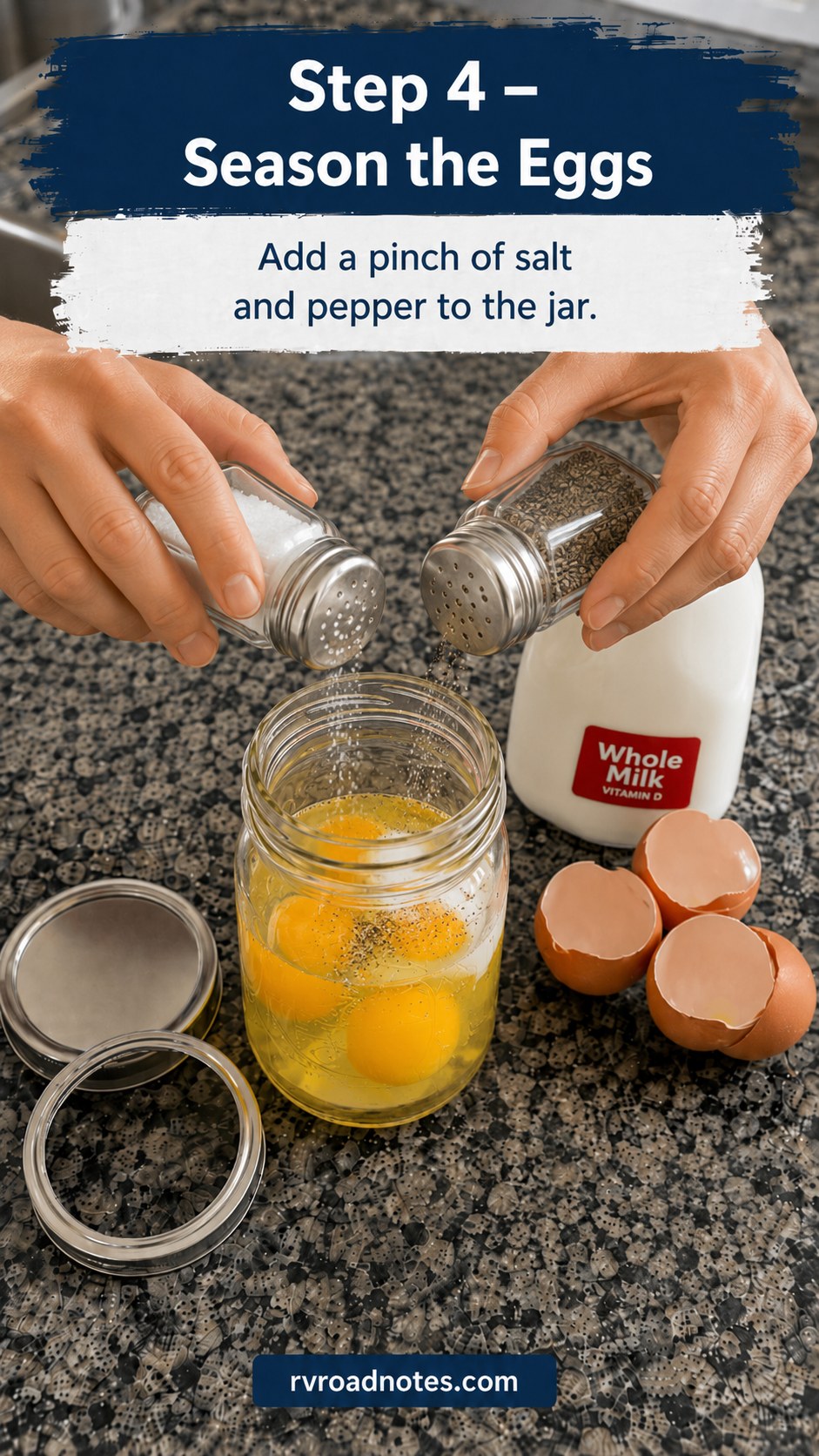
Salt and pepper go straight into the jar now, before sealing — a pinch of each is enough. I season here rather than at the pan because it's one less thing to fumble with at a picnic table in the wind, and honestly, half the seasoning I try to add trailside ends up on the ground instead of the food.
- Salt: a light pinch, more later if you want it
- Pepper: same, adjust to taste at cook time if you're feeding picky eaters
- Extras I sometimes add here: a shake of garlic powder or dried chives if I'm not planning to add fresh anything at camp
Seal the Jar
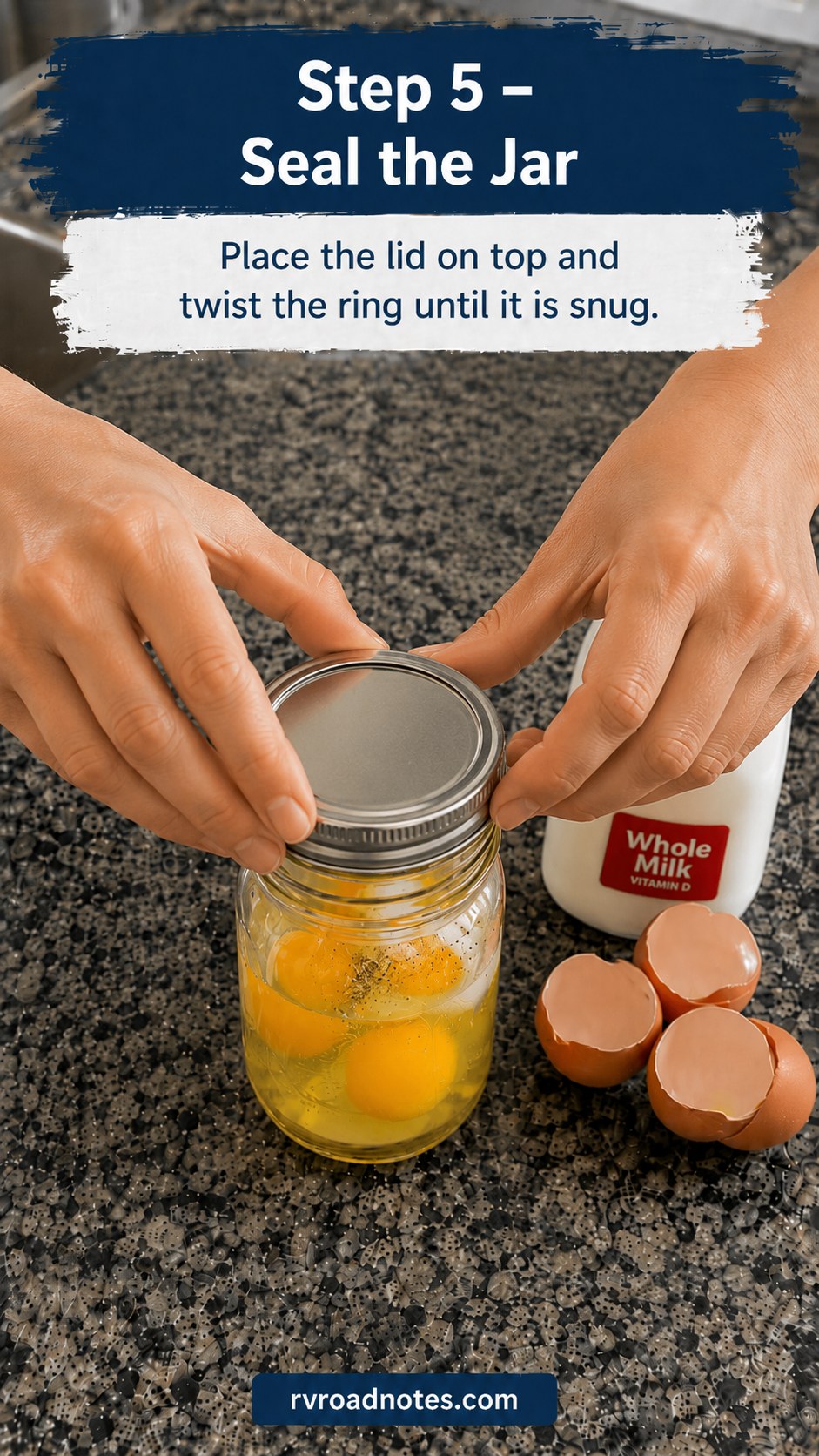
Lid on flat, ring twisted until snug — not cranked down with all your strength, just enough that it won't leak when you shake it or when it rolls around in the cooler on a bumpy road. I've overtightened these before and had a rough time getting the lid back off one-handed at a campsite with cold fingers, so snug is genuinely the right word here.
One thing I check every time: the sealing ring on the underside of the lid is intact and not cracked. A compromised seal is how you end up with egg leaking into your cooler ice instead of staying contained.
Shake Well
The Blend You're Looking For
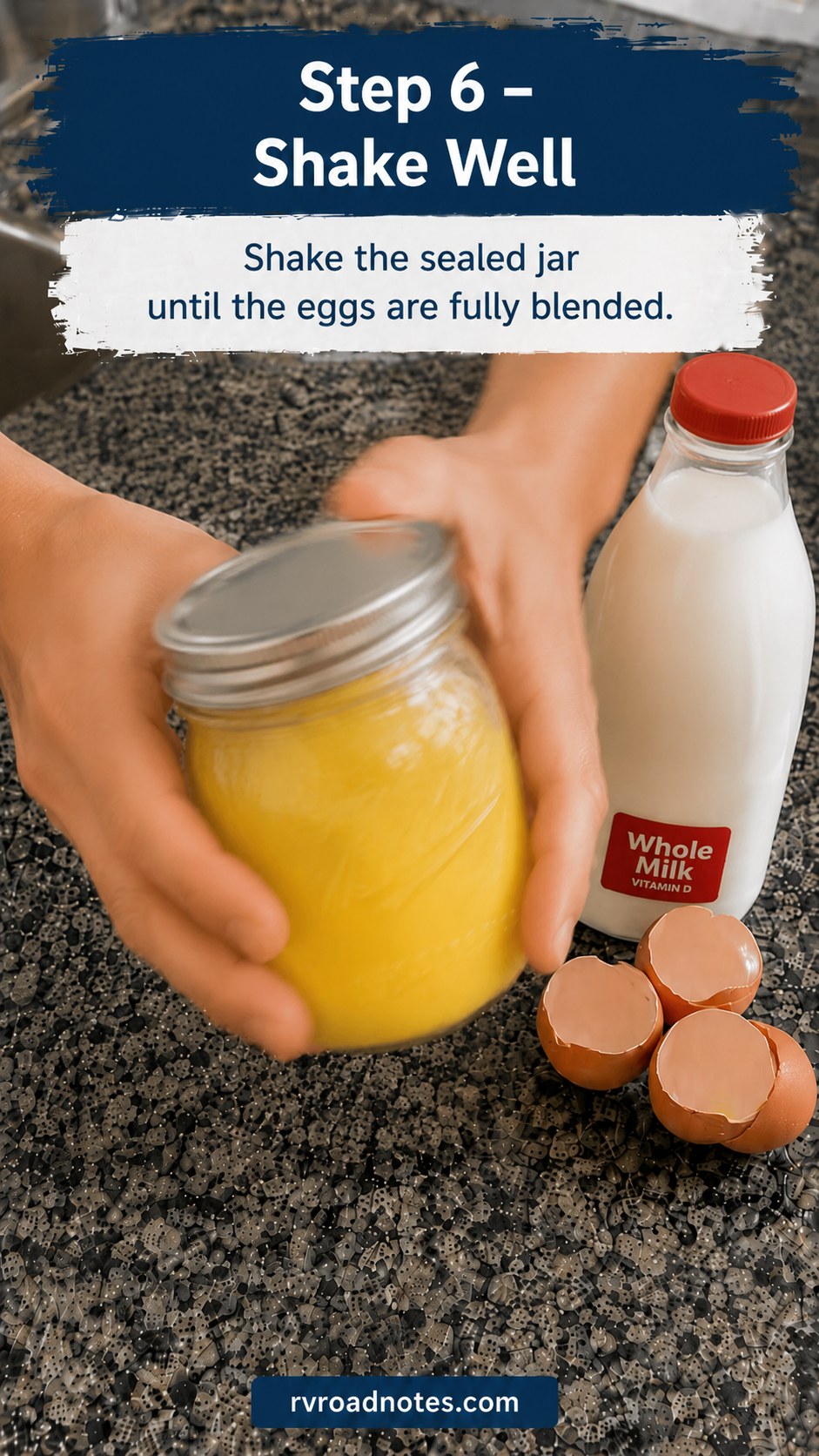
Shake the sealed jar hard for about 20 to 30 seconds. What you want is exactly what's in the photo: a uniform, solid yellow with no streaks of clear white left visible through the glass. That's your sign it's actually blended and not just agitated. If you still see ribbons of white after 30 seconds, keep going — a poorly mixed jar cooks unevenly, with rubbery white bits scattered through soft yolk-heavy sections.
This is also, unglamorously, the most fun part of the whole process. Rooster has opinions about the noise but tolerates it for the eventual eggs.
Pack It Cold
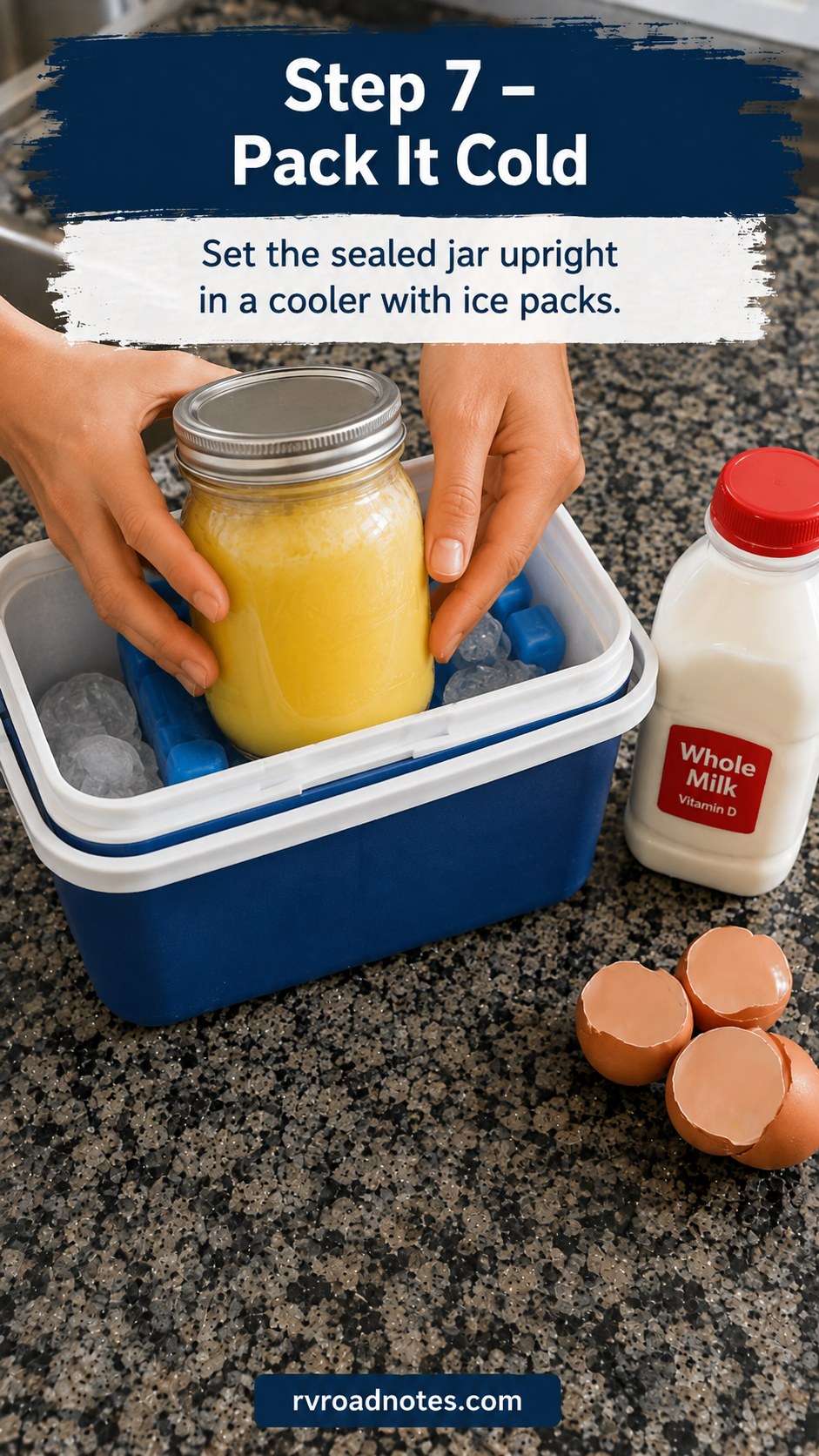
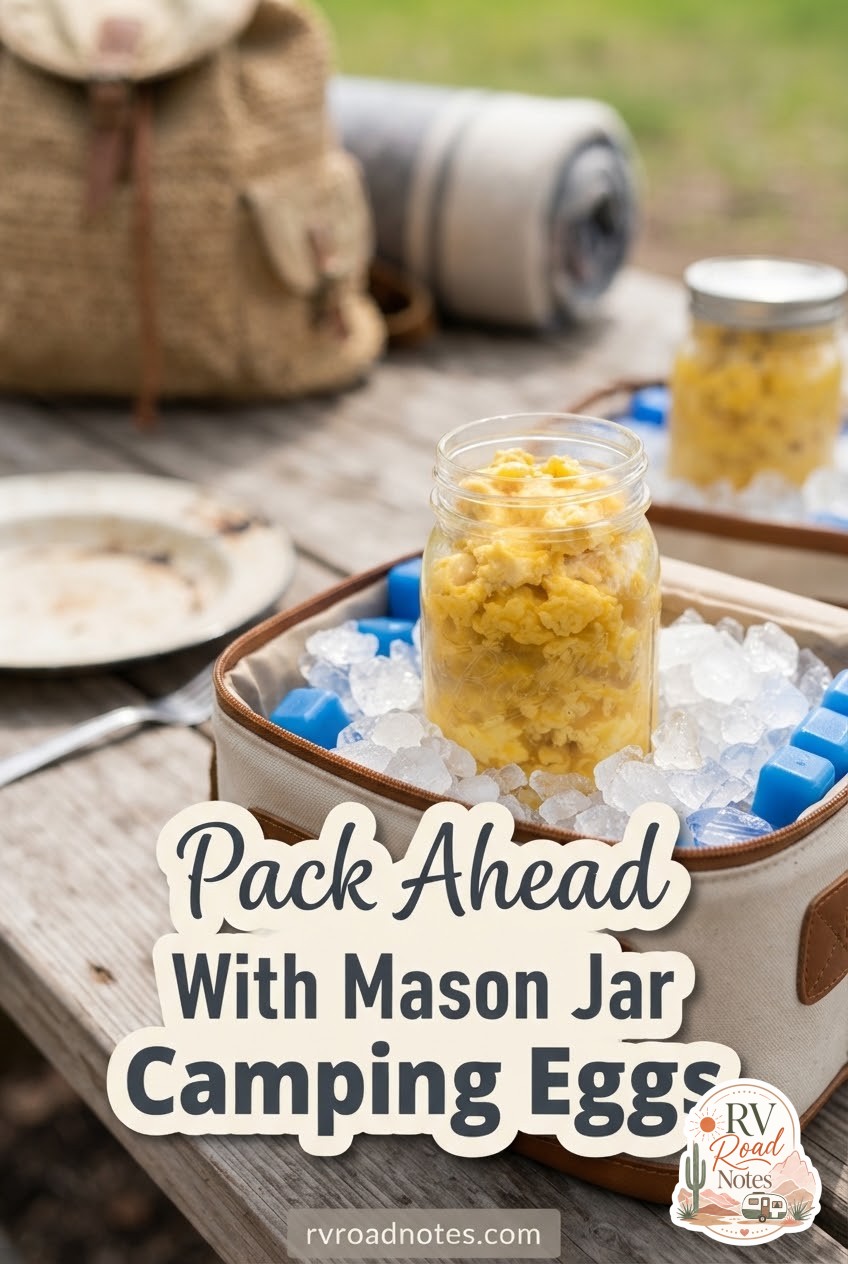
The jar goes upright into the cooler, nested against the ice packs so it stays stable and cold on all sides — not laid on its side, where a slow seep past the seal is more likely to find its way out. I use two hard ice packs rather than loose ice for this specific cooler because loose ice means loose water means a jar sitting in a puddle by afternoon, and that puddle finds its way into everything else in there too.
Do this step immediately after shaking — raw egg mixture sitting at room temperature on the counter is exactly the window you don't want to stretch out.
Ready for the Trip
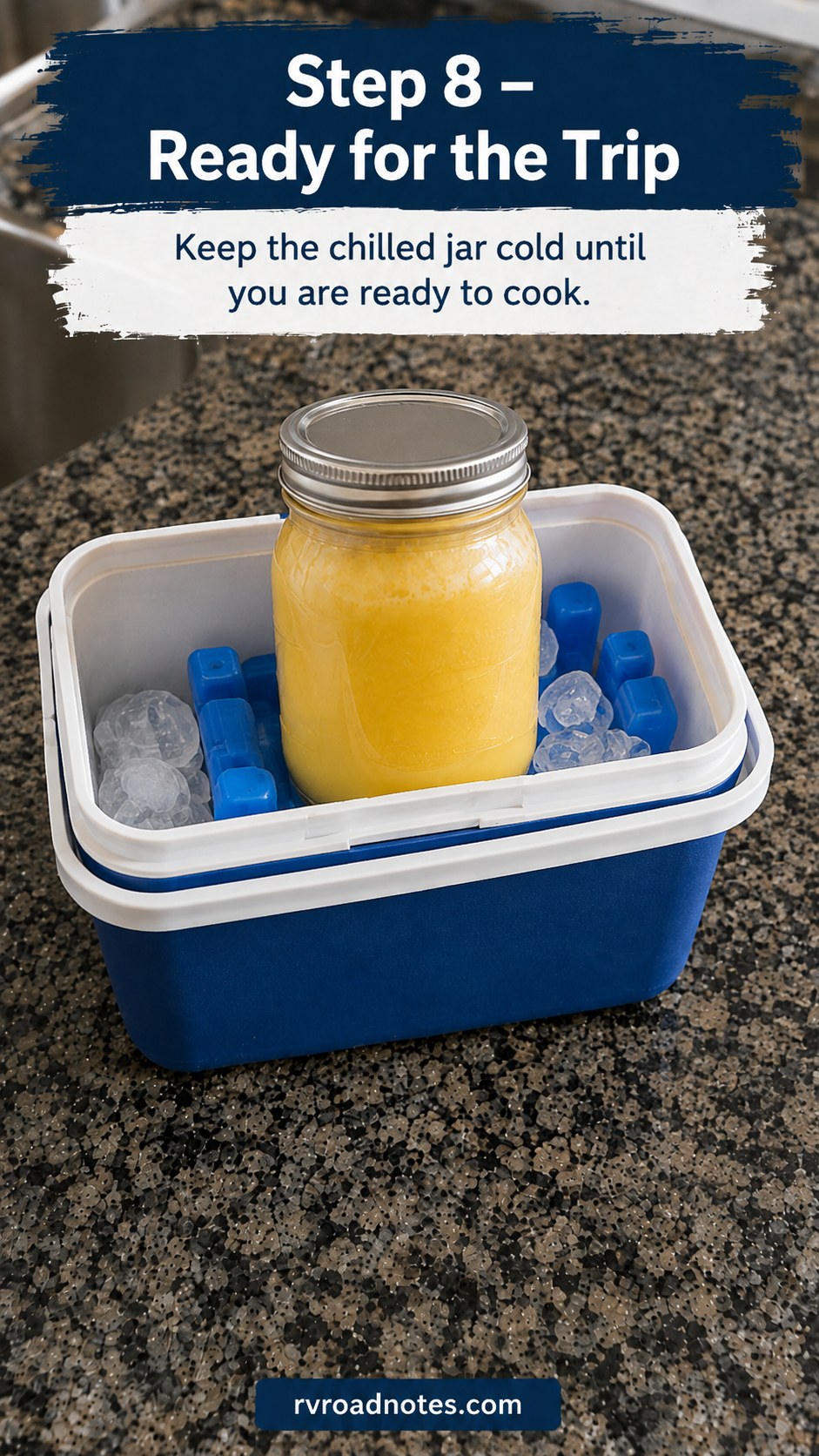
Once it's nestled in the cooler, the job is done until you're ready to cook. Keep the cooler cold and the jar upright, and treat this like any other raw egg product: use it within 2 days, keep the cooler at or below 40°F the entire time, and don't leave the jar sitting out at a lunch stop while you go look at the view. If the cooler's ice has fully melted and gone warm before you reach camp, that jar goes in the trash, not the pan — I don't take chances on raw egg that's been sitting in the danger zone, and neither should you.
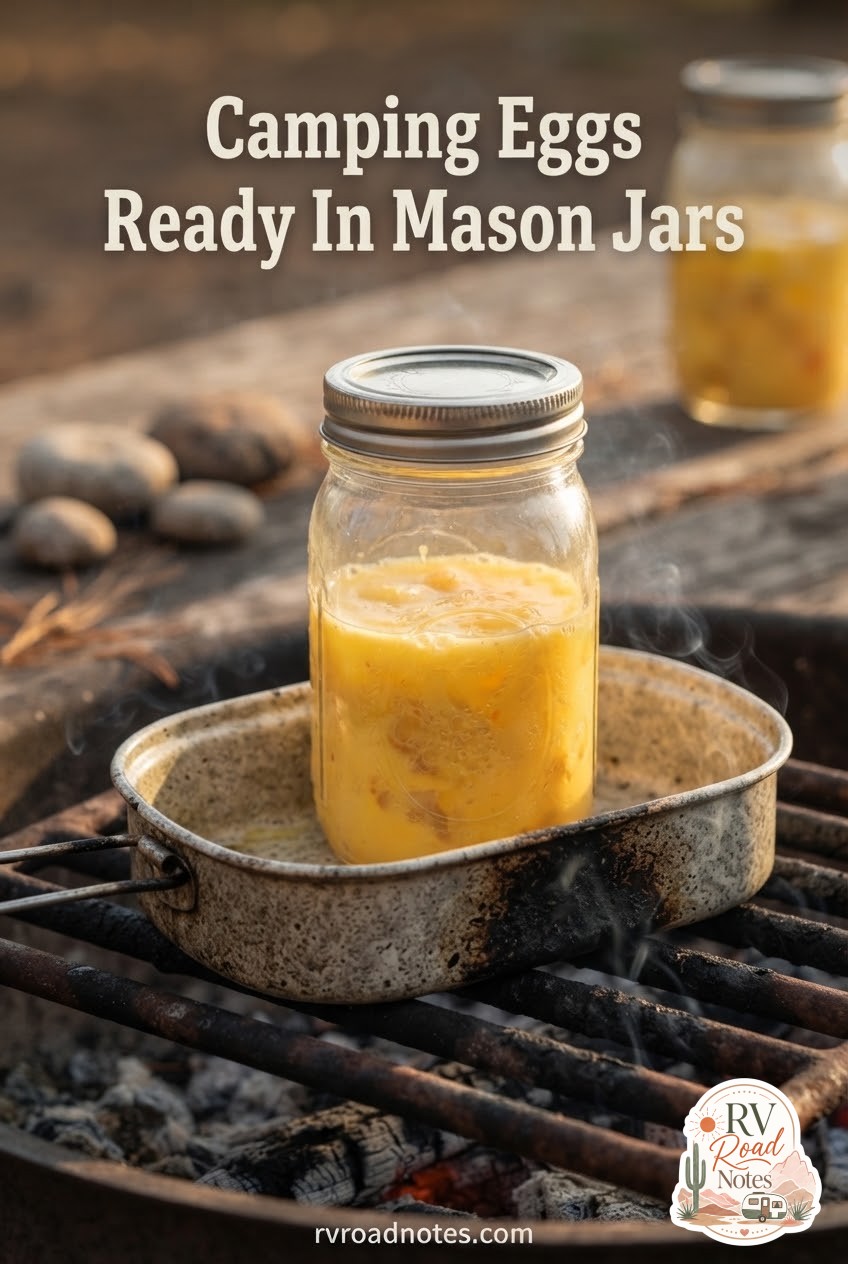
At camp, it pours straight into a hot pan on the propane stove for scrambled eggs, no bowl or whisk needed — which is really the whole point of doing it this way.
It's a small system, but small systems are most of what makes cooking on the road manageable. One jar, one cooler, four eggs, and breakfast is one step closer to done before I've even leveled the rig.

- For the Jar
- Equipment


Frequently Asked Questions
How long do eggs in mason jars for camping actually stay good?
I treat it the same as any raw egg mixture: 2 days maximum, and only if the cooler or fridge has stayed reliably at or below 40°F the entire time. If the ice melts and the cooler warms up before you get to cook it, don't risk it.
Can I put the jar straight in my RV fridge instead of a separate cooler?
Yes, once you're parked and level and running steady power. I use the cooler mainly for the drive itself, since my propane fridge runs less consistently while the rig is moving and tilted on rough roads.
Do I need to sanitize the jar every single time?
Hot soapy water and a good rinse, every time, no exceptions. Raw egg sitting in a jar that wasn't properly cleaned is one of the easier ways to make yourself sick on the road, and there's no fridge full of remedies out there when you're camped an hour from the nearest town.