I've made a lot of dinners in a galley kitchen with eighteen inches of counter, and cowboy beans is one of the few that comes out exactly the same whether I'm on shore power at a KOA or running the inverter off solar in the Utah desert. It's one skillet, one slow cooker, and almost nothing else touches water. That last part matters more than people think when your grey tank and your patience are both finite.
Mise en Place for a Rig-Sized Kitchen
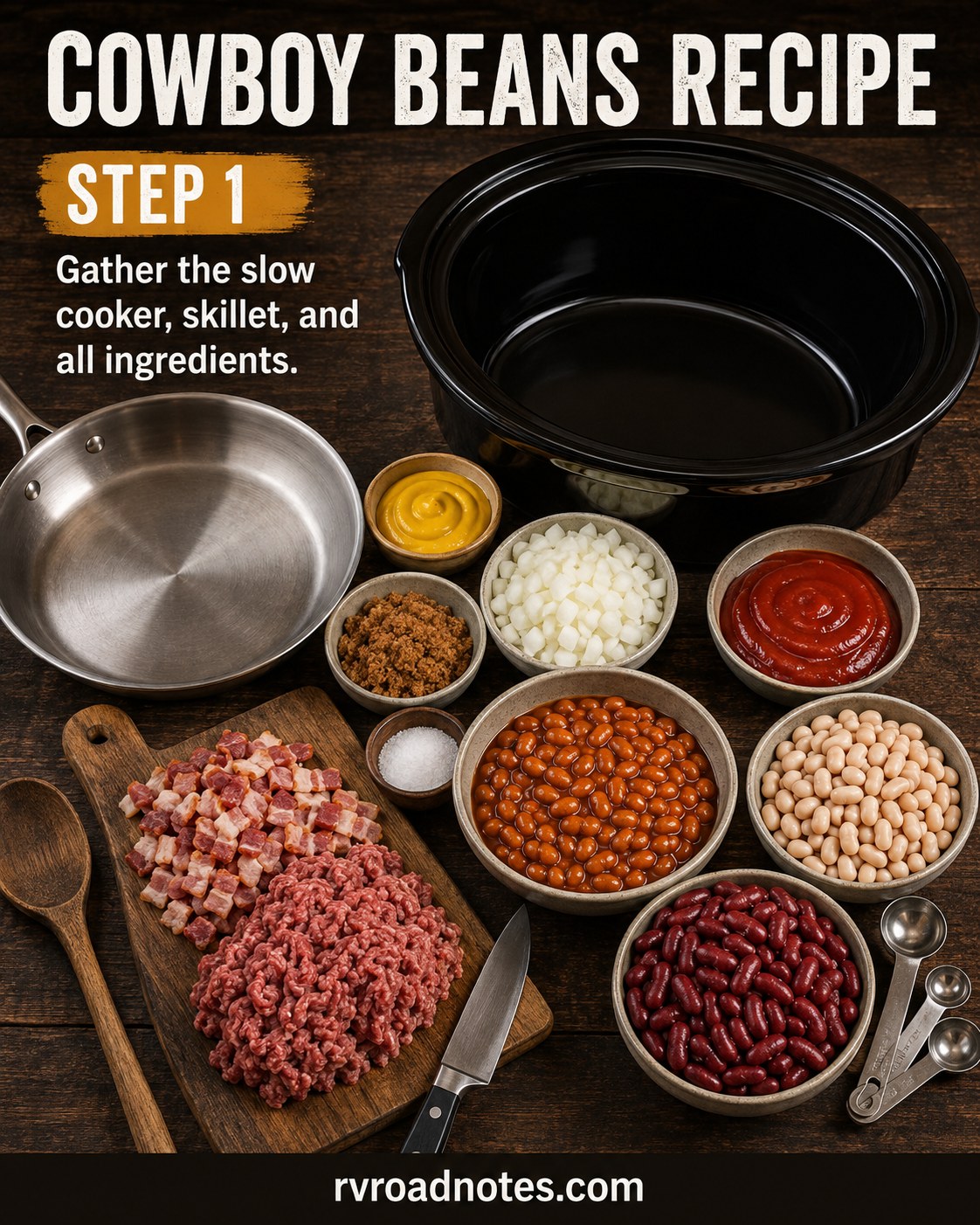
Before anything goes near heat, I lay it all out — bacon and ground beef on the cutting board, three cans of beans open and ready, the small stuff (mustard, ketchup, brown sugar, salt) in bowls I can actually reach without leaning over the stove. In a twenty-four-foot Class C, counter space is the real currency, and this recipe is generous about it: everything eventually lands in one pot, so there's no juggling six containers mid-cook.
Canned beans are heavy, and I mean that literally — three cans plus a pound of beef and a pound of bacon adds real weight to a rig where payload isn't infinite. I keep a running mental note of what's in the pantry locker for exactly this reason. If you're stocking up before a boondocking stretch, buy the beans, not the fresh produce that'll wilt before you use it.
Bacon First, Crisp Not Burnt
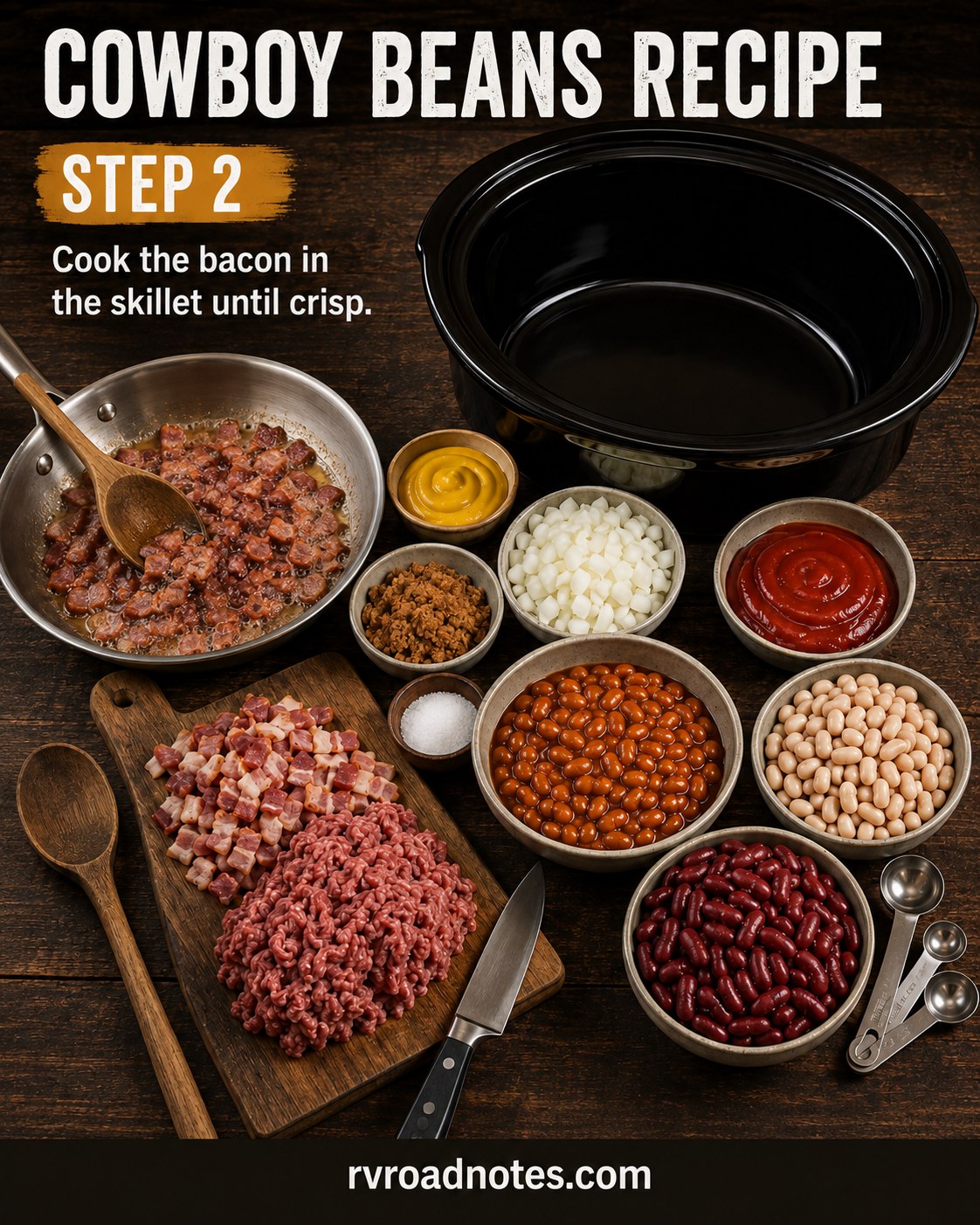
The bacon goes into the skillet first, over medium heat on the propane cooktop, and I let it render slowly rather than crank the burner to save time — a scorched edge here turns bitter fast in a slow cooker that's going to run for hours. I'm looking for that deep mahogany color you see in the pan, edges curling, most of the fat rendered out.
- Medium heat, not high — propane burners run hotter than people expect on the first turn of the dial
- Stir occasionally so it crisps evenly instead of steaming in its own grease
- Don't walk away — a small galley kitchen and an open flame is not the place for multitasking
The rendered bacon fat is doing half the flavor work in this dish — don't dump it, you'll want a spoonful of it for the beef.
Bacon Aside, Beef Into the Same Fat
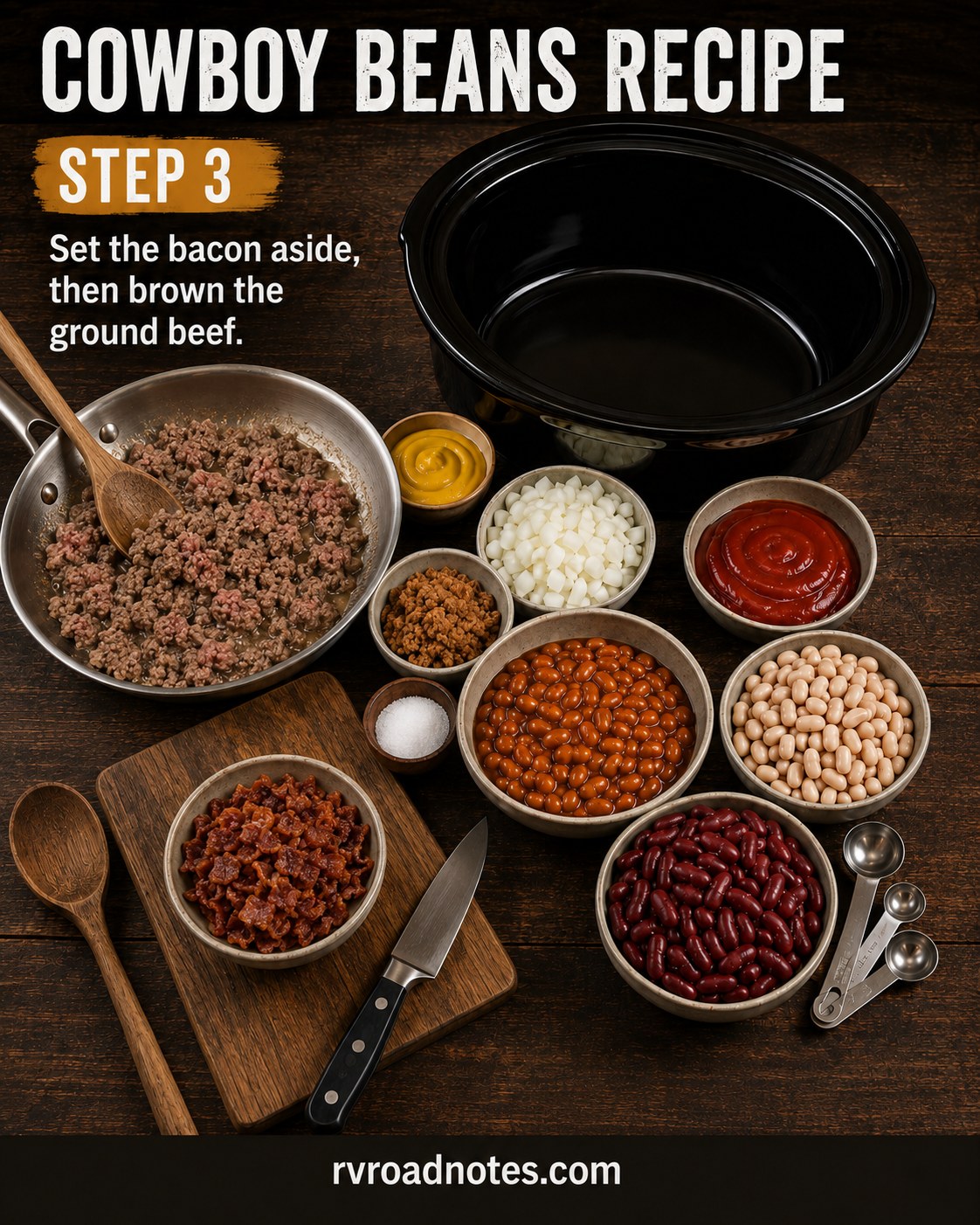
Once the bacon's out and set aside on the board, the ground beef goes into that same skillet, breaking it up with the wooden spoon as it browns. You can see in the pan that it's not fully cooked through yet at this stage — that's fine, it finishes in the slow cooker over the next several hours. What matters here is getting some color on it, not steaming it grey.
One practical note: whatever fat is left after browning, I drain it into an old can rather than down the sink. Grey tank plumbing on an older rig doesn't love congealed fat any more than a house does, and if you're on a composting or cassette toilet setup elsewhere in the rig, you're already thinking about what goes where. Small habit, saves a clog later.
Everything Meets in the Slow Cooker
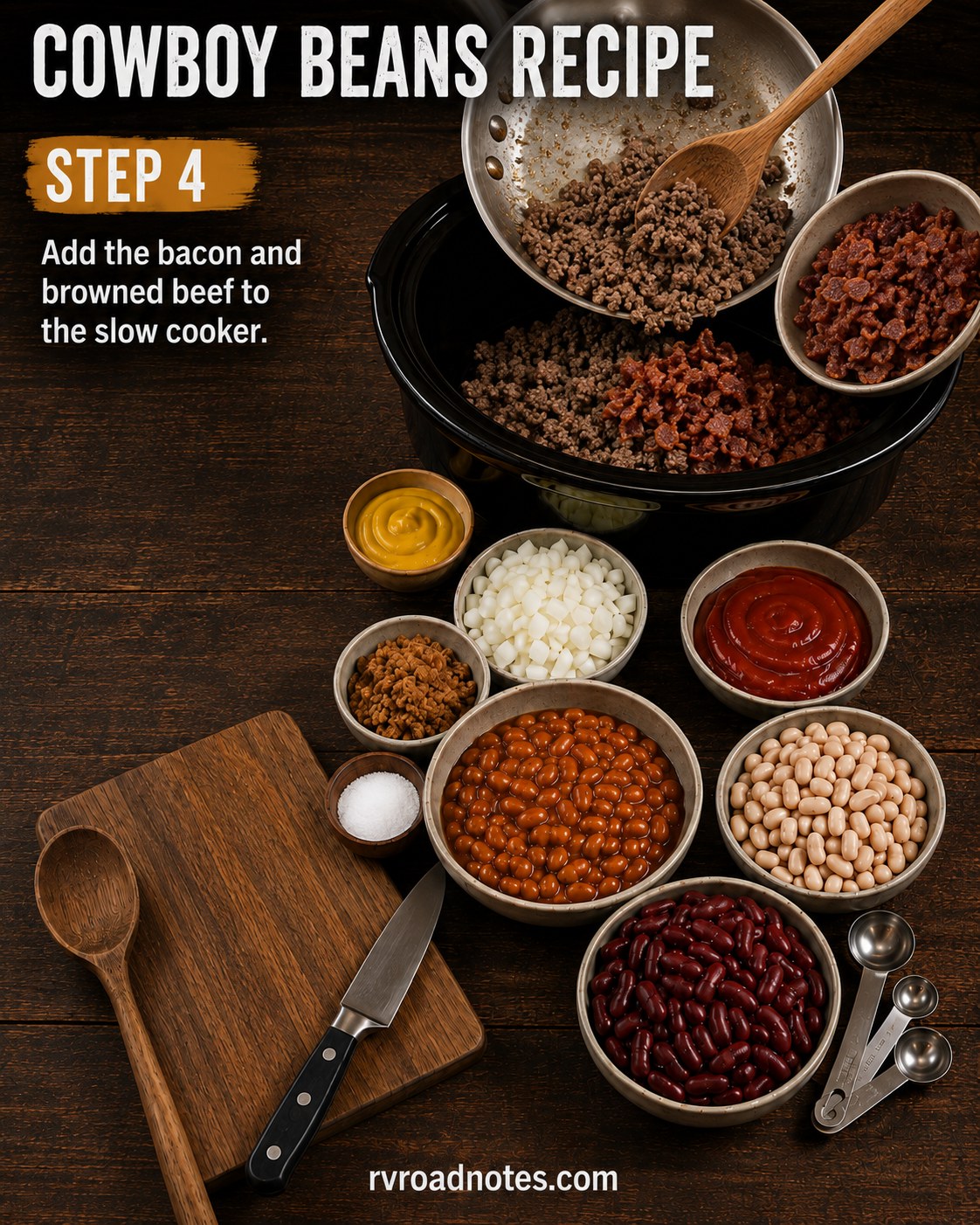
This is the step where the recipe stops being a stovetop project and becomes a dump-and-forget one. The browned beef and the crisped bacon both go into the slow cooker insert, and from here on, cleanup is one skillet and one cutting board — not a stack of dishes I have to ration water for.
I run a basic six-quart slow cooker, the kind that pulls somewhere around 150–200 watts on LOW once it's up to temperature. If you're on an inverter and battery bank rather than shore power or a generator, that's a manageable draw for a few hours, but it's still a continuous one — worth checking your battery monitor before you commit to a four-to-six-hour cook away from hookups.
Three Cans of Beans, All at Once
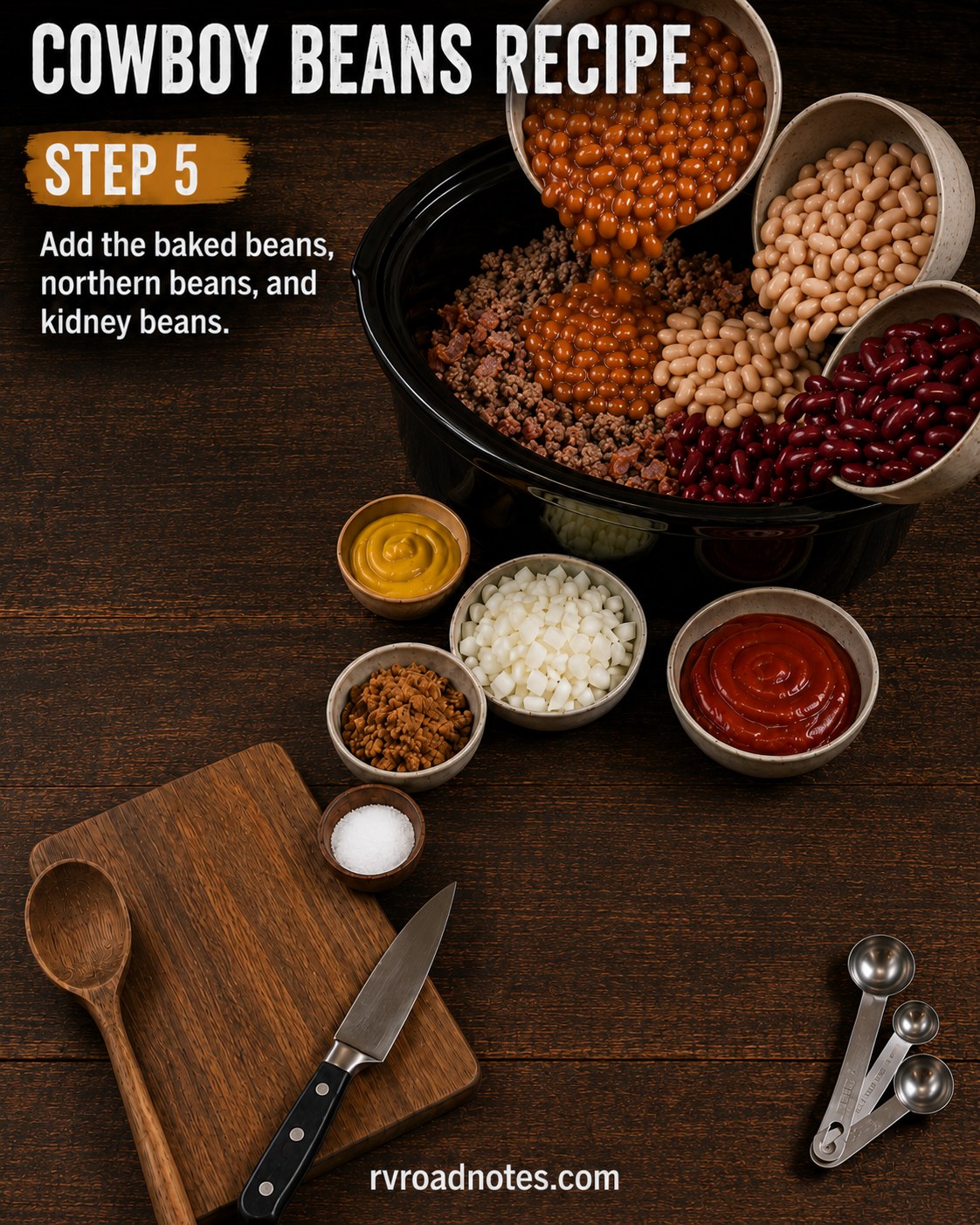
Baked beans, great northern beans, and kidney beans all go in together, and you can see the color difference in the pour — the baked beans bringing their own thick, tomatoey sauce, the northern beans pale and starchy, the kidney beans dark red and firm. I don't drain the baked beans; that sauce is doing work. The northern and kidney beans I do drain first, otherwise the whole pot ends up thinner than it should be.
- Baked beans — sauce and all, straight in
- Great northern beans — drained, rinsed if you want less sodium
- Kidney beans — drained, same treatment
Three empty cans is also three cans lighter for the recycling bag, which — again — matters more when that bag has to ride somewhere in a rig with limited storage until the next dump station or trash stop.
The Seasoning Layer That Makes It Cowboy Beans
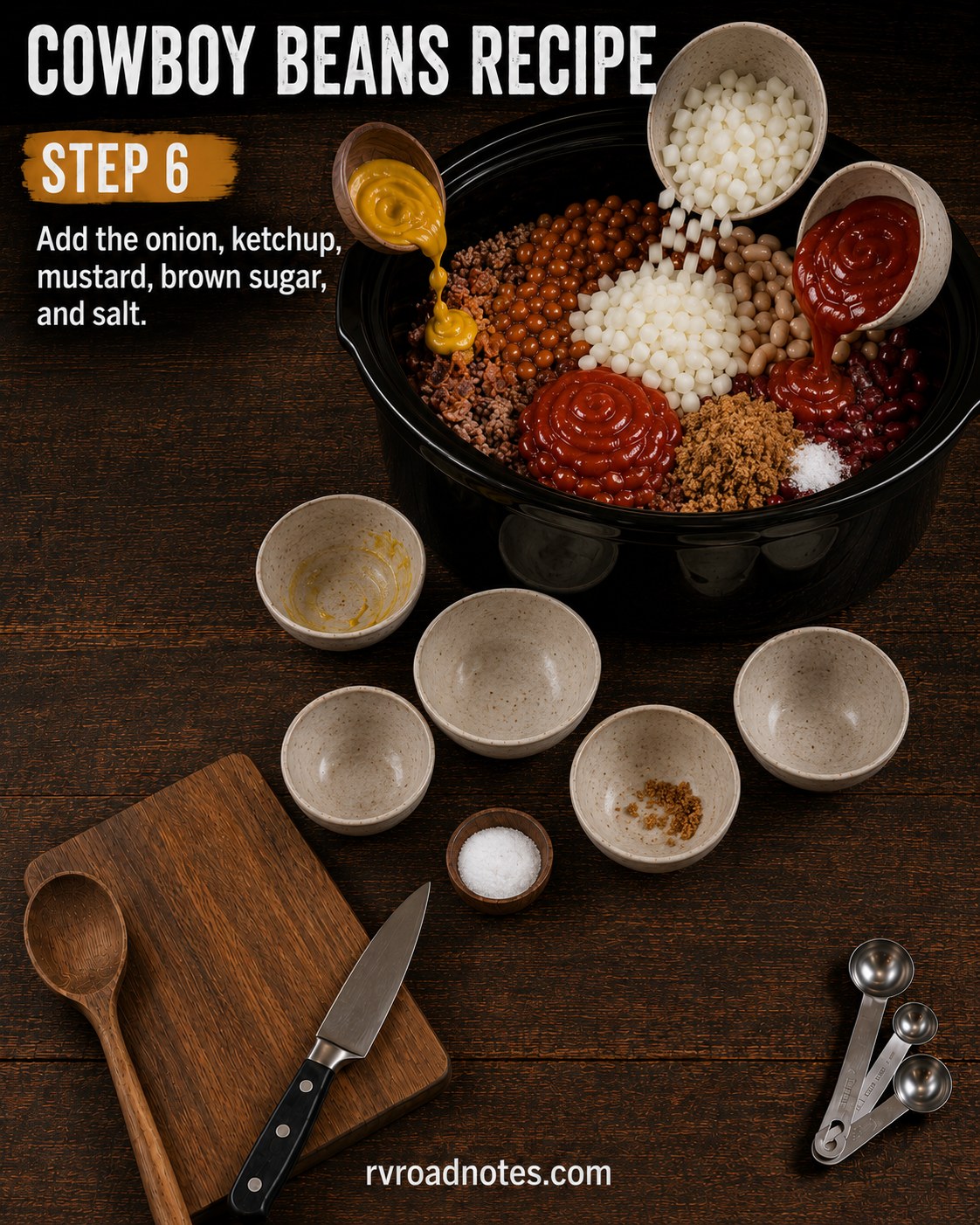
Diced onion, a good pour of ketchup, mustard, brown sugar, and salt go in next, each in its own small bowl before it hits the pot — you can see them lined up empty and full in the photo, which is basically how I keep track of what I've already added when I'm cooking distracted with a dog underfoot. This combination is what pulls the dish out of plain beans-and-meat territory and into something sweet, tangy, and a little smoky.
Exact ratios that work for me: a full cup of ketchup, a couple tablespoons of mustard, a generous half cup of brown sugar, and salt to taste — start light on the salt since the bacon and canned beans already carry some.
Stir Until It Looks Like Dinner
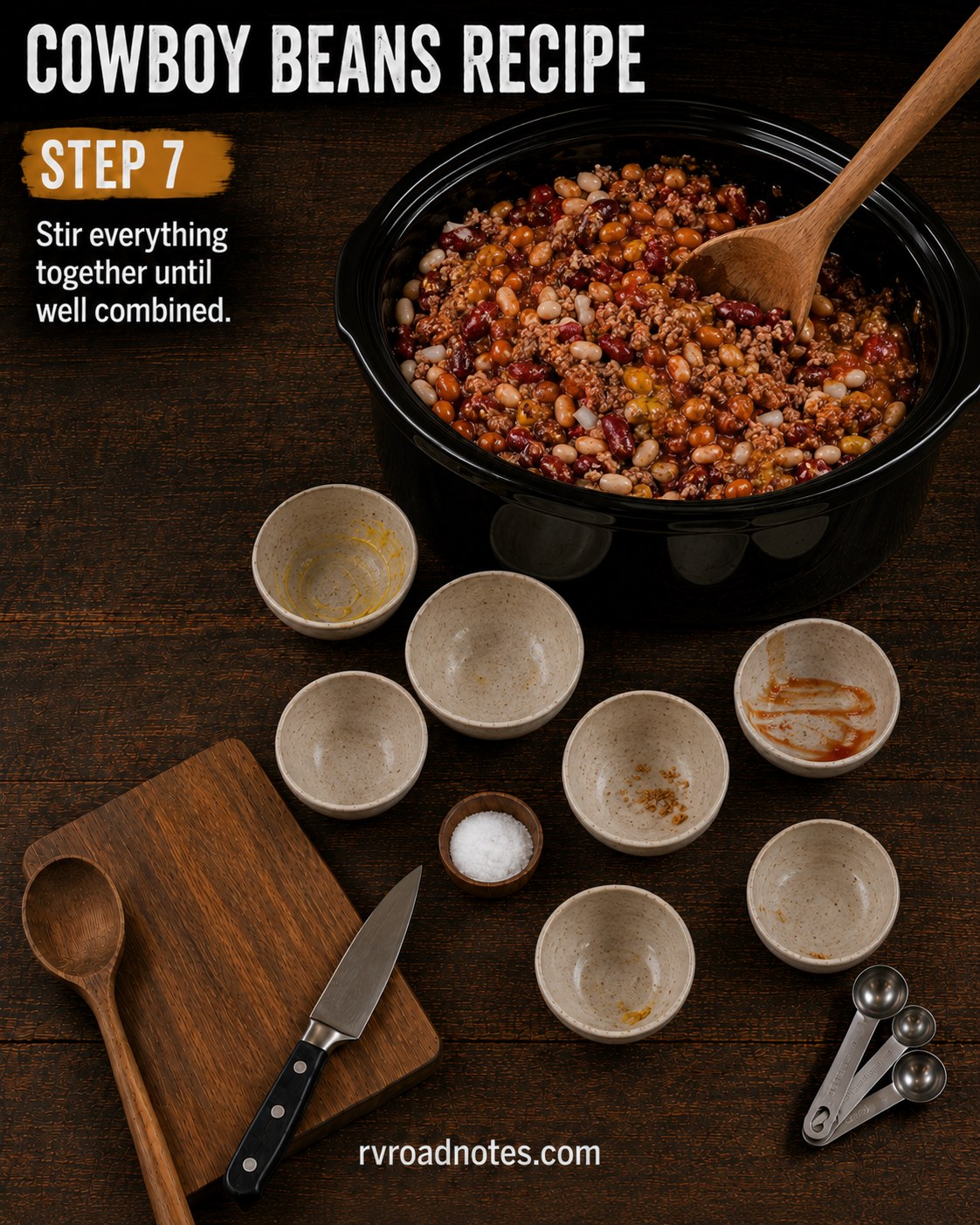
Everything gets folded together with the wooden spoon until it's evenly combined — you want the sauce coating every bean, not pooled at the bottom with dry beans sitting on top. This is the point where it stops looking like a pile of ingredients and starts looking like the finished dish, just wetter and less cooked down.
If it looks too thick at this stage, don't panic and add water — the beans and meat will release moisture as they cook low and slow, and a thin start usually means a soupy finish. Better to adjust after the first hour if you need to.
Low and Slow: 4 to 6 Hours, Lid On
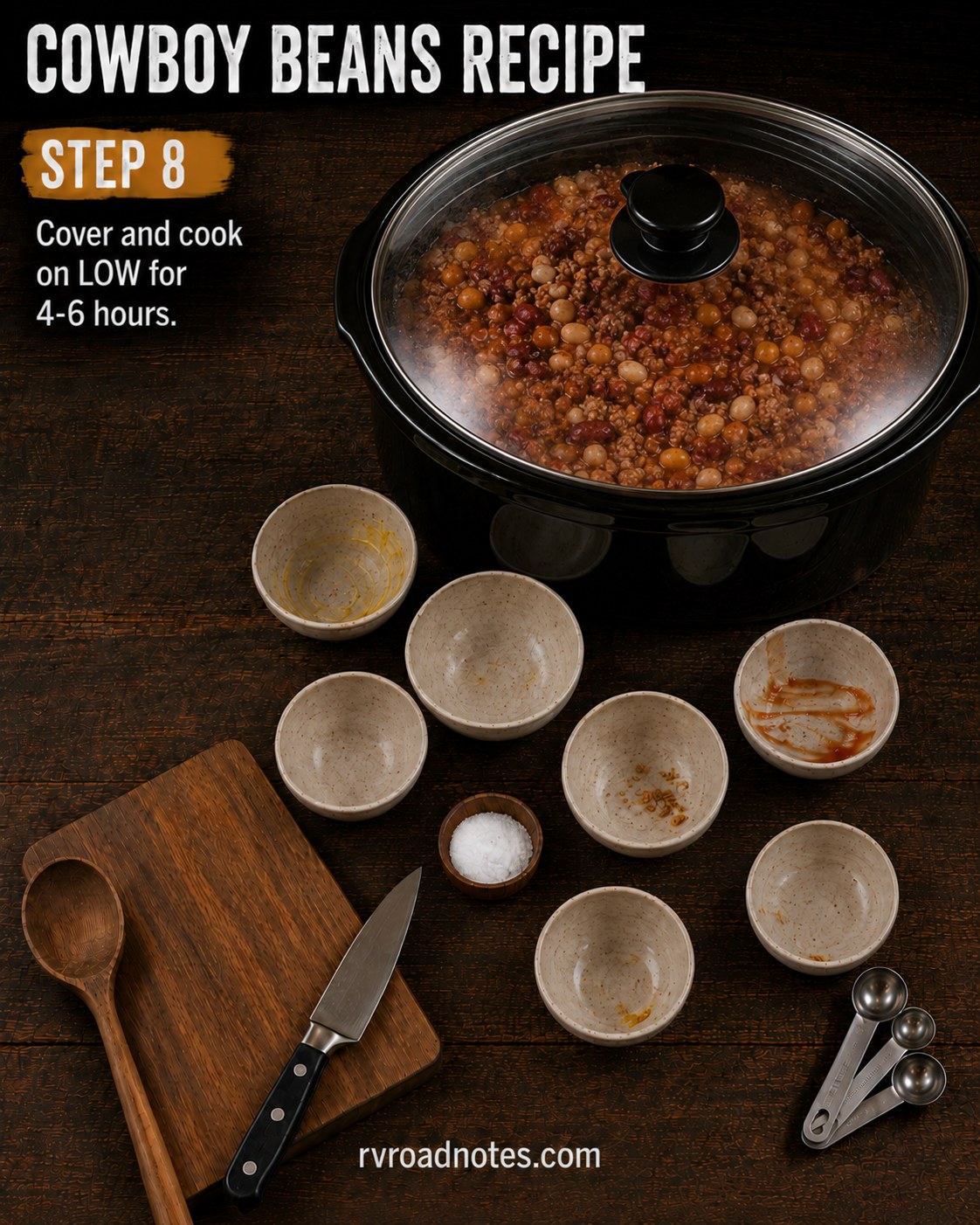
Lid goes on, slow cooker goes to LOW, and it runs for four to six hours — you can see the steam starting to fog the glass in the photo, which is normal and a good sign the temperature's climbing. I lean toward the full six hours when I have the time; the flavors round out and the beans go from firm to properly tender.
A few things I don't compromise on with a slow cooker running unattended in a rig:
- Working smoke and CO detectors, tested monthly — non-negotiable in a space this small
- Never leaving a generator running near a window or intake while I'm away from the rig
- Checking that the cord and outlet aren't warm to the touch partway through, especially on an older RV's wiring
If you're boondocking and running this off the inverter, plan the six hours against your battery bank's actual amp-hour capacity — this is a steady draw, not a spike, and it adds up over an afternoon.
Serve It Hot, Right Out of the Pot
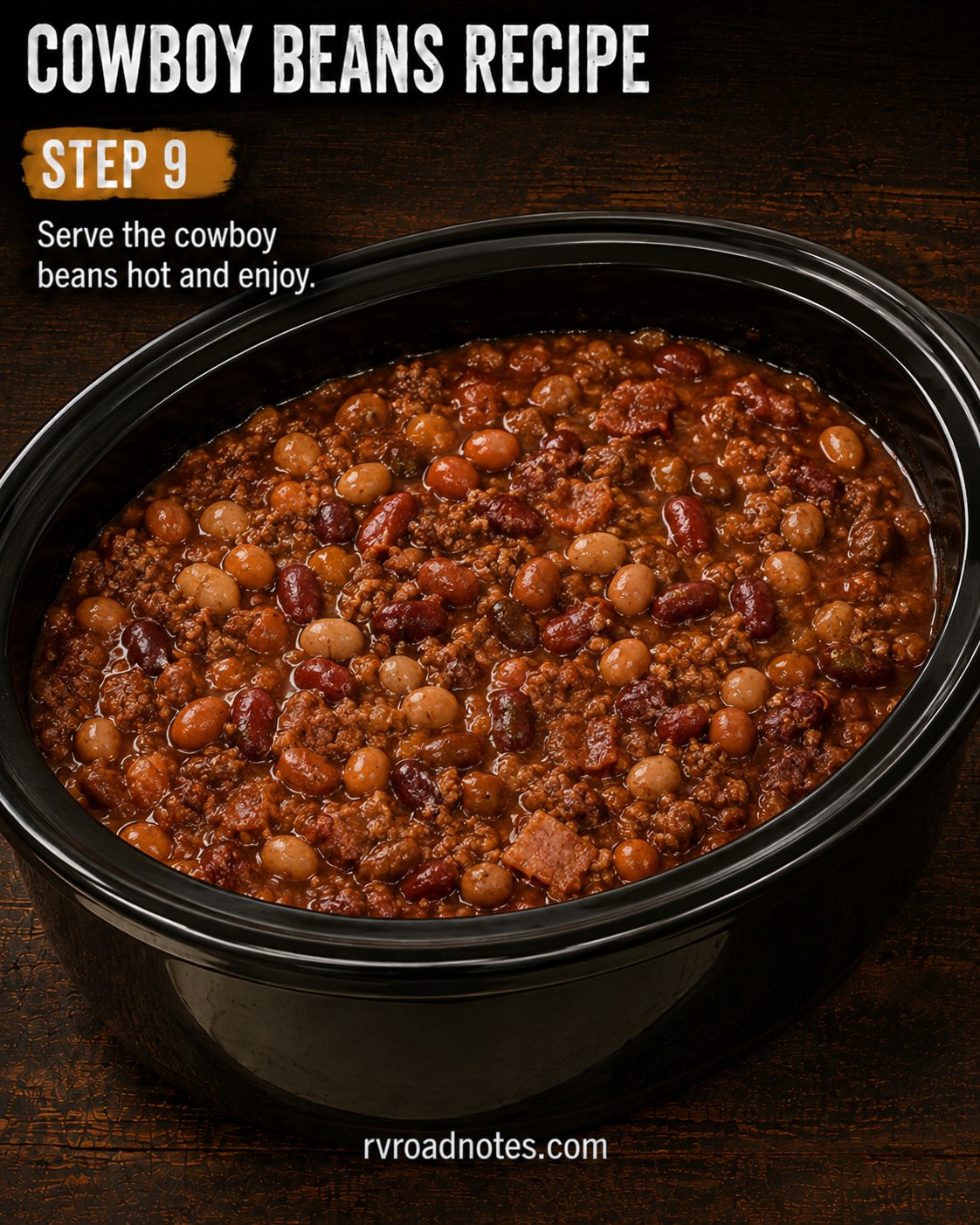
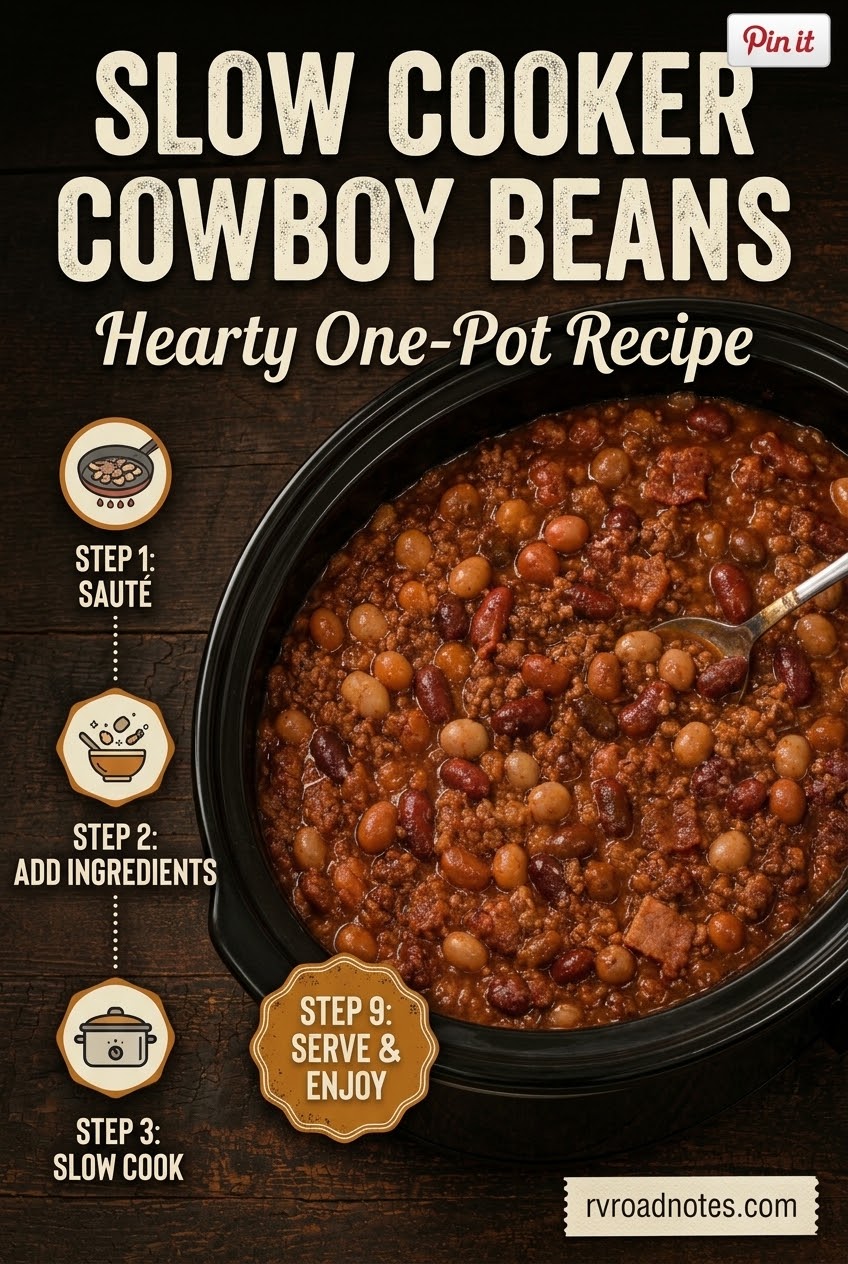
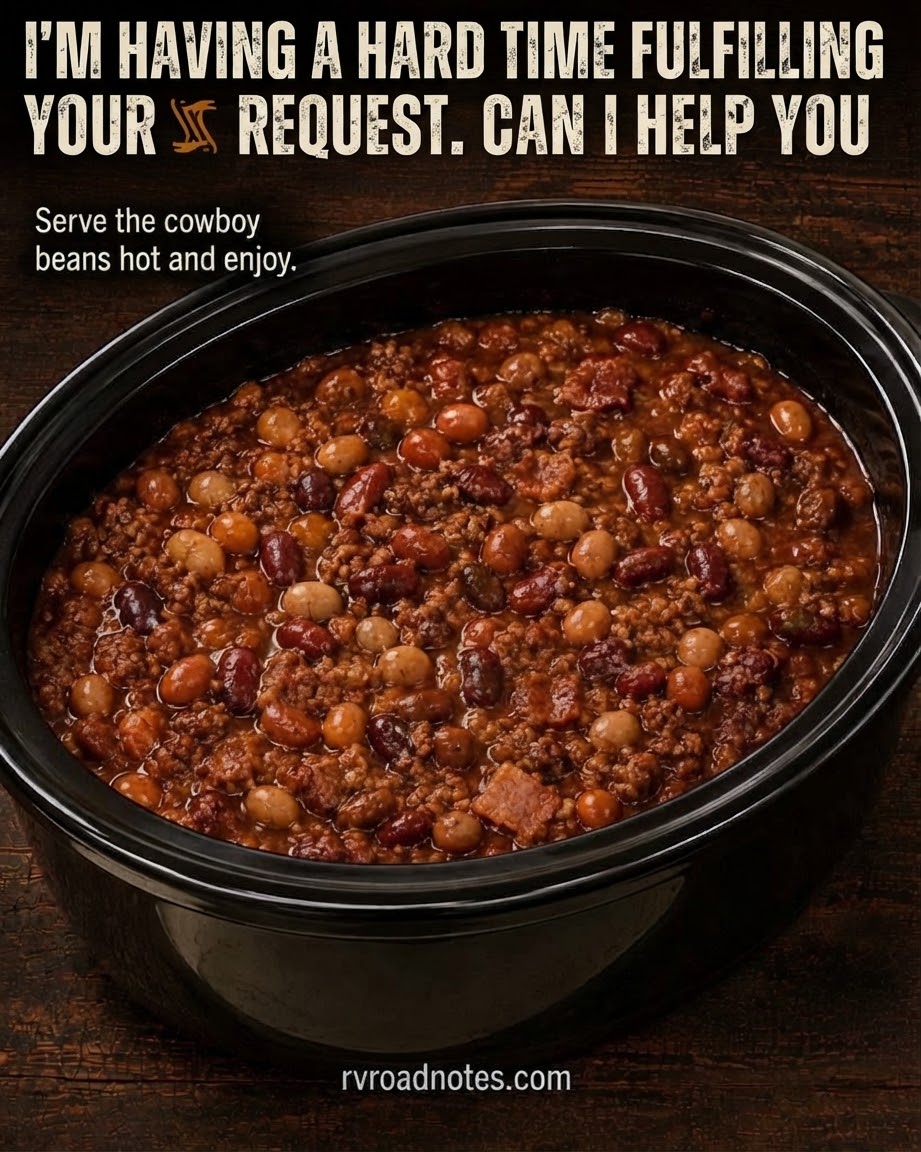
The finished pot is deep reddish-brown, beans holding their shape, bacon and beef distributed through every spoonful — this is the payoff shot, and it photographs better than it has any right to for something this simple. I usually serve straight from the insert at the picnic table rather than dirtying another dish, which is its own small victory when water for washing up is limited.
Leftovers keep well in the fridge for three to four days, but remember a propane fridge running on an older thermostat can swing a few degrees warmer than a residential one — I always let this cool briefly before it goes in, rather than sealing it up steaming hot and stressing the whole compartment's temperature.
This is the kind of dinner that buys me a free afternoon — brown it, dump it, walk away and go fix whatever's actually broken on the rig that day. Six hours later there's dinner, one skillet to wash, and enough leftovers that I don't think about food again until tomorrow.

- For the meat
- For the beans
- For the sauce and seasoning


Common Questions
Can I make cowboy beans without a slow cooker?
You can simmer it on the propane cooktop in a covered pot over low heat, stirring every 20 minutes or so for about an hour, but you'll want to watch it closely since stovetop heat is less even than a slow cooker's — it scorches on the bottom faster than people expect in a smaller pot.
Do I need to drain all the canned beans?
No — leave the baked beans with their sauce, since that's providing most of the base flavor, but drain the great northern and kidney beans or the final dish ends up thinner and less cohesive.
Is this a good boondocking recipe?
Yes, with one caveat: the slow cooker pulls a steady 150–200 watts for hours, so run the numbers against your battery bank or generator fuel before committing to the full six-hour cook away from hookups.