A reliable camping checklist printable is less about owning more gear and more about preventing the small misses that become large problems outside. After years of road travel and camping, I have found that packing systems work best when they follow the order a trip actually unfolds: shelter, clothing, food, water, safety, comfort, tools, recreation, and final review.
Camping Shelter and Sleeping Gear Checklist
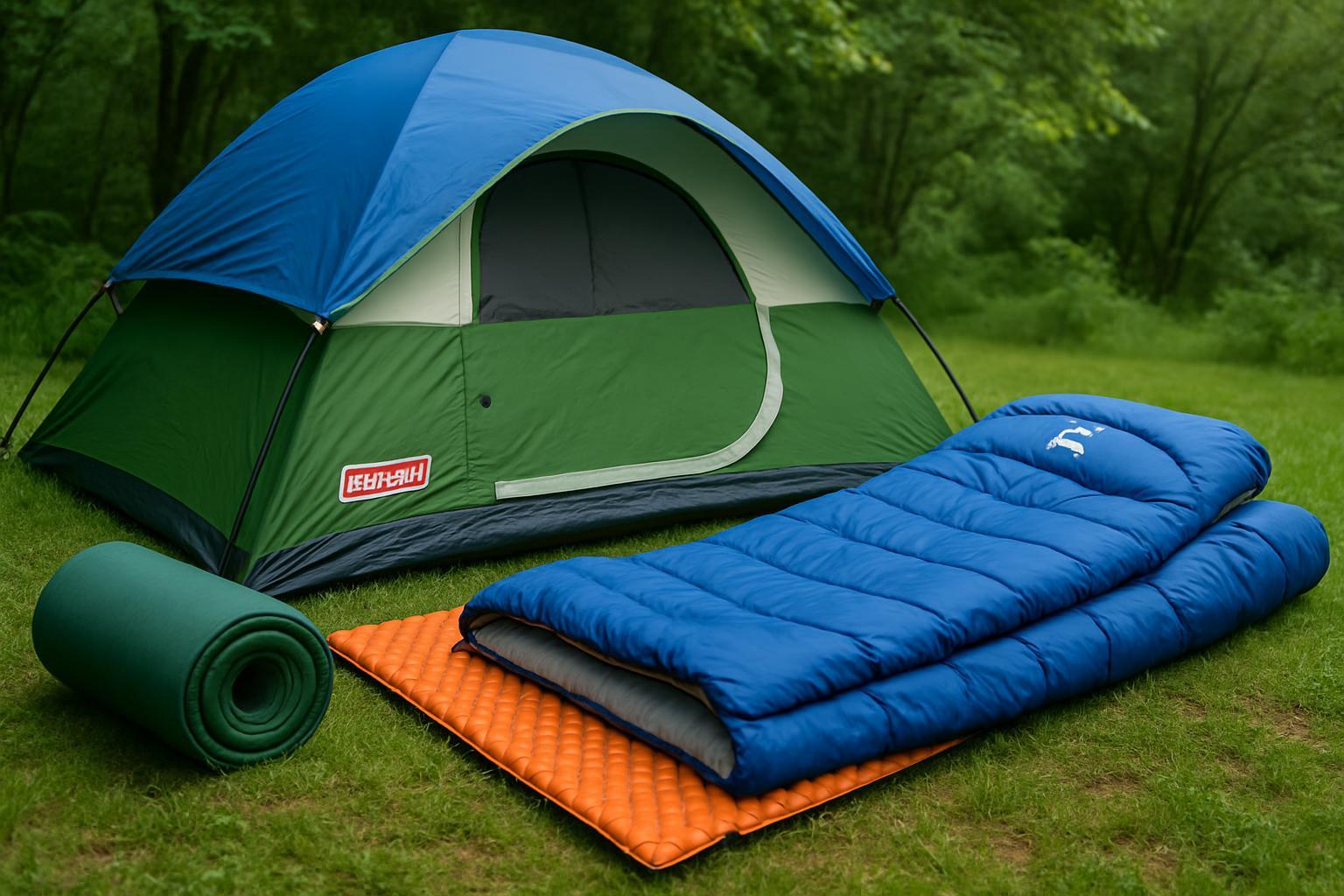
Shelter is the first item to secure because everything else depends on a dry, warm place to recover. This checklist section covers the tent, rain fly, stakes, sleeping bag, sleeping pad, pillow, and repair items that turn a campsite into a usable base.
The setup shown here represents a straightforward tent camping approach. A good checklist separates essential sleep equipment from optional comfort items. A sleeping pad is not decoration; it provides insulation from the ground, which can drain body heat even on mild nights.
- Inspect tent seams, poles, and zippers before leaving home.
- Pack stakes suitable for the soil you expect to find.
- Match your sleeping bag rating to the actual season and conditions.
- Bring a small patch kit for fabric repairs.
I learned that the fastest way to ruin a trip is arriving tired and discovering one missing sleep item. A five-minute checklist review at home beats improvising after dark.
Clothing and Weather Protection Essentials
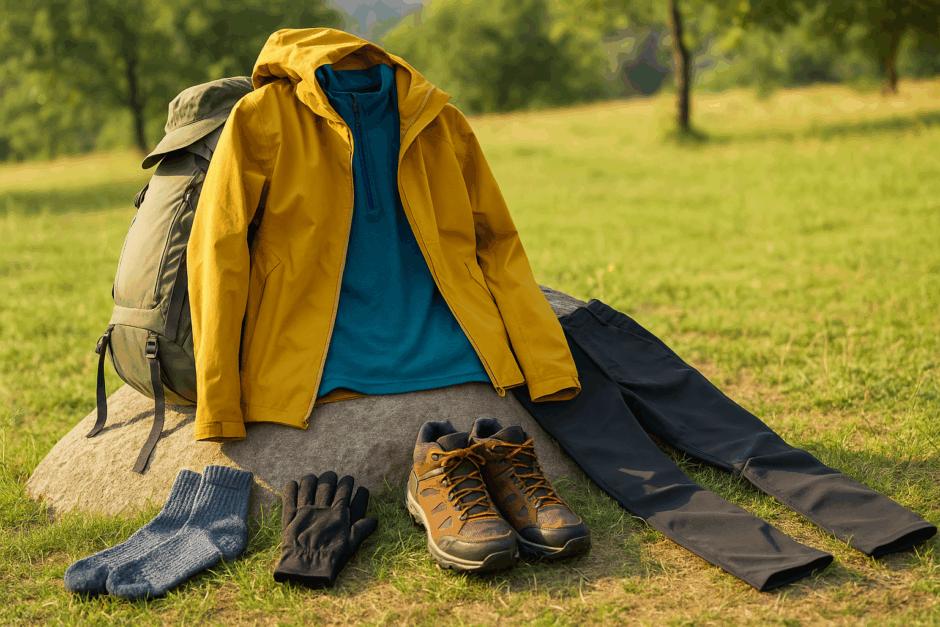
Camping clothing works in layers, not in large piles. The clothing checklist should account for temperature changes, rain, wind, and activity levels. The items pictured represent a practical outdoor clothing system: base layers, insulating pieces, rain protection, gloves, and sturdy footwear.
Weather can change quickly, so packing only for the forecast is risky. A waterproof outer layer and dry spare socks often provide more value than extra casual clothing.
My rule is simple: pack for the conditions you could realistically encounter, not just the ones you hope to get.
- Use moisture-managing base layers for active days.
- Keep one dry outfit protected from rain.
- Choose footwear based on terrain, not appearance.
For a printable checklist, this category deserves its own box because clothing is one of the easiest places to overpack.
Food Storage and Meal Planning Checklist
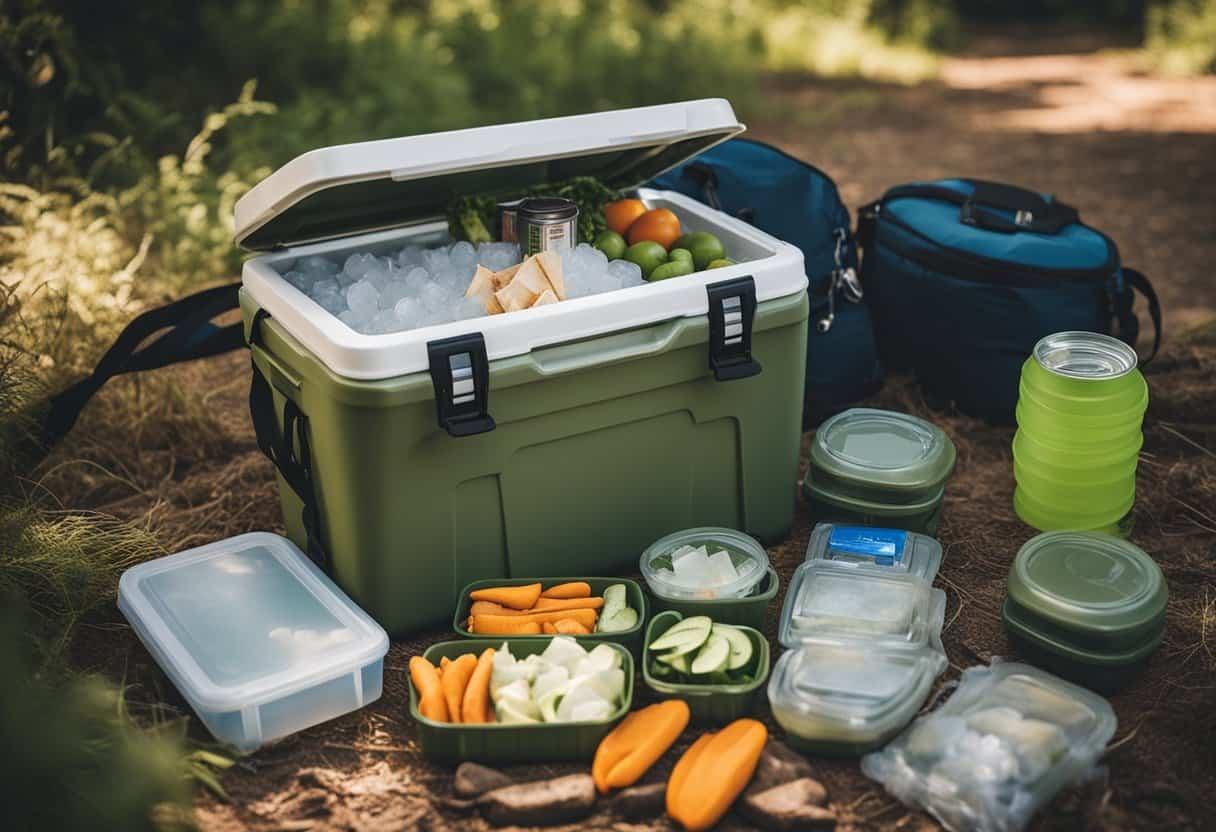
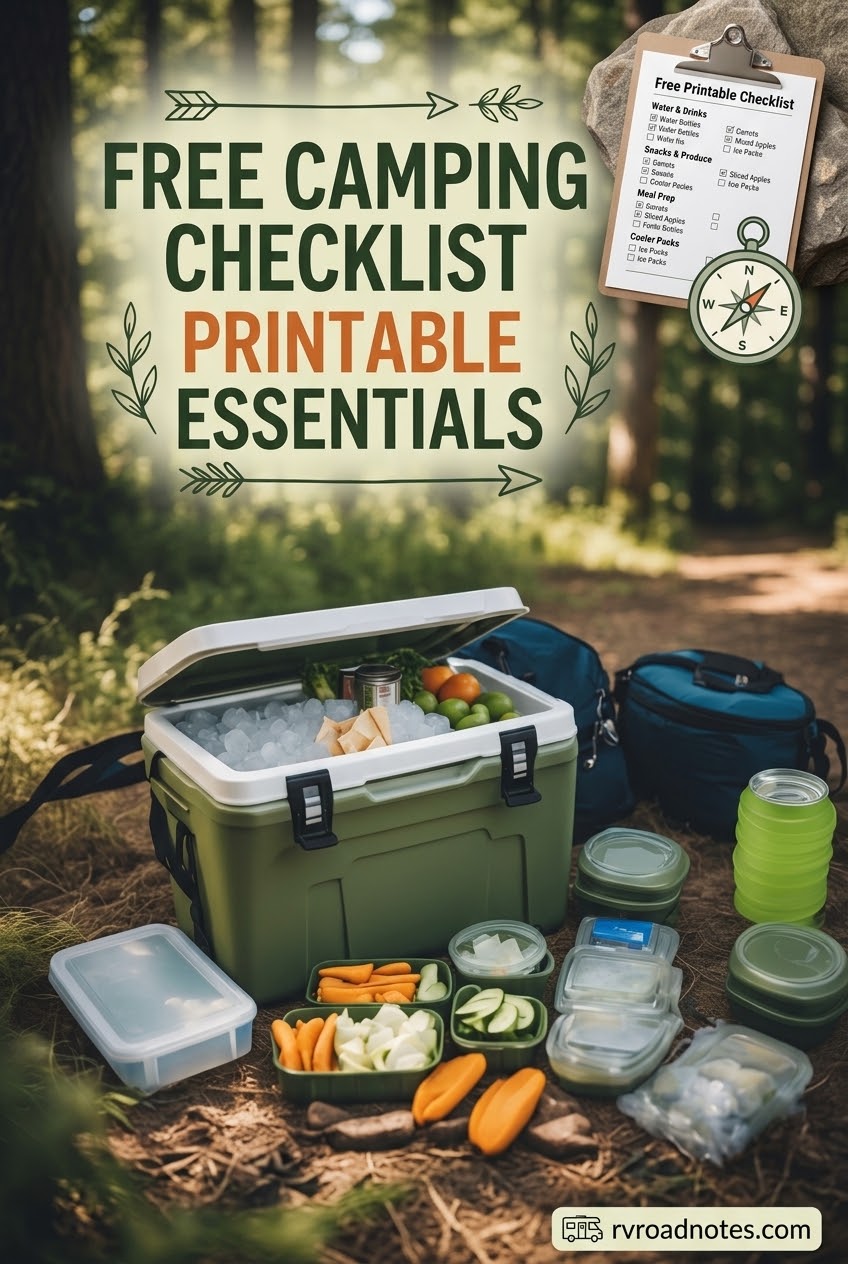
Food planning starts with storage, not recipes. The cooler and container setup shown here highlights the part many campers overlook: keeping food organized and safe from the moment it leaves home.
A camping checklist printable should include cooler, ice or cold packs, sealed containers, utensils, cooking equipment, and cleanup supplies. Separate meal ingredients by day when possible so you are not searching through every container at dinner.
- Plan simple meals with realistic preparation time.
- Pack food in sealed containers to reduce waste.
- Bring enough water for cooking and cleaning needs.
Food safety matters outdoors. Perishable foods need proper cold storage, and wildlife rules vary by location, so always follow local campsite requirements for storage and disposal.
Water, Hydration, and Filtration Supplies
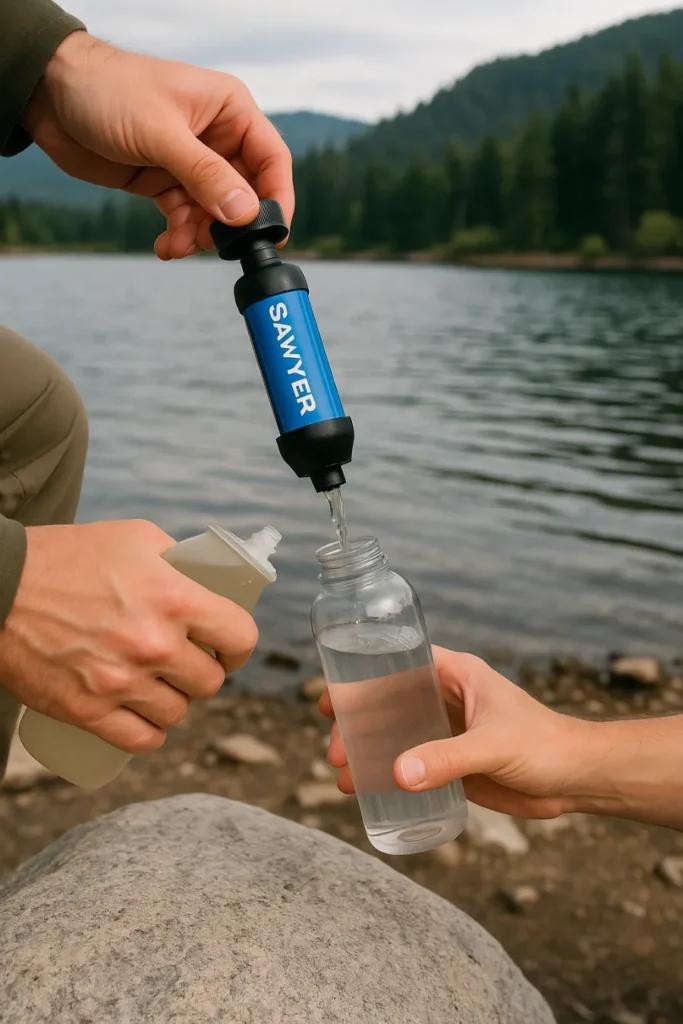
Water is a planning item, not a last-minute purchase. The filtration setup shown represents a common backpacking and camping solution for treating available water sources.
A printable checklist should separate drinking water, cooking water, and emergency treatment supplies. Filters have limits, and many systems do not remove every possible contaminant, so use equipment according to its instructions and understand the source conditions.
- Carry enough known-safe water for the route and conditions.
- Pack a filter or treatment method appropriate for your trip.
- Bring clean containers dedicated to drinking water.
When camping away from developed facilities, water planning often determines how comfortable the whole trip feels. Running out changes the schedule quickly.
Navigation, Lighting, and Emergency Gear
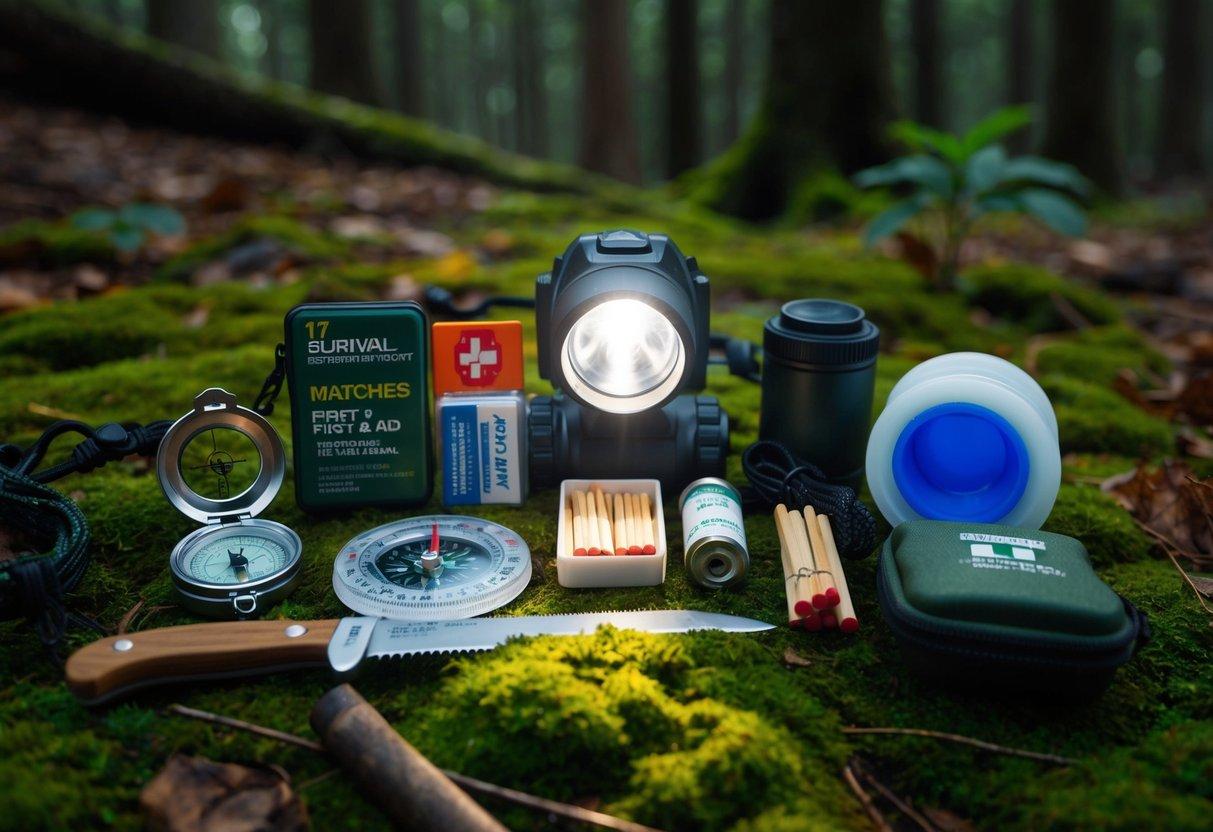
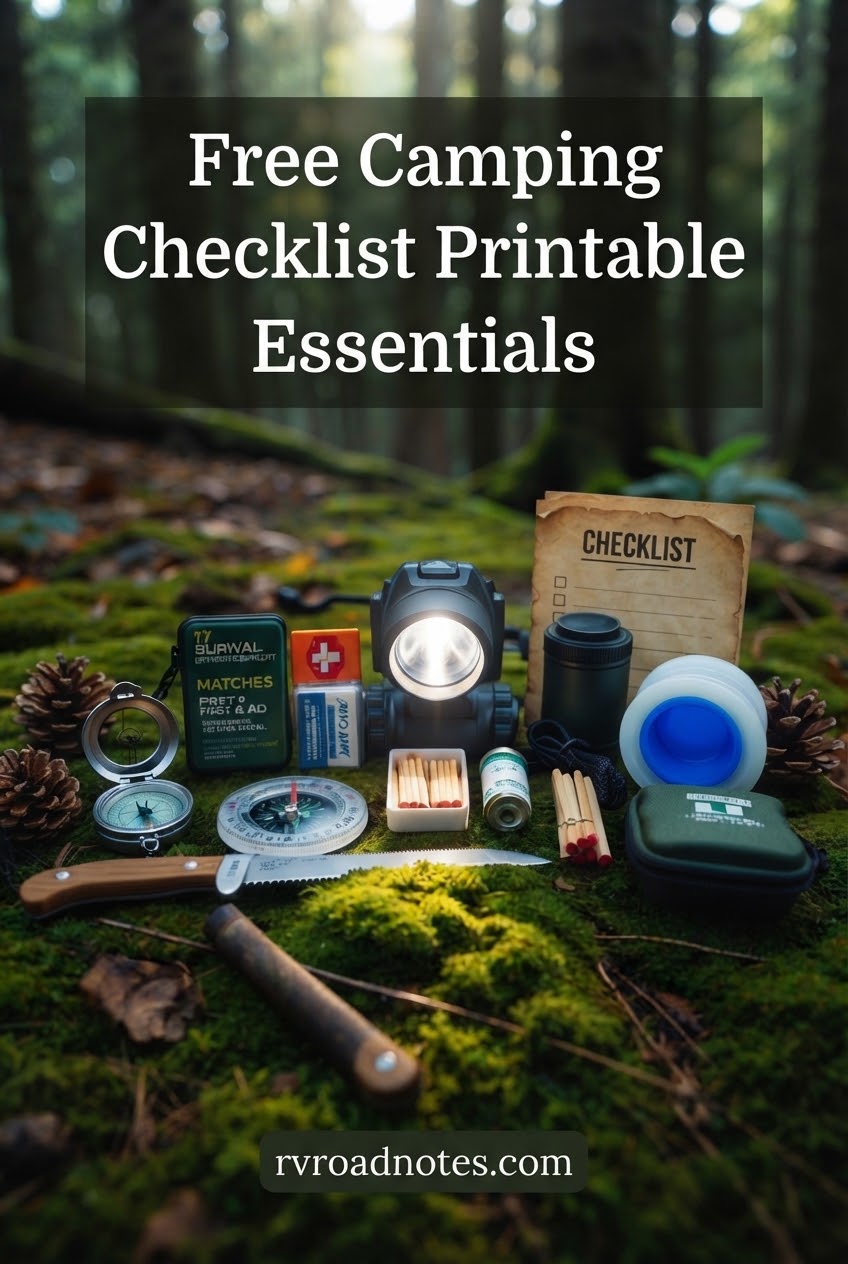
A campsite is easier to enjoy when basic safety equipment is easy to reach. This section of a camping checklist printable covers lights, navigation tools, first aid supplies, and emergency items.
The gear shown includes the type of equipment that supports decision-making when daylight disappears or plans change. A flashlight is not a substitute for navigation, and a phone is not a complete emergency plan in areas without reliable service.
- Pack headlamps with spare batteries.
- Carry maps suitable for your location.
- Keep first aid supplies accessible, not buried in a bag.
Battery checks before leaving are simple and worthwhile. I prefer equipment that can be tested at home rather than discovered empty beside a trail.
Personal Hygiene and Camp Comfort Items
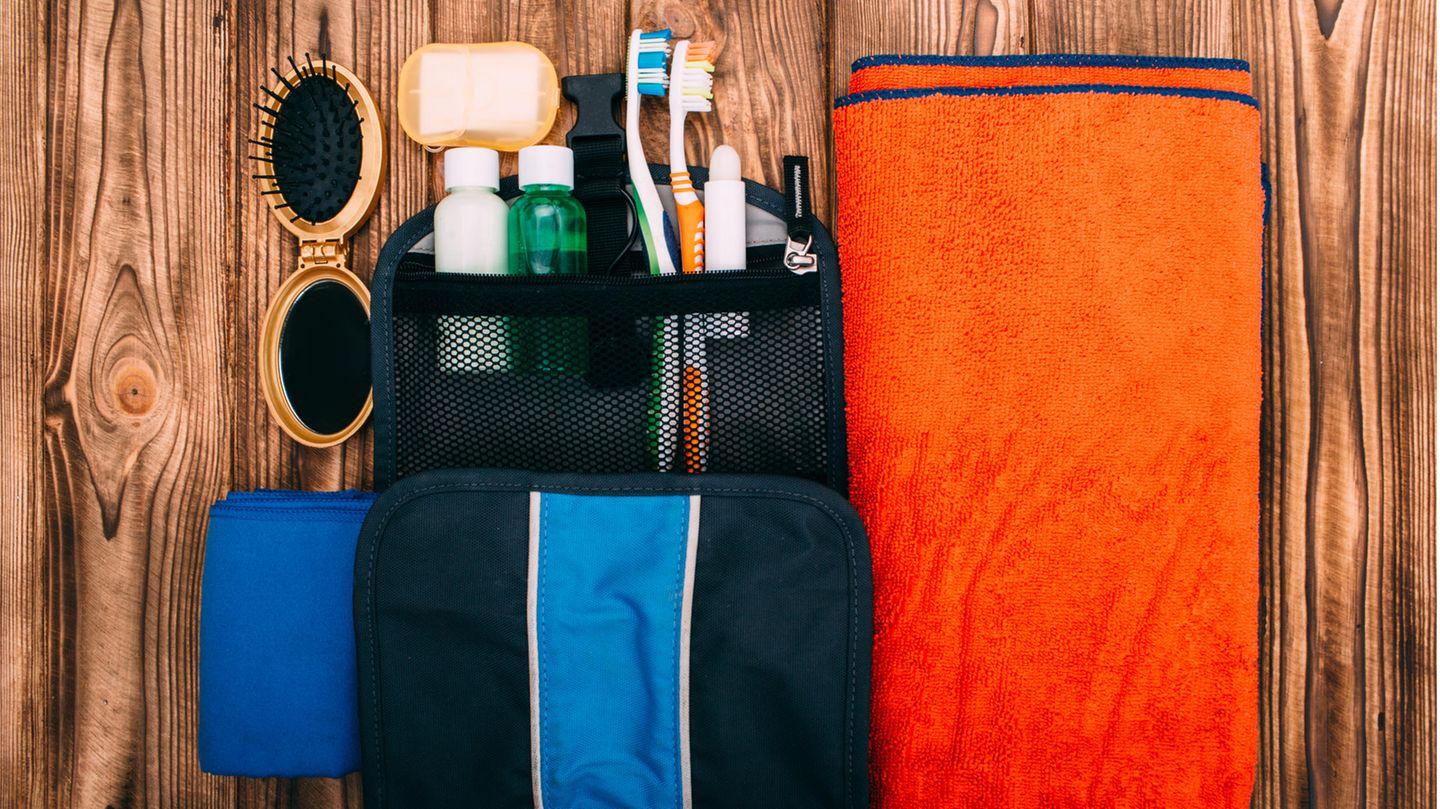
Small comfort items prevent unnecessary discomfort. The hygiene kit shown here reflects the basics that belong on a printable camping checklist: toiletries, towel, toothbrush, soap, and personal care supplies.
Camping hygiene does not require bringing the bathroom from home. It requires choosing compact items that support cleanliness while respecting the campsite and surrounding environment.
- Use biodegradable products where appropriate, while following local rules.
- Pack a towel that dries quickly.
- Include medications and personal essentials before optional gear.
Comfort is also about organization. A small dedicated hygiene bag saves time because the same items return to the same place after every use.
Camp Tools and Repair Equipment
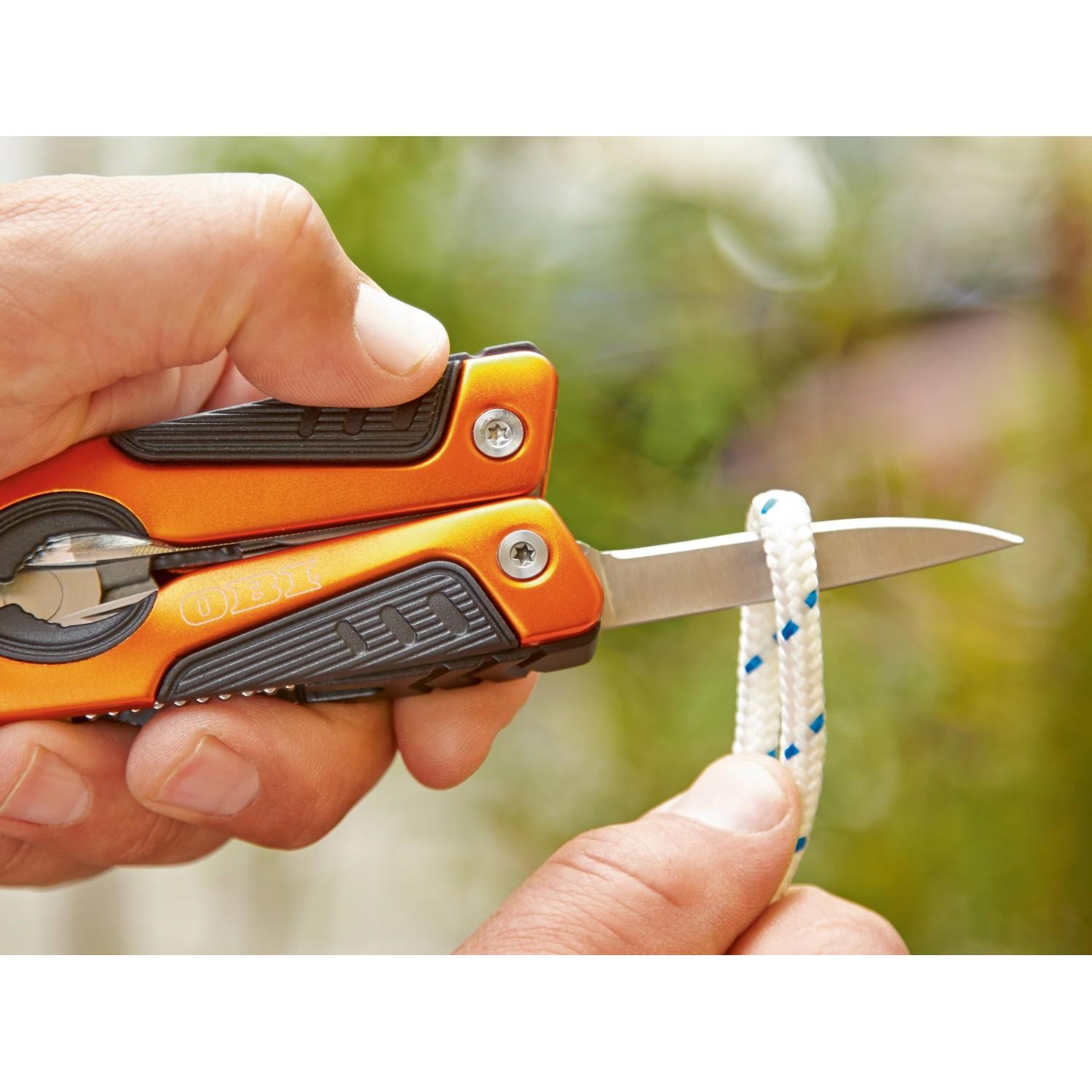
Tools should solve likely problems, not every possible problem. The repair equipment shown represents a compact approach: multipurpose tools, cordage, small fixes, and basic campsite support.
A camping checklist printable should include repair supplies that match the equipment you actually bring. Carrying a huge tool collection adds weight without necessarily improving preparedness.
- Pack duct tape or repair tape for temporary fixes.
- Carry cordage for common campsite tasks.
- Include a basic knife or multitool where legal and appropriate.
Know when a repair is beyond a campsite fix. Safety-critical systems and major equipment failures are not the place for experimentation.
Outdoor Recreation and Adventure Gear
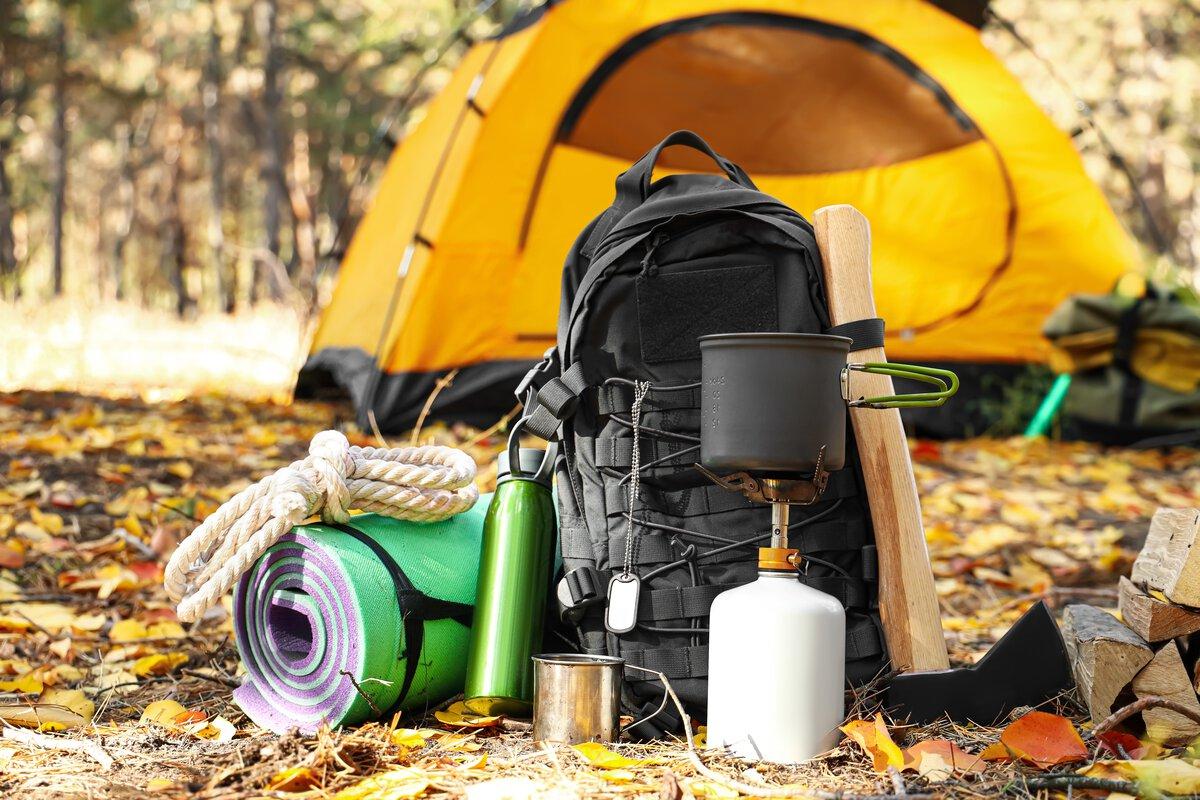
Adventure gear should support the trip you planned, not the fantasy version. The camping setup shown here includes equipment associated with outdoor recreation, cooking, and exploring around camp.
This checklist category changes the most between campers. A family car camping trip may need chairs and games, while a backpacking trip focuses on weight and efficiency. The best packing list reflects the actual activity.
- Match gear weight to transportation limits.
- Check weather and terrain before selecting equipment.
- Leave fragile environments as you found them.
Responsible camping includes following land rules, respecting fire restrictions, and avoiding damage to sensitive areas. Good gear is only useful when used thoughtfully.
Printable Final Camping Checklist and Packing Review
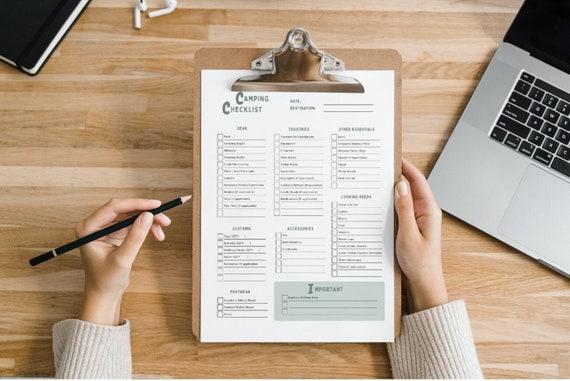
The final review is where a camping checklist printable earns its keep. The final packing page should bring every category together before departure.
Use this last review as a departure sequence:
- Confirm shelter, sleep, and weather gear.
- Check food, water, and cooking supplies.
- Verify safety equipment, tools, and personal items.
- Review campsite rules, directions, and conditions.
A printed list also helps when packing for repeated trips because it turns memory into a repeatable process. I still find simple checklists useful because travel rarely fails from one dramatic mistake; it usually fails from a handful of small omissions.
A good packing list is a small piece of preparation that prevents large frustrations. Print the checklist, mark it as you pack, and adjust it after each trip so it becomes more useful every season.


Common Questions
Why use a camping checklist printable instead of a phone note?
A printed checklist can be reviewed quickly while packing, used by multiple people, and kept with physical gear.
What should be checked before every camping trip?
Inspect shelter equipment, confirm water and food plans, test lights, and verify weather protection.
How can I avoid overpacking for camping?
Choose items based on trip length, location, transportation limits, and planned activities.